What Is Hardscape? (And How It Differs From Softscape)
Hardscape is the built environment of your yard — patios, walls, driveways, walkways. Here's how it differs from softscape and how the two integrate in great design.
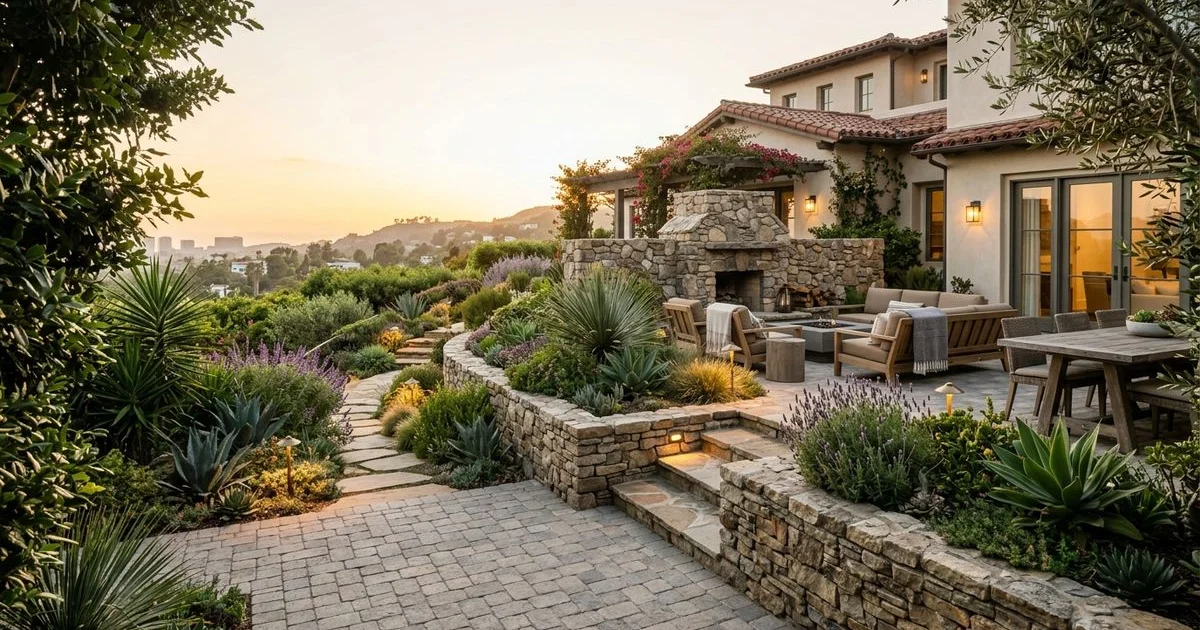
We often see homeowners jump straight into picking out patio stones or plants without realizing how these two distinct halves must work together. Understanding what is hardscape versus what is softscape serves as the dividing line between a fragmented yard and a cohesive outdoor living space.
Our team relies on this basic vocabulary to help clients accurately scope their projects and read quotes without needing a translator. The hardscape definition provides the framework, while the living elements fill it in.
Let’s break down what these terms actually mean, look at the recent data on water savings, and explore practical ways to balance them for your next project.
Plain-English definitions
Hardscape is the built, hard-surface portion of a landscape, meaning absolutely anything that is not living. Softscape is the living, growing portion of your yard, including the plants, trees, and soil.
We consider hardscape to be the permanent, structural foundation of your design. Patios, walkways, retaining walls, driveways, outdoor kitchens, pergolas, fire pits, pool decks, fences, and decorative aggregates like decomposed granite all fall under this category.
Recent real estate data from 2025 shows that adding a professionally designed paver patio or hardscape feature can yield an average return on investment of 55% to 80%.
Softscape represents the organic elements that change seasonally and respond to maintenance. Plants, trees, shrubs, lawns, groundcovers, and the mulch they grow in make up this living category. Our designs use softscape to add the texture, color, and seasonality that turns a rigid composition into a welcoming yard.
A complete landscape design always pairs both halves. Hardscape sets the bones, establishing grades, drainage, and structural geometry. Softscape fills in the gaps and breathes life into the space.
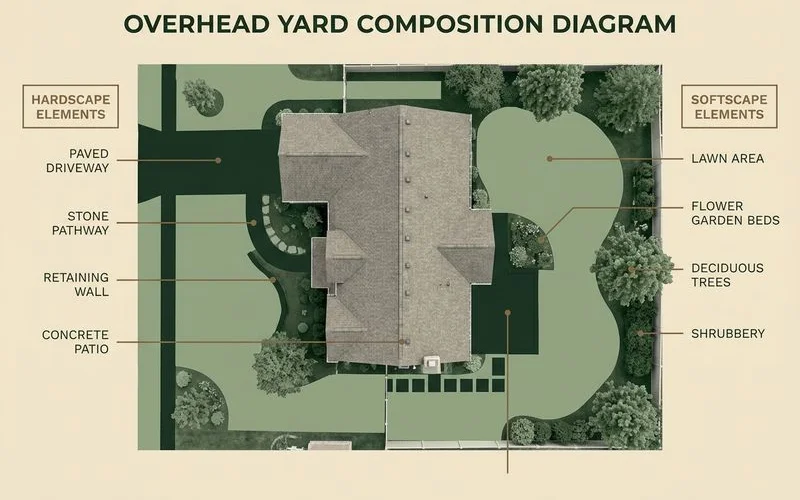
Common hardscape elements
Common hardscape elements include the durable, built features that make your yard functional and accessible. A typical Ridgeline project includes a specific subset of these materials, chosen to handle local weather and support smart water management.
We divide these features into foundational structures and outdoor living areas to keep projects organized. Breaking them down helps you understand exactly where your budget goes.
Foundational Hardscape Structures
These elements form the essential pathways, boundaries, and drainage solutions for your property. We always prioritize proper grading when installing these core features.
- Driveways: Whether you need driveway widening or a full motor court, these surfaces take heavy wear. Paver driveways are highly recommended. For instance, installing permeable interlocking concrete pavers costs between $10 and $30 per square foot in 2025, but they last up to 50 years and help capture 70% of rainfall to prevent runoff.
- Walkways: Flagstone, decomposed granite, and pavers connect the house to the yard or the yard to itself.
- Retaining walls: These range from short garden walls to engineered hillside structures made of CMU block or poured concrete. See our retaining walls guide.
- Steps and decorative aggregates: Stone or concrete steps navigate elevation changes, while materials like gravel and boulders provide durable ground cover.
Outdoor Entertainment Features
This category focuses on creating comfortable areas for relaxing and hosting guests. Our installations often blend high utility with striking visual design.
- Patios: The primary outdoor living surface usually consists of pavers, flagstone, or concrete. Check out our paver patio service.
- Outdoor kitchens and built-in BBQs: Gas, water, and electrical systems integrate directly into masonry for efficient cooking. Learn more about outdoor kitchens.
- Pergolas, gazebos, and arbors: Wood or steel structures provide essential shade on hot days. Explore our decks and pergolas.
- Fire and water features: Gas fire pits, fountains, and pondless waterfalls add strong focal points. See our fire and water options.
- Decks: Raised platforms made of wood or modern composite materials offer a great alternative to ground-level patios.
Common softscape elements
Common softscape elements include living materials like drought-tolerant shrubs, native trees, groundcovers, and the soil that supports them. These natural components breathe life into the static hardscape structure.
We actively select plants that thrive in dry climates to conserve resources and keep your water bill low. Traditional sod is increasingly the wrong default choice for dry regions like California. Switching to a water-wise garden can reduce landscape water usage by 50% to 80% compared to a standard lawn, based on 2025 environmental studies.
- Drought-tolerant planting: California natives, Mediterranean shrubs, and ornamental grasses save massive amounts of water. See our approach to drought-tolerant landscape design.
- Trees and shrubs: These provide the necessary structural plantings and shade canopy for your yard.
- Groundcovers and perennials: These lower-level plants add color, texture, and seasonal interest to the beds.
- Mulch and topsoil: This organic matrix retains moisture, regulates temperature, and keeps the softscape alive.
- Smart irrigation systems: Modern AI-powered smart controllers, a rising standard in 2026, can reduce water waste by an additional 15% to 30% when paired with native plants.
The integration principle
The integration principle is the deliberate blending of built structures and living plants into a single, cohesive environment. Patios should naturally edge with planting beds, and walls should act as beautiful backdrops for trees.
We view this as the core work of a real design-build firm. Decomposed granite paths thread naturally through native beds, and pergolas frame outdoor kitchens to create inviting shade. Done well, the line between the two halves blurs completely.
| Design Approach | Visual Result | Long-Term Performance |
|---|---|---|
| Integrated Design-Build | Smooth transitions, blurred lines between hard and soft elements | Superior drainage, cohesive root growth, lower maintenance |
| Piecemeal Contracting | Harsh borders, unfinished edges, mismatched elevations | Poor runoff management, potential erosion, disjointed aesthetics |
When executed poorly, you can tell exactly where the hardscape vendor stopped and the planting vendor started. This usually looks like a harsh, unfinished line of mulch sitting awkwardly against a concrete paver edge. Avoiding this disjointed look is the strongest argument against piecemeal contracting and the best case for hiring an in-house design-build team.
Our designers use low impact development techniques to ensure paved areas naturally direct rainwater into the surrounding softscape. This approach helps recharge local groundwater and easily meets 2026 municipal water efficiency ordinances.
When to combine in one project vs phases
You should combine hardscape and softscape into one project for full yard remodels, while phased approaches work better for spreading out costs on massive properties. Doing everything at once prevents your yard from being torn open multiple times.
We highly recommend the all-at-once method to streamline the most disruptive phases of construction. Installing the underground utilities and structural bases simultaneously is vastly more efficient because you only pay for the following steps once:
- Site grading and heavy earthwork
- Trenching for plumbing and electrical lines
- Installing complex drainage systems
For larger properties, phased landscape design is a legitimate option. Hardscape generally goes first in these staged builds. This sequence ensures the heavy machinery and concrete work will not crush delicate, newly planted shrubs during the second phase.
If you are still mapping out your project, our guide on best Pavers for the Los Angeles Climate covers a related angle that pairs well with this topic.
Where to start
Start the process by determining how you intend to use the space, rather than just picking out individual plants or paving stones. The design phase is where you map out exactly how the built and living elements will sit together.
We guide clients through this exact conversation every day. Most homeowners walk into a consultation knowing they want a specific patio style and some greenery, but they lack a cohesive plan. That integration is the primary job of the design phase.
The most successful outdoor living spaces start with a clear understanding of your daily habits and how you want to move through the yard.
It serves as the foundation for how Ridgeline approaches every paver patio and hardscape project. Taking the time to plan the structural geometry alongside the living elements ensures your investment yields a beautiful, functional, and long-lasting outdoor space. Reach out to our design team today to start planning your integrated landscape.
Frequently Asked Questions
Should I do hardscape or softscape first?
Can one contractor do both?
What share of yard cost is hardscape?
Have questions about a project of your own?
A free on-site consultation, a phased budget tier, and a master plan that fits your property and your goals.