Pasadena Hardscape Permits: When You Need One and How It Works
When Pasadena Building & Safety requires a hardscape permit, the impermeable area limits, and how a contractor handles the submittal.

We often see homeowners caught off guard by how strictly the City of Pasadena enforces hardscape limits.
Those specific pasadena hardscape permit requirements are closely tied to your lot’s impermeable area. The regulations exist to manage stormwater runoff, foothill drainage, and groundwater recharge across the region.
Our team knows that understanding these rules early is the best way to keep your project moving.
Let’s break down the data and look at the exact workarounds that save time at the permit desk.
What triggers a pasadena hardscape permit
We always check the specific exemption rules listed under the Pasadena Municipal Code before starting a design. A permit is triggered anytime a project pushes your lot past its allowed impermeable percentage or involves structures like retaining walls over four feet.
Our designers find that many homeowners misunderstand how that wall height is measured. The city measures from the bottom of the concrete footing to the top of the wall, not just the visible portion above ground.
- Hardscape over the impermeable-area threshold: A patio, walkway, or driveway addition that pushes the lot’s total impermeable area past the allowed percentage requires a formal submittal.
- Retaining walls over 4 ft retained height: The city requires engineered drawings and a geotechnical report for anything exceeding 48 inches from the footing bottom.
- Driveway widening with curb-cut changes: Public works submittal is required for curb-cut paperwork.
- Hillside work: Steeper-slope projects often trigger additional structural review to prevent erosion.
- Discharge to the city right-of-way: Stormwater or French drain discharge to the curb requires Public Works coordination.
We remind clients that small patio replacements in the exact same footprint often avoid these triggers. A modest addition under the threshold might not require official approval.
Our initial site visit is where the team officially confirms your exact requirements. Getting this right on day one sets the tone for a successful installation.
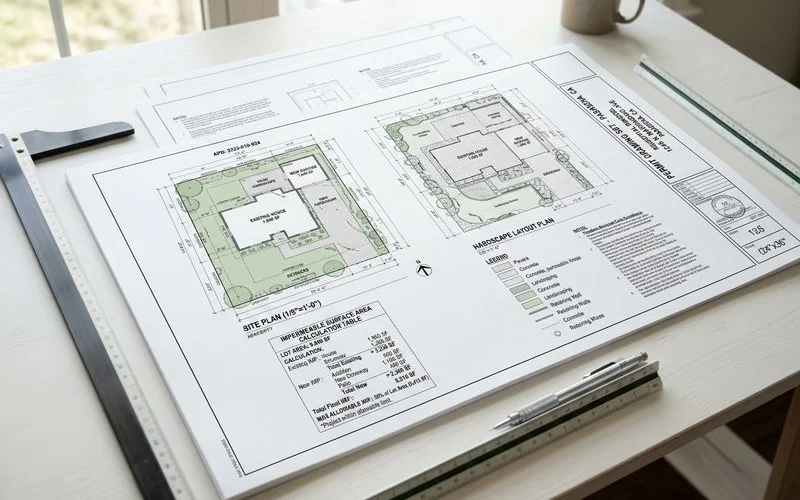
Pasadena’s impermeable-area rules
We manage these site coverage limits daily, especially in common residential zones like R-1 and R-2. Pasadena typically caps impermeable lot coverage around 35% to 40% of your total lot area.
Our goal is to maximize your usable space without triggering a permit denial. This percentage includes the footprint of your house, the existing driveway, walkways, and any new hardscape additions.
Going over the limit means you will face a mandatory redesign requirement. This is where permeable pavers become incredibly useful for drought-conscious properties.
We frequently install the Angelus Permeable Courtyard Paver to solve this exact problem. These 80mm thick stones handle heavy vehicle traffic while allowing efficient water drainage into the ground.
Our clients love that the city counts them partially or fully as permeable surface. Using open-graded base systems opens up valuable impermeable-area headroom for your outdoor living spaces.
Plus, the Pasadena Water and Power department occasionally offers turf replacement rebates up to $3 per square foot for permeable upgrades. Here is a quick look at how different materials affect your lot calculations.
| Surface Type | Permeability Status | Typical Pasadena Classification |
|---|---|---|
| Standard Concrete | 0% Permeable | Impermeable (Counts against limit) |
| Angelus Permeable Pavers | 100% Permeable (with open base) | Fully or Partially Permeable |
| Turfstone or Grass Pavers | 100% Permeable | Fully Permeable |
What’s in a typical Pasadena hardscape permit submittal
Our permit specialists compile highly detailed packages to ensure a smooth trip through the Pasadena Permit Center. For a city of pasadena patio permit or walkway project, the reviewers expect precise documentation of your current and proposed site conditions.
We include six critical elements in every standard residential submittal. Missing even one of these details usually results in immediate pushback from the plan checker.
- Site plan: Showing existing and proposed conditions accurately.
- Impermeable area calculations: Documenting existing impermeable surfaces, the proposed addition, and the total post-project ratio.
- Drainage plan: Illustrating exactly where runoff goes, which often includes routing to a French drain or dry well.
- Cross-sections and details: Highlighting the base prep, edge restraints, and polymeric sand installation.
- Specifications: Listing the specific paver brand, pattern, and joint width.
- Owner authorization: Providing the signed permit application.
We know that permeable systems require an extra layer of detail. Your cross-sections must clearly show the coarse, open-graded aggregate base layer that allows water to infiltrate the soil.
Our team also handles the extra engineering drawings and geotechnical reports required for hillside work. Providing a complete package upfront prevents costly delays during the review cycle.
Review timeline
We generally tell clients to expect a 2 to 6 week desk review for a clean residential hardscape submittal in Pasadena. The city evaluates these plans thoroughly to comply with local stormwater guidelines.
Our strategy is to file submittals immediately after you sign off on the design. This allows the permit lead time to run in parallel with material ordering and pre-construction preparations.
Pro Tip: Using Pasadena’s online permit portal for eligible submittals can sometimes help log your project faster than dropping off paper plans.
We always warn homeowners that holiday seasons and high-volume spring months will stretch this timeline. If the city issues review comments that require revisions, resubmittals add another 2 to 4 weeks to the process.
Cost of permitting
Understanding the Fee Structure
Our estimates always factor in the required city fees so you are not surprised later. Pasadena building and safety hardscape permit fees are typically a small percentage of the project cost.
We see residential hardscape permits consistently run between $300 and $1,500. The base plan check fee usually starts around $78 to $100 before the city calculates the final percentage based on project valuation.
Specialized Project Costs
Our proposals clearly outline that engineered walls and hillside permits run higher. Those complex structures require intensive structural review and geotechnical evaluations.
We handle the fee payment directly as part of your project scope. If your design impacts fire access, the fire department may also add a small review fee of around $35 to $75.
How we handle it
We manage the entire administrative workload so you can focus on the exciting parts of your renovation. Every Ridgeline paver patio project in Pasadena that triggers a review goes straight to our in-house permit team.
Our process is designed to eliminate the stress of dealing with municipal paperwork. Here is exactly how the group protects your time and investment.
- Confirm whether the project is permit-triggering during the initial site visit.
- Prepare the comprehensive submittal documentation.
- Submit the package to the Pasadena Permit Center at 175 N. Garfield Ave on your behalf.
- Coordinate any required review comments or design adjustments.
- Pull the final permit before any construction begins.
- Schedule the mandatory city inspection at project completion.
We take full ownership of the permit desk interactions. You never have to wait in line or decipher complex zoning codes.
Our complete service applies to retaining wall projects, driveway widening, and any other permit-triggering hardscape. You get peace of mind knowing professionals are handling the compliance details.
Outside Pasadena
Our crews work across the entire region, and we adapt to the distinct requirements of each municipality. Agencies like LADBS, Glendale, Beverly Hills, San Marino, La Cañada, and Burbank each enforce their own specific rules.
We find that most follow similar logic to Pasadena, but with varying site-coverage percentages and submittal criteria. For example, some neighboring areas utilize the Los Angeles Regional Uniform Code Program for standardized plans on minor projects.
Local Nuance: Cities like Beverly Hills and San Marino often require additional aesthetic reviews that go beyond standard building safety checks.
Our experts know exactly which city desk governs your specific property. Your dedicated contractor will ensure your drought-tolerant landscape meets all local regulations.
Ready to Start Your Hardscape Project?
We know that local permit rules can feel overwhelming at first glance. Having an experienced partner ensures your design meets all city requirements while maximizing your property’s potential.
Our team is ready to assess your lot and handle the heavy lifting from design to final inspection. Contact us today to schedule your site visit and get your pasadena hardscape permit process moving.
Frequently Asked Questions
Do I always need a permit for a paver patio in Pasadena?
How long does Pasadena B&S permit review take?
What if my project is over the impermeable limit?
Have questions about a project of your own?
A free on-site consultation, a phased budget tier, and a master plan that fits your property and your goals.