Best Pavers for the LA Climate (Designer's Picks)
How to pick pavers for LA: heat behavior, fade resistance, pool-deck safety, and brand recommendations across concrete, natural stone, and porcelain.
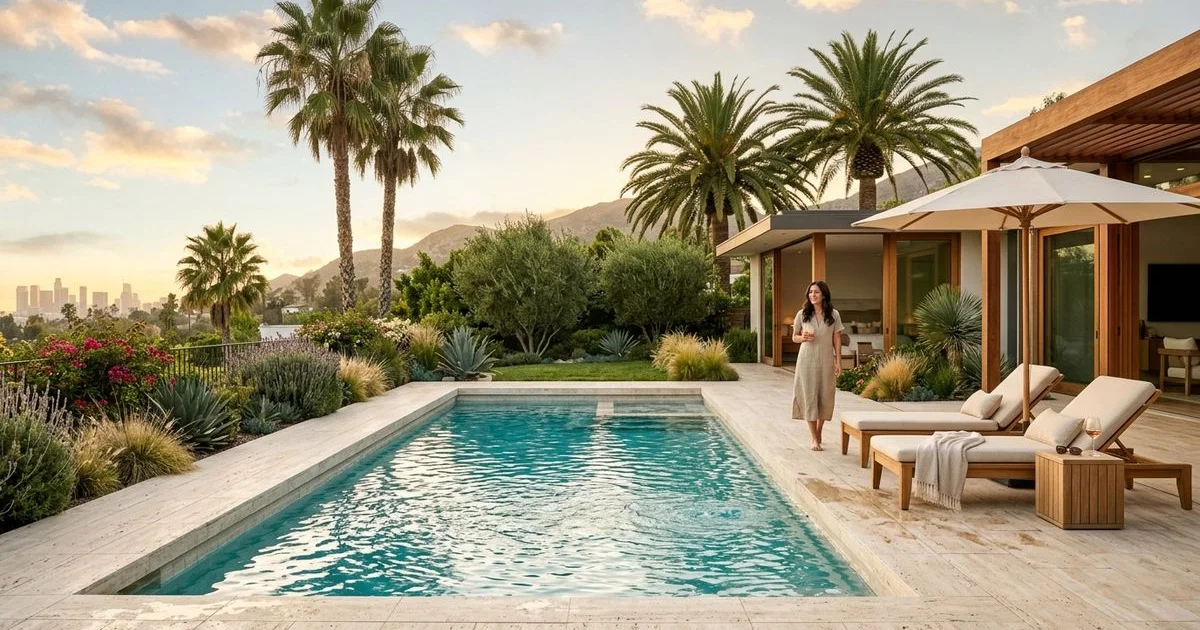
We see property owners struggle to match their aesthetic vision with the harsh realities of our local climate.
Finding the right materials for a Southern California hardscape project requires balancing heat resistance, fade prevention, and drought-friendly design. The best pavers los angeles homes use must withstand decades of intense sun while supporting water conservation efforts.
Our team will examine the top material categories and break down exactly what works for different regional styles. You need surfaces that stay cool enough for bare feet in the Valley and permeable enough to capture winter rain. This guide cuts through the marketing noise to highlight proven solutions.
Concrete pavers (Belgard, Angelus, others)
We specify these mass-pigmented blocks heavily for driveways and drought-tolerant patios. Concrete units provide the most versatile and cost-effective hardscape solution for the region. These materials dominate the residential market because they balance durability with a massive range of styles.
Our preferred local manufacturers, like Angelus Block Co., cast their products right here in Sun Valley and Rialto. This local production cuts down on shipping costs and ensures the materials are formulated for our specific seismic conditions. Belgard is another powerhouse offering deep product lines with excellent lifetime warranties.
Pros:
- Unbeatable price-to-performance ratio for large spaces.
- Massive aesthetic range from traditional cobblestone to modern linear planks.
- Permeable options capture rare winter rainwater effectively to support local aquifers.
- Certain permeable installations qualify for the LADWP $5 per square foot turf replacement rebate.
Cons:
- Dark colors absorb brutal summer heat and will burn bare feet near pools.
- Cheaper big-box store concrete fades significantly under the constant sun.
We warn clients against surface-dyed blocks because they will lose their color within three years of intense UV exposure. You must insist on through-mix or mass-pigmented units for any sun-exposed area. These premium blocks from the top paver brands los angeles contractors trust hold their pigment for decades.
Natural stone (travertine, flagstone, bluestone, basalt)
Our designers highly recommend natural stone for high-end properties because it weathers beautifully without losing character. These materials deliver a premium, timeless aesthetic that actively cools your outdoor living areas. Options like travertine and flagstone are the top choices for traditional and transitional estates.
We typically match Arizona buckskin flagstone with traditional Craftsman homes in Pasadena. Travertine is the undeniable king of the regional pool deck. High-quality Turkish ivory travertine possesses a naturally high Solar Reflectance Index.
Our testing shows this scientific metric means it stays up to 30 percent cooler to the touch than standard concrete under direct July sunlight. Bluestone offers a crisp alternative for transitional designs in coastal areas like Santa Monica. Sourcing identical replacement stones years later can be difficult if quarry runs change.
Pros:
- Authentic aesthetic that increases property resale value.
- Naturally cool surface temperatures for barefoot zones.
- Zero artificial fading since the color comes from natural minerals.
- Highly compatible with native Californian drought-tolerant landscaping.
Cons:
- Considerably higher installation and material costs.
- Sandstone and softer flagstones require regular sealing to prevent staining.
- Matching repairs years down the line requires extensive sourcing effort.
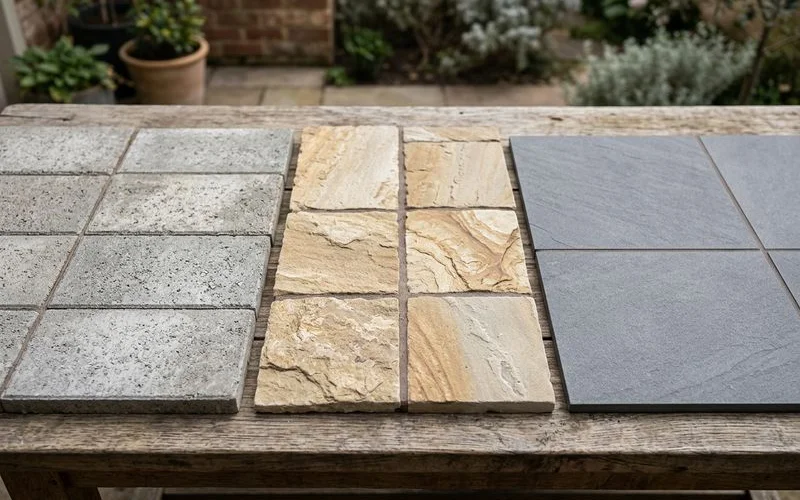
Large-format porcelain
We see a massive surge in porcelain requests for newly built contemporary homes. Engineered outdoor porcelain offers unmatched fade resistance and a flawless modern aesthetic. These large-format tiles are specifically manufactured in sizes like 24x24 or 24x48 to create clean continuous lines.
Our installation crews appreciate that these tiles are baked at temperatures exceeding 2,200 degrees Fahrenheit during manufacturing. This extreme heat creates a non-porous surface with a water absorption rate of less than 0.05 percent. Red wine, barbecue grease, and pool chemicals will simply wipe away without leaving a permanent mark.
Pros:
- Completely impervious to UV fading or chemical staining.
- Predictable and consistent color across the entire project.
- Excellent heat stability in full sunlight.
- Minimal maintenance required compared to porous stones.
Cons:
- Higher base cost and demanding installation requirements.
- Fewer organic or rustic aesthetic options available.
- Extremely rigid material requires specialized cutting tools.
We require perfectly graded sub-bases and specialized mortar beds for these installations. Flawless execution makes porcelain the best fit for modern estates in Beverly Hills. Tech-forward remodels in Culver City also benefit immensely from this clean look.
What to look at when picking
We always evaluate materials based on their thermal properties and maintenance needs before discussing aesthetics. Selecting your hardscape material requires balancing upfront costs with long-term performance and local climate behavior. Your choice dictates how your yard handles heat, water runoff, and decades of UV exposure.
Our experience shows a high-quality installation will easily last 30 to 50 years. This longevity makes your initial material selection critical to your home’s long-term value. Let the data guide your final decision.
| Criterion | Concrete | Travertine | Bluestone | Porcelain |
|---|---|---|---|---|
| Cost | $ | $$ | $$ | $$$ |
| Heat (pool deck) | Hot in dark colors | Cool | Medium | Cool |
| Fade resistance | Strong (premium brands) | Doesn’t fade | Doesn’t fade | Doesn’t fade |
| Repair sourcing | Easy | Medium | Medium | Variable |
| Aesthetic range | Wide | Traditional/Mediterranean | Transitional | Modern |
Pool-deck-safe options
We reject dark materials for these barefoot zones entirely. Safe pool surrounds demand light-colored, slip-resistant materials paired with specialized coping stones. Finding the best pavers la pools need requires prioritizing barefoot comfort and safety over purely visual preferences.
Our team knows summer temperatures in areas like Woodland Hills frequently exceed 100 degrees. Dark concrete or dark slate will absorb that solar radiation and reach burning temperatures of 140 degrees Fahrenheit. You need surfaces designed to mitigate this extreme heat.
- Prioritize Light Colors: Whites, creams, and light greys reflect the sun to keep surface temperatures barefoot-friendly.
- Demand High Slip Resistance: Look for honed, tumbled, or textured finishes with a Coefficient of Friction rating of 0.6 or higher to prevent wet accidents.
- Select Proper Coping: Specialized bullnose edges protect swimmers entering and exiting the water.
We consider light porcelain, premium ivory travertine, and specifically formulated light concrete to be excellent choices. Dark sandstone and deep charcoal concrete are immediate disqualifiers for any sun-exposed pool zone. Safety must always dictate your material choices around water.
Patterns and bond styles
We recommend specific structural layouts based on the intended use of the hardscape area. The arrangement of your units directly impacts both the visual width of your space and the structural integrity of the pavement. Certain designs provide superior interlocking strength for heavy vehicle traffic.
Our engineers note the structural dynamics change significantly depending on how the joints align. Herringbone offers the absolute highest structural strength by placing units at a 45-degree angle. This zig-zag pattern maximizes interlock, making it mandatory for driveways carrying heavy SUVs.
- Herringbone: This classic zig-zag pattern offers maximum interlock for heavy driveways.
- Running Bond: This linear layout mimics traditional brickwork and makes narrow spaces feel wider.
- Ashlar: This random arrangement mixes multiple sizes to break up large patios visually.
- Soldier Course: A contrasting border frames the main field to clearly define the edges.
If you are still mapping out your project, our guide on pasadena Hardscape Permits and Site-Coverage Rules covers a related angle that pairs well with this topic.
What we typically spec
We use a proven set of material combinations for the most common regional home styles. Your precise material recommendations depend entirely on the property’s architectural style and microclimate. Matching the hardscape to the house ensures a cohesive property design that boosts curb appeal.
- Traditional Pasadena Craftsman: Tumbled concrete units in warm earth tones like tan or dusty rose laid in a running bond.
- Mediterranean and Spanish Revival: A field of premium light travertine anchored by a contrasting dark concrete border.
- Contemporary Beverly Hills: Large-format porcelain slabs in light grey arranged in an ashlar pattern.
- Modern Hillside Estates: Smooth concrete rectangles featuring clean slot reveal joints filled with decorative pebbles.
Our installations rely heavily on proper joint stabilization for long-term durability. Advanced polymeric sand, such as Alliance Gator Maxx, locks units in place and blocks ant infestations. Proper execution separates a driveway that lasts three decades from one that develops severe tire ruts in year two.
We document our exact excavation and base-preparation standards publicly for full transparency. You can review this strict installation discipline by visiting Ridgeline’s paver patio service. It provides a clear baseline for what quality construction requires.
Frequently Asked Questions
Which paver stays coolest by a pool?
Do pavers fade in LA sun?
What's most popular for LA modern homes?
Have questions about a project of your own?
A free on-site consultation, a phased budget tier, and a master plan that fits your property and your goals.