Retaining Wall Permits in LA: When You Need One and What's Involved
When LA-area cities require a retaining wall permit, what the engineered drawings and geotech report cover, and how a contractor handles the submittal.
We see many homeowners planning beautiful, drought-tolerant landscapes who hit a sudden roadblock with hardscape regulations. A retaining wall permit in Los Angeles is mandatory for any engineered work.
The threshold is typically 4 feet of retained height in most local cities. Crossing that mark triggers structural drawings, a geotechnical report, and a formal plan-check process.
Our team at Ridgeline Outdoor Living has spent years handling these exact approvals for sustainable yards. Let us walk you through exactly what this timeline looks like and how to keep your project moving.
When you need a permit
You need a permit when a wall holds back 4 feet of soil or supports any extra weight from a driveway or structure. Most local building departments enforce this rule strictly to prevent dangerous slope failures.
Our crews verify these specific measurements during the initial site visit to confirm requirements. Grading changes for drought-conscious yards often require moving earth to capture rainwater efficiently.
This soil movement can quickly push a garden wall past the legal limit. Here are the primary triggers for mandatory engineering review:
- 4 feet of retained height: Measured from the bottom of the footing to the top of the retained soil, not just the visible block.
- Walls supporting a surcharge: A driveway or structure above the wall adds weight and triggers review regardless of height.
- Hillside-zone walls: Local overlay zones enforce stricter limits on steep residential slopes.
- Walls in setback areas: Construction near property lines automatically triggers careful municipal review.
Walls under 4 feet for general garden purposes typically skip the formal paperwork.
What’s in a retaining wall permit submittal
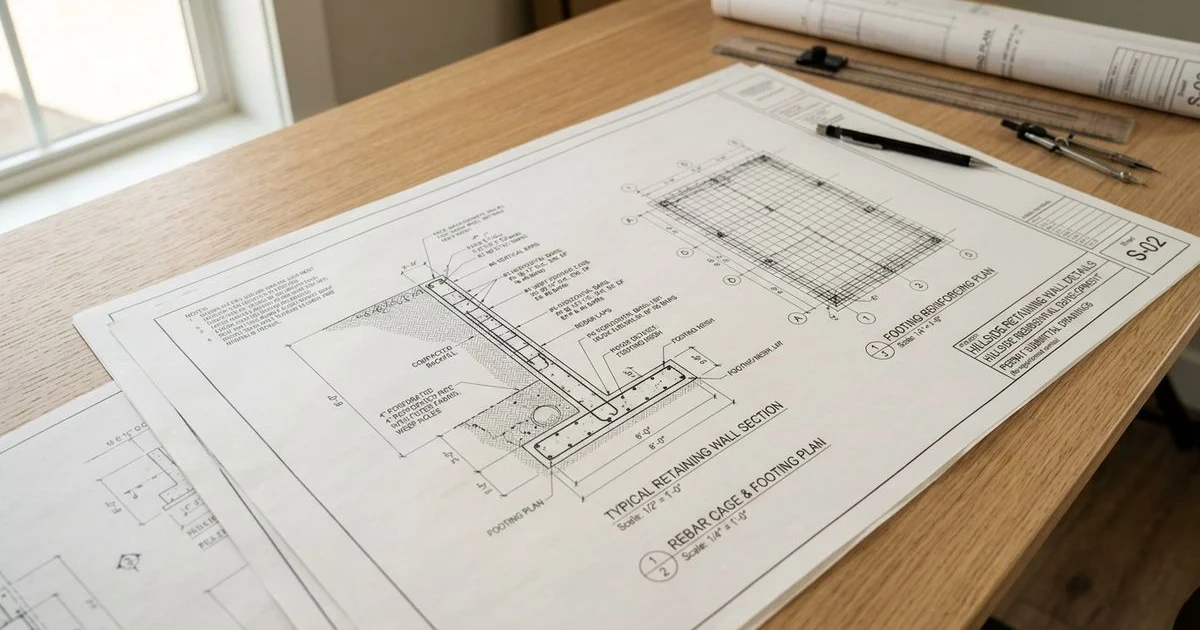
A complete permit package must include a site plan, licensed structural drawings, a geotechnical report, and engineering calculations. The city requires proof that the structure will safely handle soil pressure and seismic activity.
Our project managers compile these extensive documents long before construction begins. Water management is a massive part of this official review process.
A properly designed system includes drainage pipes and weep holes to redirect sudden winter storm runoff safely. We make sure this runoff flows directly into your drought-tolerant plant beds instead of washing away the hillside.
The structural engineer will specify rebar schedules based on the 2026 Los Angeles Building Code updates. For a permitted residential wall, the package typically includes:
- Site plan showing property lines, existing slopes, and proposed setbacks.
- Structural drawings prepared by a licensed structural engineer, detailing footing dimensions and reinforcement.
- Drainage details featuring gravel backfill, French drains at the toe, and weep holes.
- Geotechnical report confirming soil bearing capacity and expansion risks.
- Calculations proving the design satisfies retained earth pressure plus surcharge and seismic loading.
- Specifications outlining material specs and construction sequence.
- Owner authorization forms.
For shorter walls near the 4-foot threshold, engineering may be simpler, but a geotechnical report is still standard practice.
City-by-city quirks
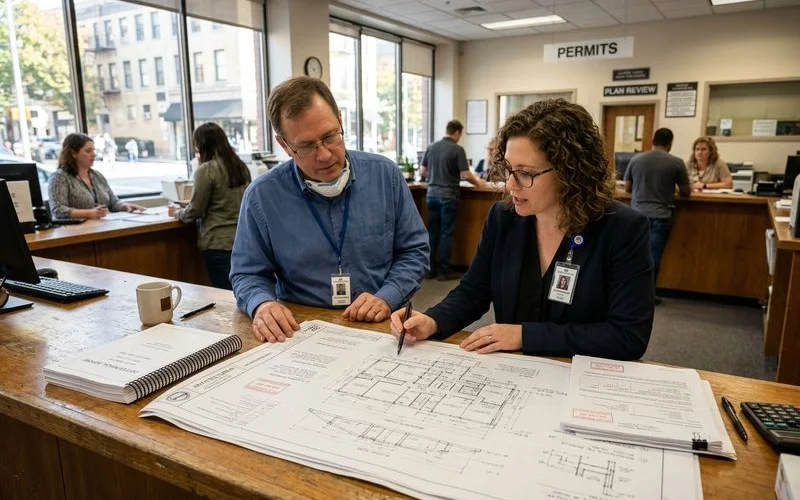
Every local building department has unique hillside ordinances and review boards that alter the approval process. A ladbs retaining wall permit requires passing through a massive local government structure, while smaller cities focus heavily on aesthetics.
Our team tracks these local variations closely to avoid frustrating delays. The contractor familiar with each desk knows exactly how to handle their specific quirks:
- Pasadena B&S: Familiar with complex hillside grading for water-wise gardens. See their Pasadena hardscape permit rules for specific hardscape notes.
- LADBS: The largest local desk uses the e-PlanLA digital system for submissions and mandates specific hillside-area review for designated zones.
- Glendale: Extremely strict on hillside requirements due to historic erosion in the Verdugo foothills.
- Beverly Hills (BHEC): The Beverly Hills Environmental Compliance division adds discretionary review on top of structural permits.
- San Marino: Mandates heritage and design review considerations that add aesthetic checks on top of the structural math.
- La Cañada Flintridge: Layers strict brush-clearance and fire-zone requirements onto hillside permits.
Stacking submittals early absorbs this variation and keeps the installation moving forward.
Plan-check timeline
Getting a retaining wall approved takes anywhere from 4 to 12 weeks, depending on the municipality and the site complexity. A clean initial submittal is the absolute best way to hit the shorter end of that timeframe.
Our administrative staff submits perfect packages to protect your planting schedule. The transition to digital platforms like e-PlanLA has modernized how these departments process documents.
| City | Typical timeline (residential wall) |
|---|---|
| Pasadena B&S | 4 to 8 weeks |
| LADBS | 6 to 12 weeks (longer for hillside) |
| Glendale | 4 to 8 weeks |
| Beverly Hills | 6 to 10 weeks |
| San Marino | 4 to 8 weeks |
| La Cañada | 4 to 10 weeks (hillside review) |
These current 2026 estimates assume the city has no major corrections. Resubmitting plans for structural comments easily adds 2 to 4 weeks per cycle.
Geotech report scheduling
A standard soils report takes 2 to 4 weeks from the initial site visit to the final document delivery. The geotechnical engineer tests soil stability to ensure the concrete foundation will not fail.
Our designers schedule this testing early in the design phase so the report is ready before structural drafting begins. Los Angeles has notoriously expansive clay soils that shrink during droughts and swell rapidly during heavy rain.
The lab tests analyze these moisture fluctuations to recommend the correct footing depth. We handle the coordination for this step to keep the timeline completely on track.
Expect to pay between $1,500 and $5,000 for a thorough residential soil analysis.
What permits cost
You can expect to pay between $500 and $2,500 in city fees for a standard residential retaining wall permit. These municipal costs are calculated based on the project valuation and the specific local desk.
Our budget proposals always separate the city charges from the engineering labor. Professional engineering fees for the structural plans and the soil report add another $3,500 to $10,000 to the total separately.
Properly engineered concrete features are an investment that protects your property from severe soil erosion. We wrap all these administrative and engineering fees into a clear project budget upfront.
Contractors usually handle the direct payments to the city to keep the process simple for the homeowner.
If you are still mapping out your project, our guide on engineered Concrete vs Segmental Retaining Walls covers a related angle that pairs well with this topic.
What we handle
We manage the entire engineering and permitting process for every hillside project over the 4-foot mark. You do not have to spend hours waiting in line at a crowded local building department.
Here is exactly what happens behind the scenes:
- Confirm permit requirements at the initial site visit.
- Coordinate the geotechnical report scheduling.
- Manage the structural engineer producing the detailed drawings.
- File the complete submittal at the relevant city desk.
- Address any technical plan-check comments.
- Pull the final approved permit.
- Coordinate city inspections at the footing pour, reinforcement stage, and final review.
- Handle the official project close-out.
This comprehensive management is a core feature of the retaining walls service we provide. Every Ridgeline retaining wall project includes this dedicated oversight.
Integrating this service ensures the connected hardscape projects stay completely compliant and on schedule. The homeowner skips the city desk entirely, leaving the technical details to the professionals.
If your upcoming landscape renovation requires moving serious earth, contact us today to schedule a site visit. We are ready to review your property and outline the exact steps required.
Frequently Asked Questions
What's the permit threshold in LA?
How long does a retaining wall permit take to approve?
Do I need a geotech report?
Have questions about a project of your own?
A free on-site consultation, a phased budget tier, and a master plan that fits your property and your goals.