Hillside Terracing in LA: When and How
How hillside terracing works, when terraces are better than a single tall wall, and how the structural and planting work integrate.
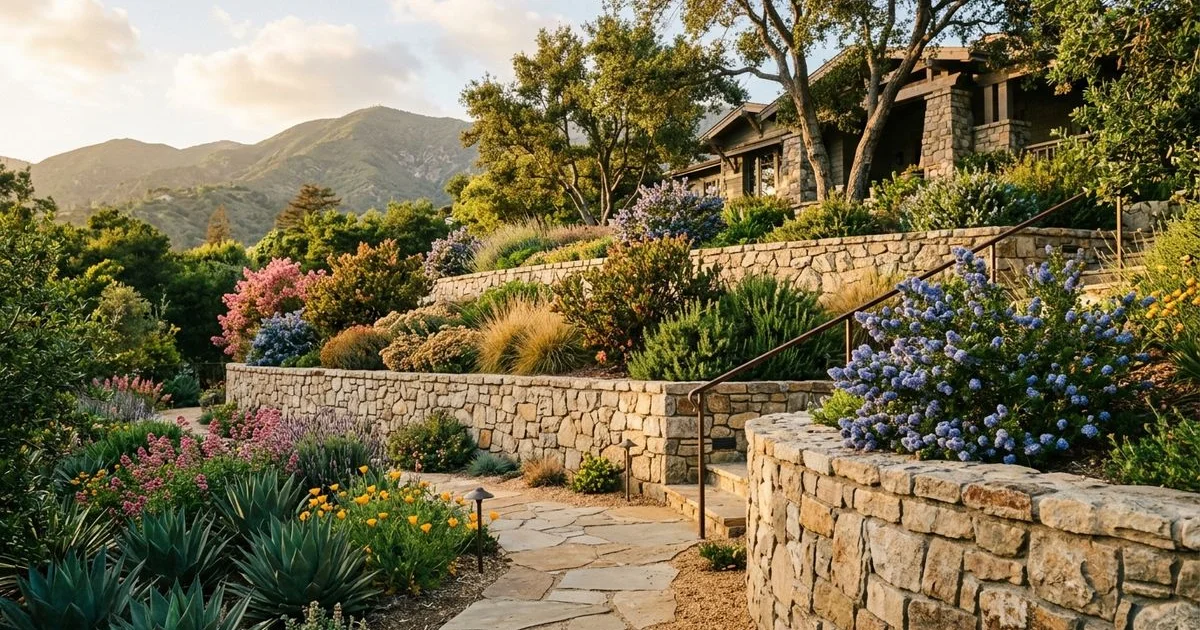
You know how dealing with a steep hillside terracing los angeles lot often feels like an impossible engineering puzzle.
Our clients frequently ask if they have to build one massive concrete barrier to hold back the slope. The reality is much more manageable. We always recommend terracing as the cleanest engineering answer to a steep property.
This tiered method makes each terrace shorter, simpler, and often cheaper than the single-wall alternative. The result is a usable hillside instead of a fenced-off liability. The following guide breaks down the structural facts and the best way to build a lasting terrace system.
Why terracing usually wins
We see terracing beat a single tall wall on almost every Los Angeles hillside lot for three distinct reasons. The financial and structural differences are impossible to ignore. Our crews have repaired enough failed single walls to know why shorter, multiple tiers perform better over time.
The advantages fall into these core categories:
- Engineering cost scales non-linearly: A massive retaining wall requires massive footings. According to 2026 industry data, a 2-foot-tall wall typically costs between $45 and $240 per linear foot, but once that height reaches 6 feet or taller, costs skyrocket to $425 or more per linear foot due to necessary structural engineering and steel reinforcement.
- Drainage is easier to manage: Every retaining wall is designed to hold back soil, but many fail because they cannot hold back water. Each terrace handles a smaller volume of soil and moisture. This localized approach prevents catastrophic failure if one drain pipe ever gets clogged.
- The hillside becomes usable: A single 10-foot wall creates an upper bench that is completely inaccessible from the yard below. Terraced steps create planting zones, garden paths, and sitting areas.
When terracing is the right call
Our structural engineers look at specific triggers to recommend a terraced design. Certain property layouts make tiered walls the obvious choice for both safety and budget. We evaluate the grade, the soil type, and the local building codes before finalizing a plan.
The strategy works best under these conditions:
- Slope steeper than 25 to 30 percent: Single tall walls become cost-prohibitive at this extreme grade.
- Retained heights over 6 feet: It is much safer to split this load into shorter, independent structures.
- Permit-tight projects: Under Los Angeles Municipal Code Section 91.106.3.2, walls under 4 feet in height, measured from the bottom of the footing, avoid building permit triggers if they do not support a surcharge. We still handle all city planning requirements when needed.
- Aesthetic preference for a layered look: This tiered style is incredibly common in La Cañada, Glendale, and Pasadena hillside neighborhoods.
- Hillside with planting potential: A terracing slope landscape design creates viable planting beds instead of dead space.
When a single wall is actually better
We do encounter specific scenarios where a single wall makes more sense than multiple terraces. Sometimes the physical constraints of the property force a different engineering choice. Our team will pivot to a single structural wall when safety or access demands it.
A single wall wins in these exceptions:
- Very narrow lots: Multiple terraces simply do not fit when horizontal space is limited.
- Driveway or motor-court frontage: These areas require a continuous, engineered face to support heavy vehicle loads safely.
- Specific seismic hazards: Properties in severe seismic zones might require deep tiebacks into the hillside that only a massive monolithic wall can accommodate.
- Architectural designs: Some modern blueprints call for a single bold concrete feature wall.
How a terraced hillside gets designed
Our design process for a typical Ridgeline terraced hillside follows a strict sequence. Missing even one of these steps can lead to structural issues down the line. We document every inch of the slope before a shovel ever hits the dirt.
The exact roadmap looks like this:
- Slope survey: Measure the existing grade, test soil conditions, and identify any surcharge weight from above.
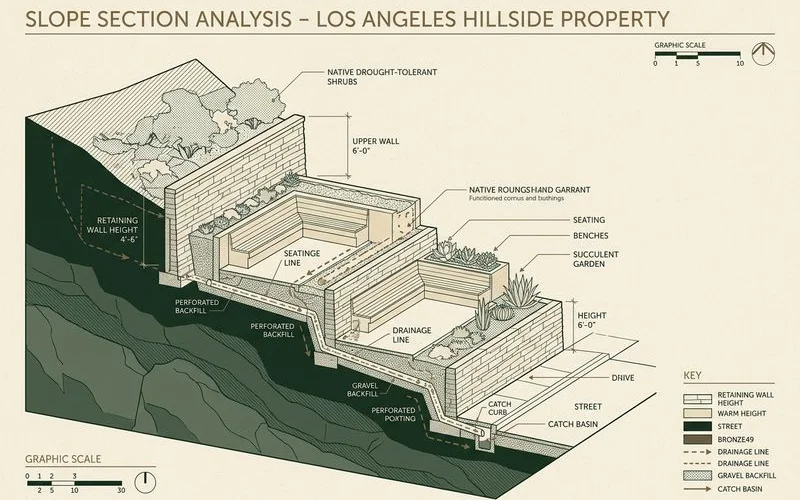
- Bench layout and heights: Decide where each terrace sits, aiming for 3 to 4 feet of retained soil per wall to optimize costs and maximize planting space.
- Wall type selection: Choose Segmental, CMU, or stone-faced materials per terrace based on visibility and structural load.
- Drainage blueprint: Design a French drain system at each terrace, including weep holes and coordinated discharge.
- Planting plan: Select slope-stable drought-tolerant species that fit perfectly in the narrow planting strips at each bench.
- Permit submittal: Submit engineered drawings to LADBS for any walls over 4 feet retained or for permit-required hillside zones.
Drainage on terraced hillsides
We consider drainage the most critical component of any retaining wall project. Water accumulation is the single most common cause of retaining wall failure in Southern California. Our crews spend as much time moving water as they do moving soil.
The Threat of Hydrostatic Pressure
Every terrace has its own distinct moisture problem to solve. Our engineers watch the upper bench absorb rain and irrigation runoff that needs a clear exit path. The wall itself holds back saturated soil that rapidly builds hydrostatic pressure.
Water is heavy, weighing roughly 8.34 pounds per gallon. Our team knows that when native expansive Los Angeles soils trap that water, the lateral pressure pushing against the wall multiplies. The lower bench then receives subsurface water flowing down from the higher elevations.
Engineering the Fix
Our drainage solutions focus on relieving pressure before it damages the structure. Getting this wrong means the entire terrace system fails progressively from the top down. We install specific safeguards behind every wall face.
The standard fix requires these elements:
- French drains: A 4-inch perforated PVC pipe wrapped in gravel sits at the back of each bench, sized specifically for the soil type and local rainfall.
- Weep holes: These small exit points are spaced across each wall face to let trapped water escape immediately.
- Subsurface routing: A dedicated pipe system directs each terrace’s discharge to a safe street daylight point.
- Surface grading: The soil is sloped gently to direct sheet flow toward the drains instead of letting it pool.
Planting integration
We view terracing and hillside drought-tolerant planting as siblings, not separate projects. The planting plan and the structural plan must be drawn together to ensure long-term stability. Our landscape architects rely on native California species that send deep roots into the hillside to act as living rebar.
Drought-Conscious Plant Selection
Finding the right greenery is crucial for drought-conscious homeowners trying to save water. The steep terrain naturally drains quickly, leaving topsoil bone-dry during the summer months. We select specific plants that thrive in these harsh, sloping conditions.
The table below highlights a few favorites.
| Plant Name | Best Terrace Location | Primary Benefit |
|---|---|---|
| California Lilac (Ceanothus) | Upper benches | Deep-rooted soil anchor, very low water needs |
| Manzanita (Arctostaphylos) | Middle terraces | Excellent erosion control, evergreen coverage |
| Toyon (Heteromeles arbutifolia) | Back boundaries | Large screening shrub, thrives on slopes |
| Tickseed (Coreopsis) | Wall faces / edges | Slope-stable groundcover that drapes over edges |
Our teams route drip irrigation directly through the structural drainage zones for easy maintenance. Smaller accent plants fit perfectly into the narrow planting strips at each bench. This method creates a vibrant garden that requires a fraction of the water a traditional lawn needs.
Where to start
Our hillside terracing projects cross perfectly between drought-tolerant design and retaining walls work. They are a single, integrated build that requires careful planning from day one. We walk the slope during the initial site visit to frame the right number of terraces and the best wall types for the specific hillside terraces LA conditions.
Take a close look at your property grade and locate your property lines. Once you know the rough dimensions of your slope, reach out to schedule an engineering review and start planning your usable yard today.
Frequently Asked Questions
When are terraces better than one tall wall?
How tall should each terrace be?
Do terraces need separate drainage?
Have questions about a project of your own?
A free on-site consultation, a phased budget tier, and a master plan that fits your property and your goals.