Pavers vs Concrete Patio: Which Is Better for LA?
Side-by-side comparison of pavers and poured concrete for LA patios — install, longevity, repair, drainage, and aesthetics.
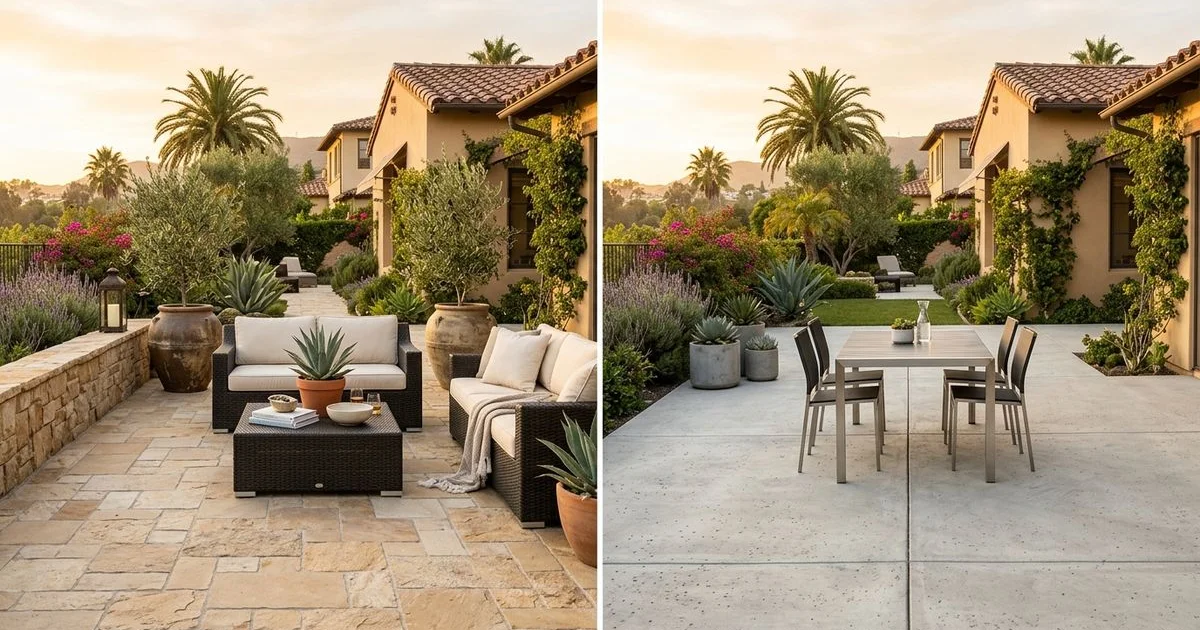
We see this decision pause almost every backyard renovation in Southern California. The debate between a pavers vs concrete patio usually comes down to a few core factors. People want to know what lasts, what looks good, and what fits the budget.
The right choice depends heavily on your specific soil, seismic risk, and long-term aesthetic goals. Local geology plays a massive role in how hardscaping ages.
Let us look at the actual data for Los Angeles yards. We will explore exactly how to make the smartest, most durable call for your property.
Quick comparison
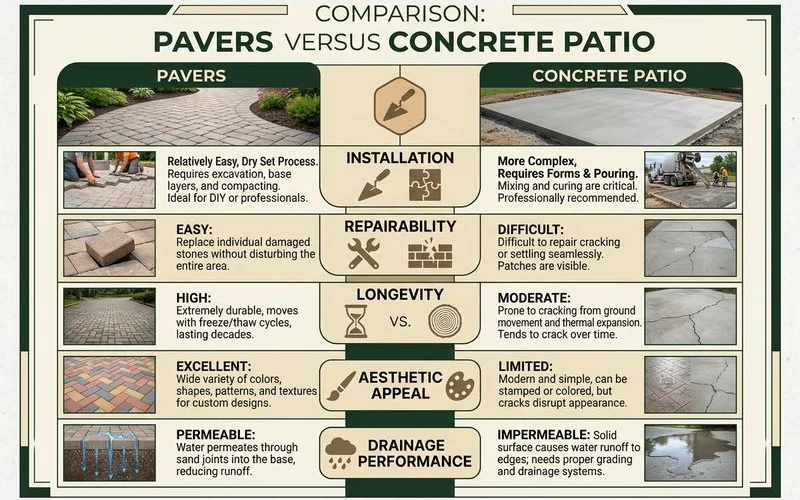
The core difference comes down to flexibility and long-term maintenance. Pavers shift naturally with the ground, while poured slabs are rigid and eventually crack under pressure.
Our designers use this basic matrix to help homeowners understand their options. This paver vs concrete cost and feature comparison highlights the baseline realities for Los Angeles properties.
| Dimension | Pavers | Poured concrete |
|---|---|---|
| Install cost | $18 to $45/sq ft | $12 to $25/sq ft (plain), $20 to $35 (stamped) |
| Lifespan in LA | 25+ years | 5 to 15 years before visible cracking |
| Crack failure | Individual unit replaceable | Whole-slab problem |
| Seasonal soil movement | Flexes (joint shift) | Cracks |
| Seismic resilience | Excellent | Vulnerable |
| Repair sourcing | Easy (unit replacement) | Patches show |
| Eco/Drought Utility | Permeable options capture rain | Surface runoff only |
| Aesthetic range | Wide (color, pattern, texture) | Stamped or colored adds range |
| Resale value (LA market) | Premium signal | Standard |
Why concrete cracks in LA
Concrete slabs fail here because they cannot handle the natural ground movement inherent to our region. Two major geological factors work against rigid surfaces in Southern California.
Our team constantly sees expansive clay soils destroy older slabs. Wet winter rains cause the clay to swell dramatically. The long, dry summer then bakes the soil, causing it to shrink rapidly.
This constant heaving puts tremendous stress on a solid surface. The ground beneath the patio never truly sits still. The USGS tracks thousands of minor seismic events in Southern California every year.
Even micro-tremors shift the earth enough to snap a rigid block. Add aggressive tree root growth from mature neighborhood landscaping, and the damage accelerates. A concrete patio that looks great during year three is routinely in failure mode by year ten.
Primary threats to solid slabs in LA:
- Expansive clay soil swelling during winter rains.
- Severe soil shrinkage during intense summer heat.
- Frequent minor seismic shifting.
- Invasive tree roots lifting rigid sections.
Why pavers handle LA conditions better
The segmented design allows this hardscape to absorb movement without sustaining damage. Individual units sit securely on a flexible aggregate base with sand-filled joints.
When the earth shifts beneath the surface, those tiny joints take the pressure. The entire base flexes slightly instead of snapping. Individual stones can even be lifted and reset easily if a large tree root causes an issue.
We frequently highlight this system’s massive advantage for drought-conscious homeowners. Permeable pavers allow precious rainwater to seep back into the aquifer rather than running off into the storm drain. LADWP even encourages permeable hardscaping as part of their broader water conservation goals.
Key advantages of a segmented system:
- Base layers easily flex with minor tremors and soil changes.
- Permeable joints capture rain to support local groundwater.
- Damaged areas require cheap unit replacements instead of full demolition.
- No unsightly crack patching is required over the lifespan.
When concrete is the right call
A poured slab remains a highly practical choice for purely utilitarian spaces or extremely tight budgets. It provides a fast, flat surface when long-term aesthetics are a secondary concern.
Our project managers still recommend poured surfaces for a few very specific situations. Modern alternatives exist, but traditional pouring has a definitive place in local construction.
Common scenarios for poured slabs:
- Strict budgets on small patios: Plain concrete requires less initial investment for tiny footprints.
- Modern minimalist designs: A single, uninterrupted surface works well for specific architectural styles.
- Utility areas: Side yards, garage floors, or trash bin storage pads rarely need premium materials.
- Continuous pool decks: Certain modern pool designs favor a monolithic look over a segmented one.
You can often achieve that minimalist aesthetic using large-format porcelain without the cracking risk. The choice simply depends on your exact aesthetic goals and maintenance tolerance.
Stamped and colored concrete
The visual appeal of stamped patterns often fades rapidly under the intense Southern California sun. Comparing stamped concrete vs pavers reveals significant long-term maintenance differences that catch many homeowners off guard.
Contractors use stamps to mimic beautiful stone or brick, but the underlying material remains a rigid slab highly prone to cracking. The colored surface also requires chemical resealing every two to three years to prevent moisture damage and color loss.
We rarely spec this material on Ridgeline projects today. If a crack occurs, patching a patterned and colored surface leaves a highly visible, ugly scar that cannot be hidden.
Real cost ownership over 10 years
True hardscape costs must always include the inevitable repairs a rigid slab requires over a decade. While individual stones demand more upfront capital, they effectively eliminate the need for expensive crack patching.
Our estimators track these numbers carefully for local projects. You pay for a segmented system once, but you pay for slab repairs repeatedly.
| Material Type | Initial Install | 10-Year Repairs | Total Estimated Cost |
|---|---|---|---|
| Plain concrete | $7,000 | $2,000 to $4,000 | $9,000 to $11,000 |
| Stamped concrete | $11,000 | $2,000 to $4,000 | $13,000 to $15,000 |
| Premium pavers | $14,000 | Minimal maintenance | $14,000 |
| Pavers with repair | $14,000 | $500 (small reset) | $14,500 |
What we typically spec
Our primary recommendation for Los Angeles backyards is a high-quality segmented system over an engineered base. The long-term durability simply outperforms rigid slabs in our specific climate.
We almost exclusively spec premium pavers for most residential projects. Materials like durable concrete from Belgard and Angelus, natural travertine, or large-format porcelain offer incredible longevity. Concrete poured slabs only come up in very specific, highly utilitarian use cases.
The true difference between a patio that holds for 25 years and one that fails at year three is base discipline. This installation rigor is the exact work behind Ridgeline’s paver patio service. Our teams follow strict ICPI standards to guarantee your outdoor space survives the elements.
If you are ready to settle the pavers vs concrete patio debate for your own property, reach out to our design team today to explore your options.
Frequently Asked Questions
Is concrete cheaper than pavers?
Why do concrete patios crack?
Which lasts longer?
Have questions about a project of your own?
A free on-site consultation, a phased budget tier, and a master plan that fits your property and your goals.