Permeable Pavers in LA: When They're the Right Call
How permeable pavers work, when they help with impermeable-area limits and drainage, and how install differs from standard paver patios.
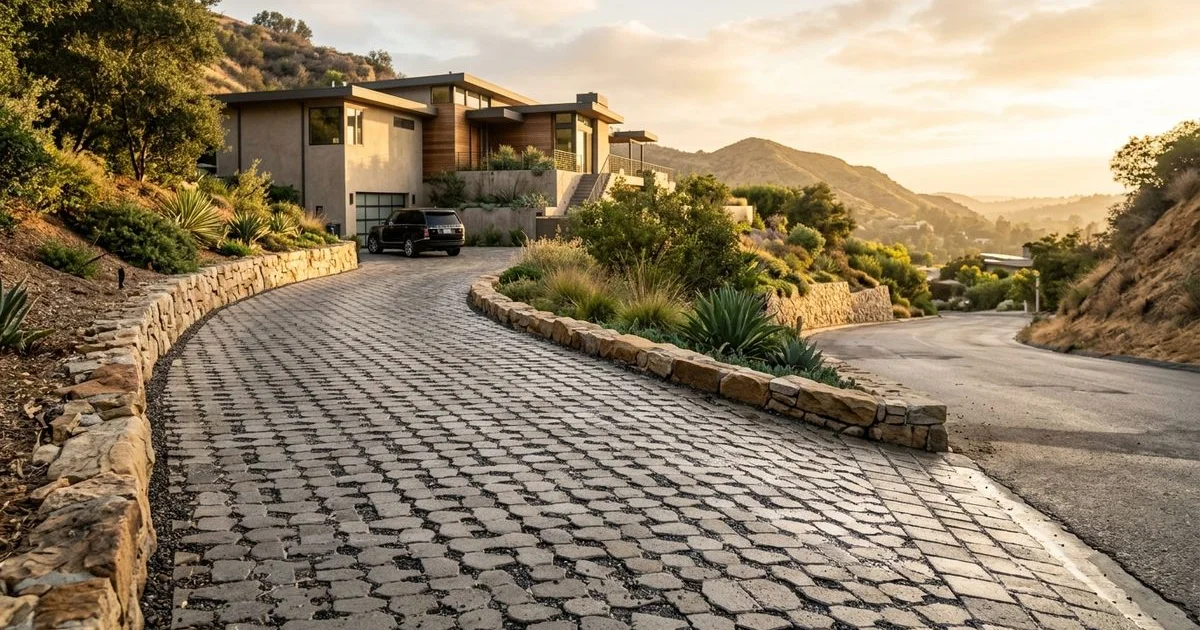
You probably know the feeling of watching perfectly good rainwater rush down the driveway and into the street during our rare, heavy downpours.
At Ridgeline Outdoor Living, we see this wasted opportunity on almost every property evaluation across the region. That runoff is exactly why local municipalities are cracking down on hardscape limits.
Let’s look at the data behind the permeable pavers Los Angeles homeowners are installing, what the current regulations demand, and how you can use these systems to solve drainage headaches.
How permeable pavers Los Angeles systems work
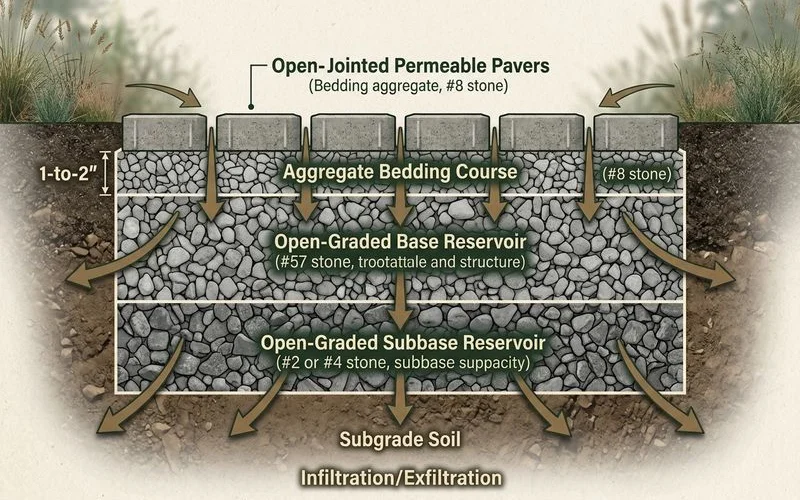
Permeable pavers function as a two-part system designed to capture rainwater and filter it directly into your native soil. We install these concrete units over an open-graded aggregate base to create a hidden reservoir right under your patio.
A permeable system looks identical to a standard block patio from above, but the magic happens below grade. Let’s break down the hidden layers:
- Open-graded aggregate base: Standard paver bases use mixed crushed stone that compacts tightly. Permeable bases use clean, uniformly sized stone to ensure the voids stay open for maximum water flow.
- Geotextile separation: This structural fabric layer prevents your native dirt from mixing with the clean base rock.
- Open joints: Installers fill the spaces between the surface stones with small chip gravel instead of solid polymeric sand.
- Deep storage capacity: The base acts as both a structural foundation and a temporary water storage vault.
These systems achieve impressive numbers, with options like the Angelus Permeable Holland pavers boasting initial infiltration rates of 300 to 800 inches per hour. That capacity easily handles the heaviest California atmospheric rivers.
When a permeable paver patio is the right call
Three specific scenarios exist where these systems truly shine for local homeowners.
1. Hitting impermeable-area limits
The Los Angeles Low Impact Development (LID) Ordinance strictly regulates how much water your property can shed. We frequently use permeable systems to keep projects fully compliant with local codes.
Any project adding or replacing more than 500 square feet of impervious surface usually triggers these mitigation rules. These specialized pavers count differently in the city calculation, keeping your project under the limit without shrinking your outdoor living footprint.
2. Replacing a problem drainage area
Water naturally pools at the bottom of slopes or near heavy-flowing downspouts. We integrate permeable surfaces in these trouble spots to act as a giant, flat French drain.
You bypass the need for a separate, expensive dry well system entirely. The Los Angeles Department of Building and Safety (LADBS) generally requires infiltration areas to sit at least 10 feet from building foundations. This spacing ensures water absorbs safely away from your home’s structural supports.
3. Driveways and large hardscape footprints
Expansive concrete slabs generate massive amounts of problematic runoff. Our team often designs permeable paver driveways to offset this massive footprint.
These eco-friendly vehicle zones absorb the water instantly, preventing puddles and erosion. For properties already pushing their coverage limits, this material swap often makes the difference between a permit approval and a denial.
Where standard pavers are still the right call
Porous systems are fantastic, but they are not the automatic answer for every square inch of your yard. We recommend traditional solid installations in a few specific situations.
- Small patios with no coverage issues: If your lot is well under the city’s impermeable limit, the 15 to 30 percent price premium for porous materials rarely justifies the extra cost.
- Pool decks and heavy foliage zones: The open gravel joints easily trap organic debris from overhanging trees, requiring more frequent cleaning.
- High-traffic commercial zones: Heavy vehicular loads require specialized engineering, making solid bases a safer bet for extreme weight.
- Steep hillsides: Fast-moving water on steep slopes can bypass the open joints entirely.
Aesthetic options
You never have to sacrifice your design vision to meet environmental standards. We regularly source top-tier materials from major brands like Belgard, Angelus, and Hanover.
Belgard offers popular permeable options like Eco-Dublin and Aqua-Bric, which deliver classic, cut-stone textures. The aesthetic difference is negligible to the untrained eye.
Installers use dark grey chip stone in the joints, which creates a slightly thicker outline but blends perfectly from a few feet away.
Cost relativity
Budgeting for an outdoor upgrade requires looking at the total project scope. We see average 2026 installation rates for permeable pavers hovering between $10 and $30 per square foot in the Los Angeles market.
This pricing typically runs 15 to 30 percent higher than a standard installation.
| Feature | Standard Pavers | Permeable Pavers |
|---|---|---|
| Average Cost (per sq. ft.) | $10 - $25 | $10 - $30 |
| Base Material | Dense-graded aggregate | Open-graded clean stone |
| Drainage Need | Requires separate drains | Self-draining system |
| Best For | Pool decks, small patios | Driveways, LID compliance |
The required volume of crushed stone and specialized labor drive that initial premium up. However, the all-in cost balances out perfectly if the porous surface eliminates the need for complex, separate yard drainage trenches.
Maintenance
A well-maintained porous surface will filter rainwater flawlessly for decades. We advise clients to perform a simple surface vacuum or pressure rinse once a year to extract trapped dirt.
This basic task typically takes a homeowner about 30 minutes annually to complete. Recent 2026 industry maintenance data shows long-term upkeep costs are incredibly low, often ranging from just 5 cents to 37 cents per square foot.
In the rare event that a section clogs heavily, a professional can vacuum out the old gravel and sweep fresh chip stone back into the joints. This quick reset restores the system to its original factory flow rate immediately.
Where this fits
Permeable solutions are a staple in our daily problem-solving toolkit. We rely on these systems heavily for Pasadena hardscape projects, hillside properties in Glendale, and tight lots in Beverly Hills.
Making the call between solid or porous stone happens during the initial design phase once we calculate your exact lot coverage numbers. Our team is ready to help you understand these tricky municipal codes regarding permeable pavers Los Angeles installations.
Check out our paver patio service and our dedicated yard drainage service pages to see how these elements work together. You can finally reclaim your outdoor space and manage the next big rainstorm with confidence.
Frequently Asked Questions
Do permeable pavers really help with impermeable-area limits?
How does install differ from regular paver patios?
Are permeable pavers more expensive?
Have questions about a project of your own?
A free on-site consultation, a phased budget tier, and a master plan that fits your property and your goals.