Will a Drought-Tolerant Yard Look Brown or Sparse?
Short answer — no, when it's designed for density, year-round bloom, and proper finishing. Here's how a designed drought yard avoids the sparse look.
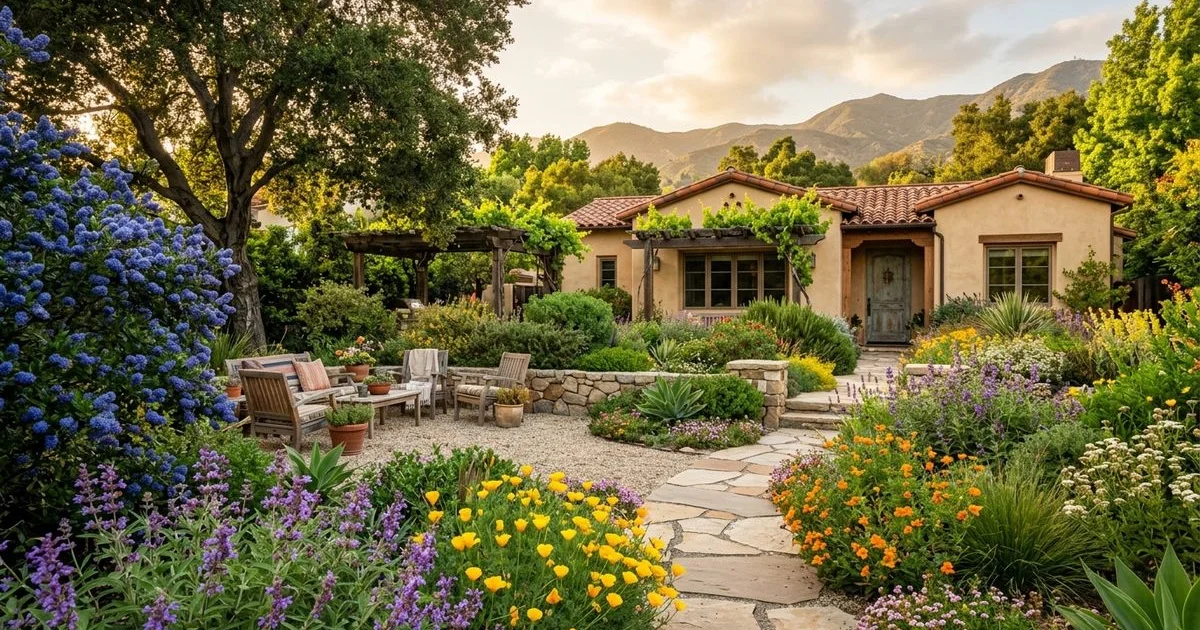
We regularly hear one specific question from property owners across Pasadena and Beverly Hills. Does drought tolerant landscaping look bad automatically, or can it actually be lush?
You might consider a typical drought yard ugly, but that bare look is simply the result of poor design choices. A 2026 evaluation of Los Angeles properties shows that water-wise plants thrive beautifully when given the right foundation.
Let’s examine the exact installation mistakes causing these bare yards and walk through the practical solutions that create vibrant gardens.
What makes a drought yard look sparse? (Does drought tolerant landscaping look bad?)
We evaluate hundreds of properties a year, and three specific issues cause almost every sparse landscape you see. The core problem usually comes down to execution rather than the plant species.
- Under-planting at the installation phase. Designers often under-spec the plant count to hit a lower budget number. This leaves the yard reading as 70 percent gravel and 30 percent plants in year one. The space never fills in because the initial spacing was simply too generous for varieties like Ceanothus or Manzanita.
- Bare aggregate and poor soil management. Skipping a high-quality mulch layer leaves bare dirt or oversized decorative rock exposed between your plants. A yard covered in cheap 2-inch river rock will always look harsh and dry. Using a proper organic material or decomposed granite (DG) makes a massive visual difference.
- No design discipline or repetition. Planting one of every species scatters visual focus across the entire yard. A random assortment reads as a chaotic botanical collection instead of a cohesive designed landscape.
Our team notices that these mistakes also hurt the long-term health of the garden. A traditional lawn in the high desert uses up to 60 gallons of water per square foot annually. A well-planned drought yard drops that usage to around 4.5 to 12 gallons, but those savings only matter if the plants survive the first year.
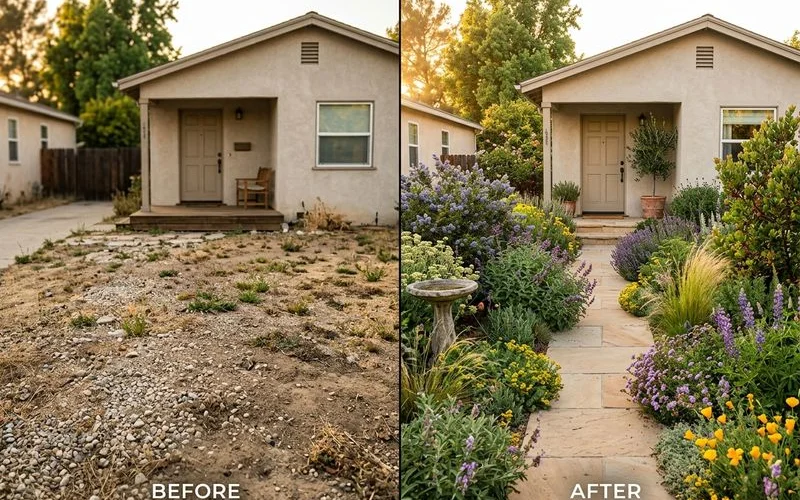
How professional drought design solves it
The real fix for a sparse yard happens well before the installation begins. A proper design strategy focuses heavily on long-term root development and accurate spatial planning.
We approach every residential project with a specific set of rules to guarantee full coverage.
- Plant for year-three density on day one. Proper spacing accounts for the mature spread of each species within 24 to 36 months. This prevents the awkward gaps that plague amateur installations.
- Repeat plants to build visual weight. Grouping three to seven of the same species creates a deliberate, structured appearance. Repeating these clusters throughout the design ties the whole space together.
- Layer evergreen structure with herbaceous plants. Shrubs like Toyon and Manzanita maintain their green structure straight through the winter. This backbone carries the design when summer favorites like California fuchsia naturally recede.
- Finish the matrix with functional groundcover. Mulch, decomposed granite, and natural boulders must act as a textural part of the design. Southern California rebate programs, like SoCal Water$mart, often require specific permeable groundcovers to qualify for funding.
- Install smart, zone-based drip irrigation. Single-point drip emitters force plants to form a tiny root ball, which leaves them vulnerable during intense heat. Using inline emitters spaced every six inches encourages a deep, wide root system.
- Plan for a staggered bloom schedule. Ceanothus flowers in early spring, Salvia pops in mid-summer, and native grasses add texture in the fall. A precise schedule ensures something is always catching the eye.
Our irrigation specialists find that upgrading to weather-based smart controllers saves an additional 15 to 30 percent on water usage. The technology adjusts automatically to local rainfall, keeping the landscape lush without wasting a single drop.
Aesthetic spectrum
Achieving drought landscape full coverage does not force you into a single, rigid style. The exact same water-wise plant palette can adapt to entirely different architectural aesthetics.
We frequently customize the look and feel of a yard by simply shifting the hardscape materials and the grouping style.
| Design Style | Best Fit For | Defining Plants & Features | Hardscape Elements |
|---|---|---|---|
| Naturalistic Foothill | Pasadena Craftsman & La Cañada hillsides | Mexican feather grass, loose massing | Gorilla hair mulch, natural boulders |
| Architectural Modern | Beverly Hills & Culver City properties | Agave specimens, sculptural massing | Permeable pavers, decomposed granite |
| Mediterranean Courtyard | San Marino & traditional homes | Clipped lavender, rosemary, citrus | Warm gravel paths, terracotta accents |
These distinct styles prove that saving water does not mean sacrificing your home’s unique character. A modern Beverly Hills property requires a sleek, structured layout, while a classic Craftsman demands a softer, free-flowing garden.
Our clients often ask about the timeline for these different designs to reach maturity. You can find a detailed, year-by-year expectation in this guide on how long a drought-tolerant landscape takes to fill in.
What a good drought yard looks like at year three
A mature, three-year-old drought yard features layered, vibrant foliage with plant-on-plant texture rather than an expanse of hot rock. Color remains present across every single season.
We aim for an aesthetic that feels like a highly curated garden instead of a dusty parking lot. When people ask us, “does drought tolerant landscaping look bad?” the answer is a resounding no, provided you plan for the future.
Replacing a thirsty lawn with a climate-adapted design can reduce outdoor water usage by up to 75 percent, effectively neutralizing recent utility rate increases.
That massive drop provides real financial relief, allowing a beautiful yard to actually pay for itself over time.
Our team applies this exact design discipline to Ridgeline’s drought-tolerant design service. The final result is a composed, dense, and year-round landscape that thrives in the California heat, so contact us today to schedule a site evaluation.
Frequently Asked Questions
Why do some drought yards look bare?
Can a drought yard have lawn-like color?
Is mulch required?
Have questions about a project of your own?
A free on-site consultation, a phased budget tier, and a master plan that fits your property and your goals.