California Native Plants for Los Angeles Yards
A landscape designer's curated list of California native plants for Los Angeles yards, with sun, water, and pairing notes for foothill and flatland lots.
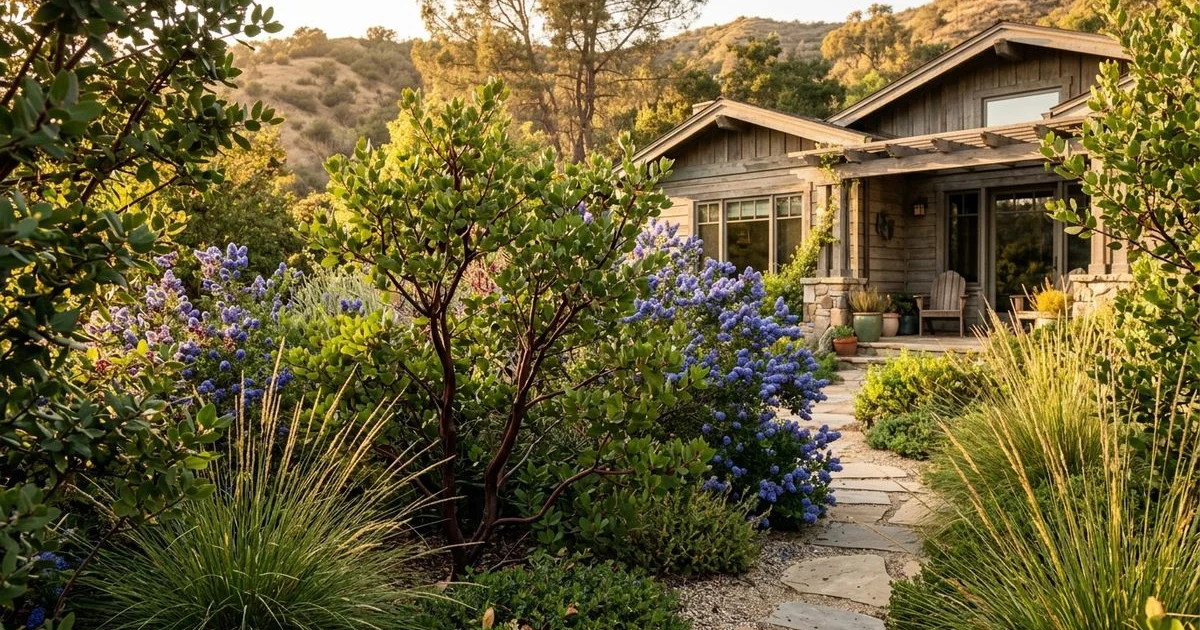
We constantly see homeowners battling to keep thirsty lawns alive during intense Southern California summers. That struggle is exactly why the California native plants Los Angeles yards rely on are rapidly becoming the new standard.
Our team utilizes these resilient species because they evolved with the exact wet-winter and dry-summer rhythm we experience here. They handle the direct heat without supplemental water once properly established.
We know they support local pollinators in a way no imported palette ever could.
This guide serves as a practical working plant list. We actually specify these exact species on Ridgeline projects across Pasadena, Glendale, La Cañada, San Marino, and the rest of our service area.
You will find them grouped by use case rather than alphabetically for easier planning.
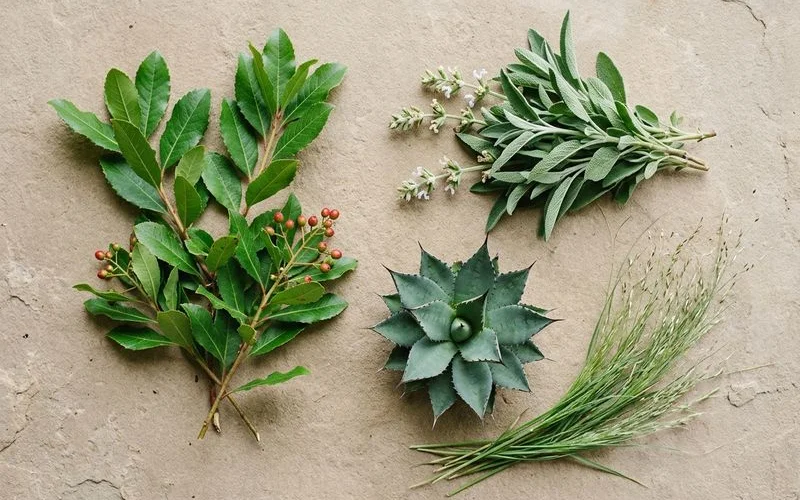
Structural shrubs (the bones of the design)
These large shrubs carry the visual weight of your yard and provide essential year-round structure. We use them as foundational anchors because they stay green even when smaller herbaceous plants recede during the winter months. Proper placement reduces the need for constant pruning.
Our preferred structural shrubs offer distinct benefits for Southern California climates. The following table breaks down the three core options for your foundation planting.
| Shrub Name | Botanical Name | Mature Size | Key Design Feature |
|---|---|---|---|
| Toyon | Heteromeles arbutifolia | 6 to 12 feet | Bright red winter berries |
| Manzanita | Arctostaphylos varieties | 2 to 8 feet | Smooth mahogany bark |
| California Lilac | Ceanothus varieties | 4 to 10 feet | Vibrant blue spring blooms |
We consider Toyon to be an absolute staple for privacy hedges. This full-sun evergreen is famously known as the “California holly” that originally gave Hollywood its name. It easily reaches 12 feet tall and produces bright red winter berries that attract flocks of Cedar Waxwings directly to your yard.
Our designers frequently select Manzanita for its striking architectural presence. You must choose the specific variety based on your desired mature size. Our team recommends the ‘Howard McMinn’ cultivar as a mid-sized option because it performs exceptionally well in the heavy clay soils common around Los Angeles. The ‘Pacific Mist’ variety stays low and functions beautifully as a sprawling groundcover.
We rely on Ceanothus for fast growth and stunning seasonal color. The ‘Concha’ variety thrives as a full-sun shrub and naturally adds nitrogen back into poor urban soils. Our landscape crews use the ‘Joyce Coulter’ cultivar when we need a dense cover for steep slopes.
Mid-layer accents
Mid-layer accents add seasonal color and varied textures to the spaces between your large foundational shrubs. We select these specific plants to draw in local wildlife and create visual interest at eye level. They require excellent drainage to perform their best.
Our installations always include these four reliable performers when sourcing the best CA native plants LA has to offer.
- White sage (Salvia apiana): This plant features highly fragrant, silvery foliage that acts as a magnet for native bumblebees. It requires a very dry environment and full sun exposure. You must plant it in fast-draining soil to prevent root rot during our heavy winter rainstorms.
- California fuchsia (Epilobium canum): These low-growing accents produce brilliant scarlet flowers in late summer when most other natives go dormant. We consider them absolutely critical for supporting local hummingbird populations.
- Cleveland sage (Salvia clevelandii ‘Allen Chickering’): This specific cultivar sends up highly fragrant blue flower spires. It thrives in full sun and requires very little supplemental water once established.
- Matilija poppy (Romneya coulteri): This dramatic plant produces massive white flowers that look like fried eggs and grow up to 6 feet tall. Our crews always give this species plenty of room because it spreads aggressively through underground rhizomes.
Grasses & sedges (texture and movement)
Grasses and sedges introduce essential movement and a softer texture to rigid hardscaping elements. We use them to fill empty gaps and create a cohesive meadow-like aesthetic. Their deep root systems also help improve water infiltration in compacted yards.
Our favorite selections provide year-round interest without the high maintenance of a traditional lawn.
- Deer grass (Muhlenbergia rigens): This mounding bunch grass produces beautiful golden plumes every fall. We rank it as the single best native grass for Los Angeles landscape design. It only needs one deep soaking per month once fully established.
- Blue oat grass (Helictotrichon sempervirens): This cool-season grass offers striking blue tones. It stays much smaller than deer grass and works perfectly in tight border spaces.
- Sedges (Carex pansa and Carex praegracilis): These species provide a lush, lawn-like coverage while maintaining a true native identity. Our clients love that this groundcover tolerates light foot traffic. Current data from the California Native Plant Society shows that replacing a standard lawn with native sedges can reduce irrigation needs by up to 75 percent.
Groundcover for California native plants Los Angeles gardens
Low-growing groundcovers suppress weeds and insulate the soil against extreme summer heat. We plant these spreading species to create a living mulch that locks moisture into the ground. Bare dirt is a missed opportunity in any drought-tolerant design.
Our top recommendations stay close to the earth and spread reliably.
- Yarrow (Achillea millefolium): This resilient plant features flat, fern-like foliage and broad summer flower clusters. You can easily mow it down to form a dense, walkable mat.
- California aster (Symphyotrichum chilense): This gentle spreader produces lovely lavender blooms late in the season. We frequently use it because it acts as a vital late-summer food source for native sweat bees.
- Sandhill sage (Artemisia pycnocephala): This silvery, mounding plant is incredibly tough against severe drought conditions. Our team advises keeping summer water entirely away from its foliage to prevent fungal issues.
Trees worth the room
Trees act as the primary cooling system for your property and define the overhead canopy. We incorporate them strategically to cast shade on the home and lower ambient yard temperatures. Studies show that a mature Coast Live Oak positioned correctly can reduce summer air conditioning costs by up to 20 percent.
Our planting plans typically feature one of these three iconic species.
- Coast live oak (Quercus agrifolia): This is the defining native canopy tree of the Los Angeles basin. We consider it a keystone species because it supports over 300 different local insect and animal species. It grows slowly but eventually creates a massive, iconic silhouette.
- California sycamore (Platanus racemosa): This fast-growing riparian tree features striking mottled bark and large, velvety leaves. It requires a larger water budget than an oak tree and thrives in lower-elevation drainage areas.
- Western redbud (Cercis occidentalis): This multi-trunk tree puts on a spectacular display of magenta spring flowers. Our landscape architects love using it as a focal point in smaller yards. It drops its leaves in the winter to allow warm sunlight to reach the house.
Foothill vs flatland selection notes
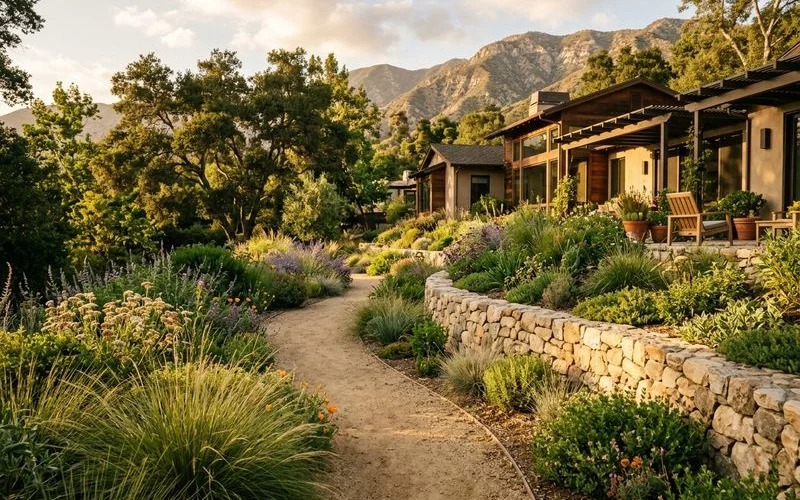
Your specific elevation and soil type dictate exactly which species will thrive on your property. We always adjust our plant palette based on whether a home sits up against the mountains or down in the basin. Soil drainage makes a massive difference in plant survival.
Our approach to foothill lots in La Cañada and Altadena leans heavily on rugged species. These sloped properties feature excellent drainage that perfectly supports the drought tolerant native plants Pasadena residents love. We frequently install these hillside favorites:
- Deep-rooting manzanita for slope stabilization and erosion control.
- Sprawling sage varieties to rapidly cover wide hillside areas.
- Sturdy deer grass to visually soften hard retaining walls.
Flatter, denser lots in the Beverly Hills Flats or Culver City often call for a slightly more refined and controlled palette. We typically pair structural toyon with Cleveland sage, deer grass, and low Mediterranean shrubs in these areas. The heavier clay soils found in the basin hold moisture much longer.
Our hillside clients face unique challenges with erosion control and seasonal runoff. For hillside-specific selection, please see our complete guide on hillside drought-tolerant design.
Pairing principles
Successful landscaping relies on deliberate groupings rather than random placement. We follow strict visual rules to ensure the yard looks intentional and cohesive. A scattered collection of individual plants always looks chaotic.
Our design process utilizes five fundamental rules for combining native species.
- Group in odd numbers: Plant in clusters of 3, 5, or 7 to establish strong visual weight. You should never scatter single specimens alone across a large space.
- Embrace repetition: Repeat core species across the entire design rather than collecting one of everything. We find that repeating colors and textures creates a calming, unified environment.
- Mix structures: Combine evergreen foundation shrubs with soft, herbaceous color accents like sage or fuchsia. This ensures the design reads clearly in every single season.
- Finish the surface: Complete the area around the planting with decomposed granite, organic mulch, and accent boulders. Our crews never leave bare soil exposed to the harsh sun.
- Practice strict hydrozoning: Group plants based entirely on their specific irrigation needs. We never place a thirsty sycamore tree on the same irrigation valve as a dry-loving white sage.
How a California native plants Los Angeles project becomes reality
Picking species off a list is the easy part of the transformation. We handle the detailed design work that turns a simple plant list into a thriving ecosystem. Professional placement, hydrozoning, soil amendment, irrigation routing, and proper phasing require serious planning.
Our goal is to build a yard that looks significantly better at year three than it does on day one. A major financial incentive makes this transition easier right now. As of early 2026, the LADWP turf replacement rebate offers residential customers up to $5 per square foot for replacing a thirsty lawn with sustainable landscaping.
We can help you maximize that $25,000 maximum residential rebate while completely transforming your property. That careful execution is the specific role of Ridgeline’s drought-tolerant design service. Contact us today to schedule your initial site consultation.
Frequently Asked Questions
What native plants survive full LA sun?
Do natives need any irrigation?
Can I mix natives with non-natives?
Have questions about a project of your own?
A free on-site consultation, a phased budget tier, and a master plan that fits your property and your goals.