What Is Drought-Tolerant Landscaping in California?
Drought-tolerant landscaping replaces thirsty lawn with hydrozoned California natives, Mediterranean shrubs, and decorative aggregates that thrive on a fraction of the water.
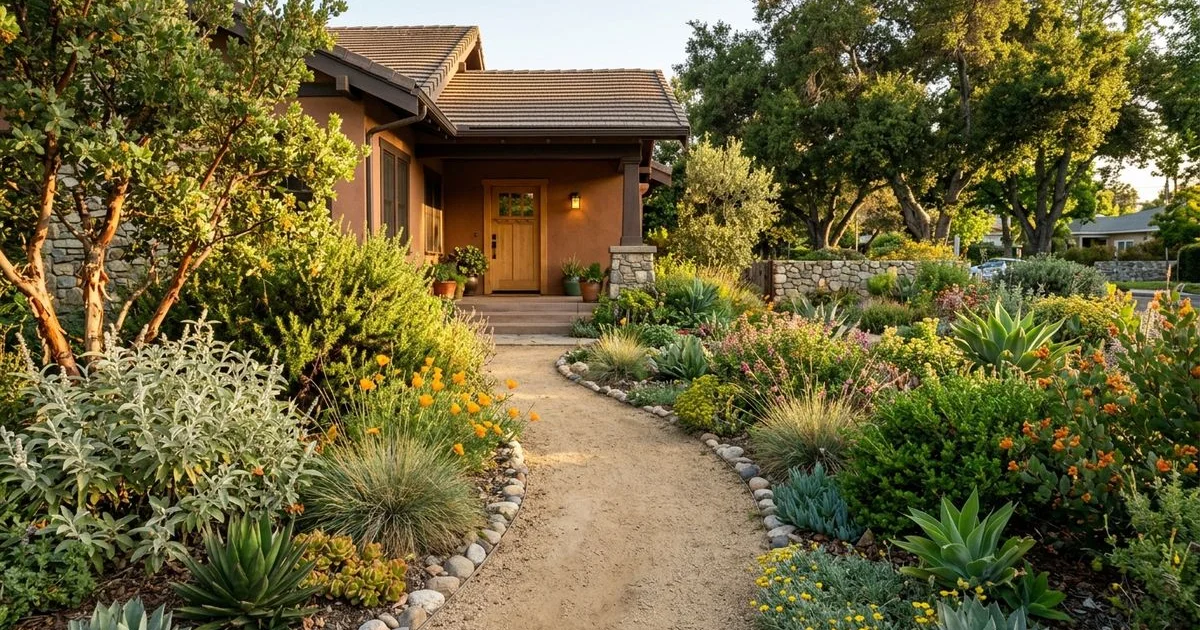
We hear the same frustration from homeowners across Southern California every summer. You want a yard that looks beautiful, but pouring thousands of gallons of water onto a thirsty lawn feels completely out of step with our local climate.
As the team at Ridgeline Outdoor Living, we founded this company with a simple mission to provide exceptional landscaping and hardscaping services you can truly rely on.
People frequently ask us exactly what is drought tolerant landscaping and how it actually functions. The answer is highly practical.
This design approach replaces water-heavy grass with native planting communities engineered specifically for a Mediterranean climate. Our crews use California natives, ornamental grasses, and decorative aggregates to create a lush space using a fraction of the water.
How drought design differs from a traditional lawn
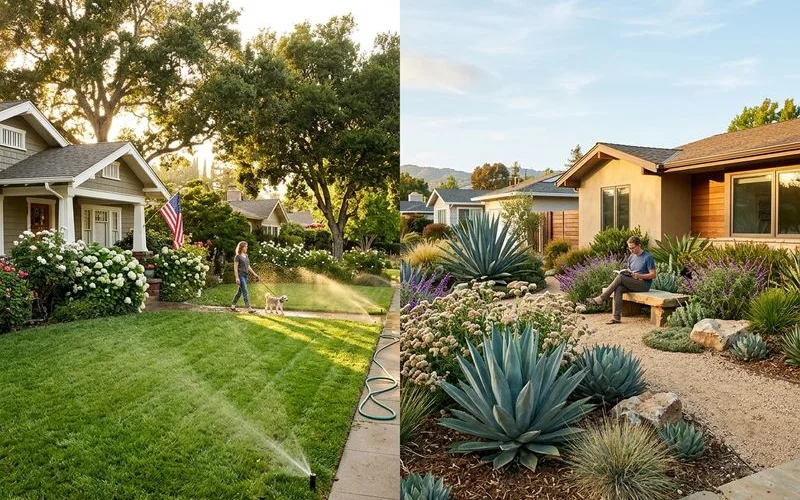
A traditional lawn is a single species of thirsty grass requiring constant overhead watering, while drought design uses a mixed community of deep-rooted plants requiring minimal drip irrigation. A standard cool-season grass yard is essentially a 1950s aesthetic kept on life support with heavy water input, regular mowing, and routine fertilizer.
We see a massive difference in water consumption between these two approaches. According to the EPA WaterSense program guidelines, replacing a traditional turf lawn with a water-wise landscape can reduce outdoor water use by up to 60 percent.
That translates to thousands of gallons saved each year for a typical Los Angeles property. Our clients often watch their outdoor water bills drop drastically after the second year of root establishment.
A yard that used to need an hour of overhead spray three times a week now runs on a few minutes of drip emitters per zone, twice a week or less.
| Feature | Traditional Lawn | Drought-Tolerant Design |
|---|---|---|
| Water Input | High (3x weekly overhead spray) | Low (1-2x weekly targeted drip) |
| Planting Style | Monoculture (1-2 grass species) | Mixed Community (shrubs, grasses, succulents) |
| Maintenance | Weekly mowing and regular synthetic fertilizer | Seasonal pruning and periodic organic mulch |
The plant categories you actually use
A proper drought-tolerant yard relies on a specific mix of California natives, Mediterranean shrubs, ornamental grasses, and structural succulents. These four groups mimic how natural dry-climate ecosystems arrange themselves to provide year-round color and texture.
We pull from these distinct planting groups to build a resilient, layered yard. A typical Ridgeline drought design includes:
- California natives: toyon, manzanita, ceanothus, white sage, deer grass, California fuchsia, and coast live oak.
- Mediterranean shrubs: rosemary, lavender, Mexican bush sage, and Russian sage.
- Ornamental grasses & sedges: deer grass, blue oat grass, and low-water sedges for green coverage.
- Succulents & agaves: used for sculptural punctuation in grouped clusters rather than straight lines.
Toyon, commonly known as California Holly, provides incredible red berries in the winter that attract local birds. Our landscape teams find that adding a thick three-inch layer of organic mulch around these specific plants reduces soil moisture evaporation by up to 70 percent.
Decorative boulders and decomposed granite pathways tie these plant groupings together visually. They also protect the underlying soil matrix during the crucial first year of root establishment.
Hydrozoning is the discipline
Hydrozoning is the essential practice of grouping plants with identical watering needs onto the same irrigation valve. This precise water management is the fundamental core of the drought tolerant landscaping definition.
We always map out these distinct zones before planting a single shrub. A native plant zone might only need a few minutes from a 0.9 gallon-per-hour drip emitter once a week.
Conversely, a slightly thirstier Mediterranean accent zone requires slightly longer watering cycles. To keep systems organized, we typically break yards into three distinct hydrozones:
- Very Low Water: Established California natives and large agaves receiving monthly or zero summer water.
- Low Water: Mediterranean shrubs and ornamental grasses needing brief weekly drip irrigation.
- Moderate Water: Accent plants or small fruit trees requiring bi-weekly targeted watering.
Putting a drought-adapted sage on the same valve as a water-loving fern is a guaranteed way to lose expensive plants. Over-watering actually kills significantly more native plants in Los Angeles than under-watering does.
Our installation crews avoid this common pitfall by separating plant types using dedicated smart irrigation controllers. Devices from brands like Rachio or Hunter adjust watering schedules automatically based on local weather data, saving an average of 20 to 50 percent more water than standard manual timers.
Aesthetic spectrum
Drought design is incredibly versatile, ranging from naturalistic foothill wildlands to sleek architectural spaces. The specific plant palette and hardscape materials dictate the final visual style, not the water requirements.
We adapt this flexible water wise landscape california approach to fit the exact architecture of your home. The aesthetic runs across several popular styles:
- Foothill Naturalistic: Perfect for Pasadena or La Cañada, utilizing heavy native groupings and natural stone boulders.
- Architectural Modern: Common in Beverly Hills and Culver City, featuring sharp lines, poured concrete pavers, and large structural agaves.
- Traditional Mediterranean: Ideal for San Marino courtyards, focusing on lavender, rosemary, and crushed gravel pathways.
For a detailed look at specific species, see California native plants for Los Angeles yards. For the head-to-head comparison with synthetic options, see drought landscape vs artificial turf.
Where this lives in a project
Drought-tolerant planting serves as the visual and ecological foundation for the vast majority of landscape projects we install. It integrates directly with solid surfaces, yard drainage solutions, and structural property walls.
We coordinate these softscape elements alongside larger construction phases to ensure a cohesive final product. Drought-tolerant landscaping pairs beautifully with hardscape, integrates perfectly with drainage, and stabilizes hillside lots alongside retaining walls.
Many Southern California residents miss out on substantial financial incentives for making this switch. Programs from the Metropolitan Water District (MWD) or the Los Angeles Department of Water and Power (LADWP) currently offer residential turf replacement rebates up to $5 per square foot.
To secure this funding, the city requires a specific approval process:
- Site Plan Approval: Submitting the proposed plant list and hydrozone map to the city before removing any grass.
- Pre-Inspection: Allowing the water district to verify the existing thirsty lawn is still in place.
- Post-Inspection: Confirming the new design uses approved permeable materials and required native plant coverage.
We run the design through these exact regional rebate criteria whenever a project involves replacing an existing lawn. This city funding can significantly offset the initial installation costs.
Bridging to the design service
Successfully creating a drought-tolerant space requires a comprehensive master plan before any planting begins. Species selection, precise hydrozoning, aggregate finishing, and irrigation engineering must all work together perfectly.
We view a water-wise yard as a strict design problem rather than just a simple planting task. That exact planning is the core work behind Ridgeline’s drought-tolerant landscape design service.
A professionally engineered yard will thrive and hold its visual structure at year three, rather than just looking good on installation day. Reach out to our design team today to evaluate your current lawn and start planning a smarter yard.
Frequently Asked Questions
How much water does drought-tolerant landscaping save?
Does drought-tolerant mean cactus only?
Will it look full year-round?
Have questions about a project of your own?
A free on-site consultation, a phased budget tier, and a master plan that fits your property and your goals.