Artificial Turf vs Sod vs Drought Landscape: Which Wins in LA?
Three-way comparison: artificial turf, real sod, and drought-tolerant landscape for LA yards. Cost, water, maintenance, heat, and look.
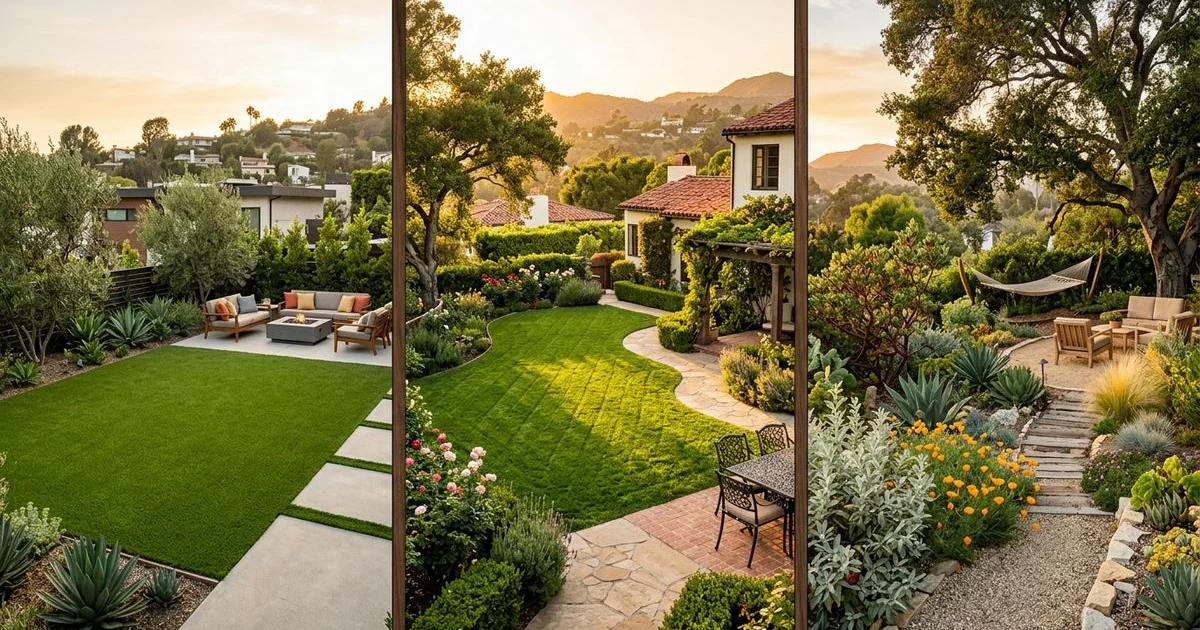
We hear the exact same dilemma from almost every homeowner looking for the best lawn replacement LA has to offer. The team at Ridgeline Outdoor Living was founded with a simple mission to provide exceptional landscaping and hardscaping services that customers can truly rely on. This commitment means we only recommend materials that actually work for your specific property.
The decision between artificial turf vs sod vs drought landscape usually comes down to your water bill, your weekend free time, and how you actually use your yard. Most people walk into a project already leaning one way.
Our goal is to make sure that lean is informed by real facts.
Let’s break down the actual costs, surface temperatures, and daily maintenance requirements for each option.
Quick decision matrix
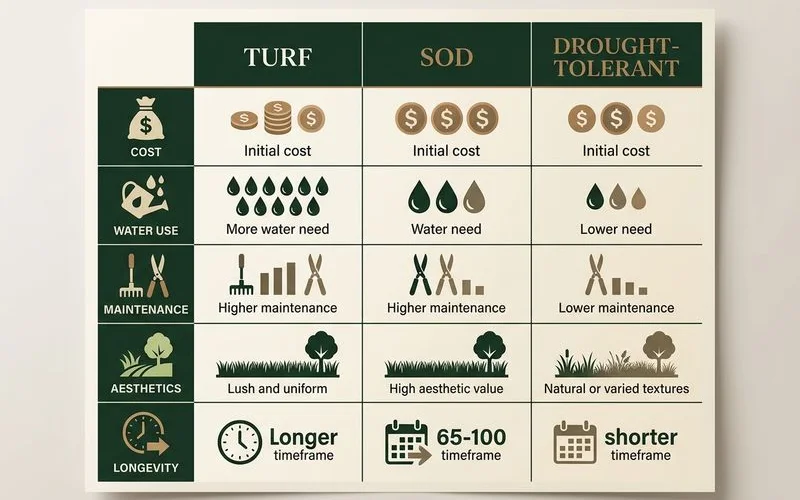
We created this matrix to give you the raw data right up front. The chart below compares the installation costs and performance metrics for a typical 1,000-square-foot Los Angeles yard.
| Dimension | Artificial Turf | Sod | Drought Landscape |
|---|---|---|---|
| Install cost (1,000 sq ft) | $10K to $18K | $1K to $3K | $4K to $10K |
| Water (year 3+) | None | High ($60 to $120/mo summer) | Low |
| Maintenance | Brushing, infill top-up | Weekly mow + fertilize | Seasonal pruning |
| Lifespan | 12 to 20 years | 8 to 15 years (often shorter in drought) | 15 to 40+ years |
| Surface temp (summer) | 130°F to 173°F | 75°F to 95°F | 80°F to 95°F (under canopy) |
| Pet friendliness | Excellent | Good with mud cycles | Poor |
| Pollinator value | None | Low | High |
| Rebate eligible | No | No | Yes (MWD/LADWP) |
Our team constantly tracks local utility rates to keep these figures accurate. A 2026 HomeGuide report shows California water bills are the highest in the nation, averaging over $77 per month. This expensive reality makes the sod vs turf vs xeriscape debate much easier to settle.
When each wins
We analyze dozens of specific site factors before making a final recommendation. Each material has distinct strengths and distinct weaknesses.
Artificial turf wins for…
Our landscaping crews recommend synthetic grass for homeowners who prioritize extreme durability and zero watering. Modern turf technology has improved drastically, making it a highly functional choice for very specific needs.
- Heavy dog yards (multiple dogs, daily use)
- High-traffic kid play surfaces
- Custom putting greens
- Deep-shade north-facing yards where most California native plants struggle
- Owners who want a predictable look year-round with zero water
We always warn clients about the heat factor associated with synthetic materials. A 2024 UC Cooperative Extension study by Janet Hartin found that artificial turf surface temperatures in Southern California can reach a blistering 173°F on summer afternoons. Plan for afternoon shade structures if kids or pets will use the area during peak heat.
Sod wins for…
We still install natural grass for clients who need a cool, soft surface for bare feet. Natural grass provides a massive cooling effect through a biological process called transpiration.
- Households dedicated to a traditional green aesthetic
- Limited budgets where a full drought conversion exceeds the upfront cash available
- Areas where pollinators or pet traffic both matter
- Properties not eligible for an LADWP rebate or where design constraints prevent a full xeriscape conversion
Our experience shows that traditional lawns are becoming harder to justify in Southern California. Los Angeles homeowners typically dedicate 30 to 60 percent of their total household water usage just to keep a lawn green. Upgrading to a smart irrigation controller with a weather sensor is a mandatory step to manage those rising utility costs if you choose natural grass.
Drought-tolerant landscape wins for…
We see drought-tolerant conversions as the smartest long-term investment for most Los Angeles properties. This approach replaces thirsty grass with native California plants and permeable hardscaping.
- Front yards prioritizing curb appeal and maximizing local rebate value
- Most LA properties without heavy daily play traffic
- Hillside lots that require deep-rooted plants for erosion control
- Households motivated by maximum water savings and environmental impact
- Year-round seasonal interest and rich pollinator habitat
Our clients are frequently surprised by the generous financial incentives available right now. The 2026 LADWP and SoCal Water$mart programs currently offer residential rebates of $5.00 per square foot for turf removal. A standard 1,500-square-foot lawn replacement can earn you $7,500 in cash back to radically offset your initial installation costs.
10-year cost ownership (1,500 sq ft)
We calculated the ten-year financial impact of each landscaping option to reveal the true cost of ownership. The initial price tag rarely tells the whole story.
| Option | Install (after rebate) | Water (10yr) | Maintenance (10yr) | Total |
|---|---|---|---|---|
| Sod | $3K | $9K | $4.5K | $16.5K |
| Premium artificial turf | $18K | $0 | $1K (brushing/infill) | $19K |
| Drought landscape | $22K (after $7.5K rebate) | $1K | $3K | $26K |
Our projections show that sod appears cheap initially but drains your wallet through endless water and maintenance bills. Artificial turf and drought-tolerant yards converge on total cost over a decade. The drought option costs slightly more to install upfront, but it provides a cooler surface and superior habitat value for local wildlife.
If you are still mapping out your project, our guide on artificial Turf Installation: Base Preparation and Process covers a related angle that pairs well with this topic.
The hybrid Ridgeline answer
Our favorite approach is a strategic mix of different surfaces to match exactly how you use your property. A surprising number of Los Angeles projects use all three options in distinct zones.
- Front yard: Drought-tolerant planting for maximum curb appeal and capturing the $5-per-square-foot LADWP rebate
- Back yard high-traffic: Artificial turf or a custom putting green for durable, mud-free play
- Back yard borders: Drought-resistant native shrubs framing the turf to provide shade and habitat
- Side yards: Small patches of natural sod if a cool green strip is necessary for pets
We design these hybrid spaces so the three surfaces complement each other perfectly. Proper layout ensures they cover the exact use cases each material handles best. For a deeper head-to-head comparison between the two low-water options, check out our guide on drought vs artificial turf.
We are ready to help you plan the perfect layout for your specific property. Contact our team today to schedule an on-site consultation and get a precise estimate for your yard.
Frequently Asked Questions
Which is cheapest over 10 years?
Which is best for dogs?
Which uses no water?
Have questions about a project of your own?
A free on-site consultation, a phased budget tier, and a master plan that fits your property and your goals.