How Long Does Artificial Turf Last in Los Angeles Sun?
Premium artificial turf lasts 12–20 years in LA sun. Here's how UV stabilization, infill, and warranty differences shape real lifespan.
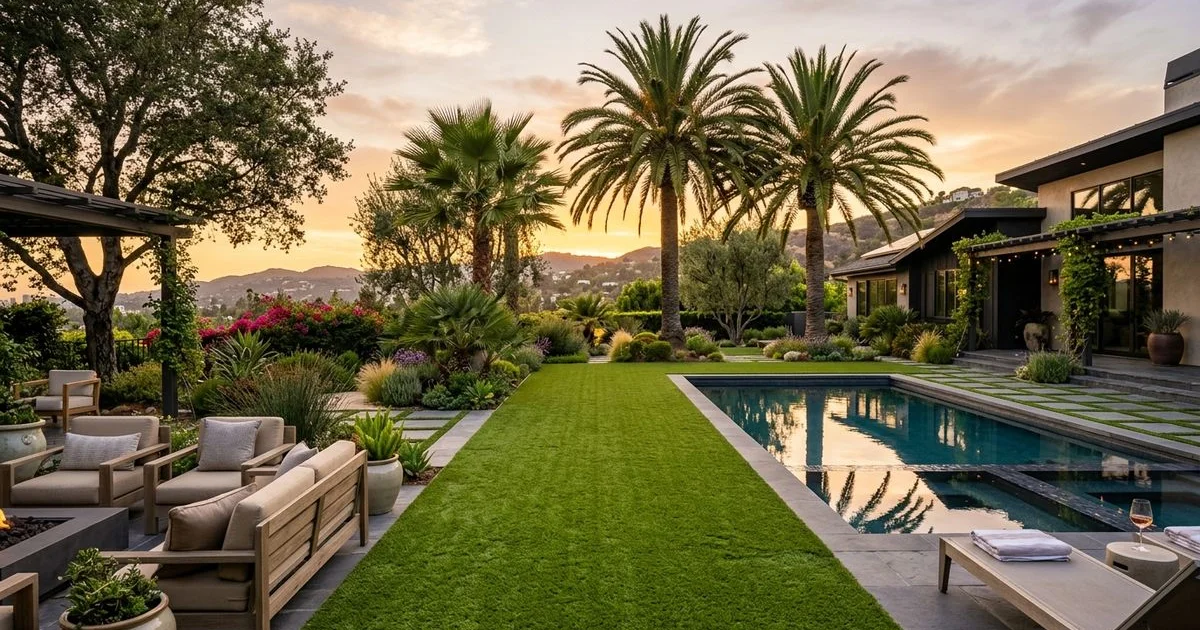
We regularly hear Los Angeles homeowners ask how long does artificial turf last when dealing with extreme local heat and rising water rates.
The honest lifespan answer for LA artificial turf is that a premium product on a properly built base lasts 12 to 20 years. That band is centered right around 15 years for most yards.
Cheaper product on a marginal base usually lasts 5 to 8 years. Our Ridgeline Outdoor Living team knows the difference is mostly UV stabilization and base discipline, not luck.
You will see exactly how UV rays affect fibers, what warranty levels actually mean, and how to protect your investment.
I will break down the main reasons turf ages and then walk through the exact maintenance steps a knowledgeable homeowner should follow.
What ages artificial turf
Several distinct environmental factors determine the exact lifespan of your synthetic grass in Southern California. We see that prolonged sun exposure, heavy foot traffic, and base instability are the primary culprits behind early turf failure. The Los Angeles sun is notoriously harsh on plastics, making proper material selection critical.
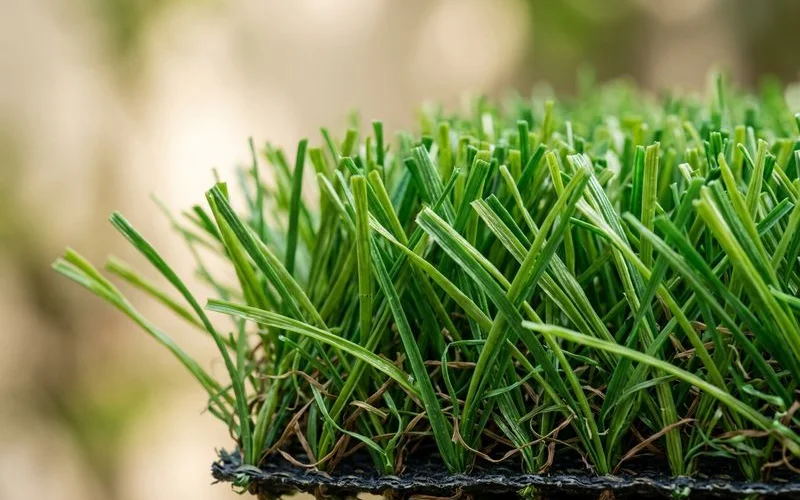
- UV degradation: Fiber polymers slowly break down under direct sunlight. UV stabilizers, specifically Hindered Amine Light Stabilizers (HALS), combat UV damage in artificial grass dramatically by neutralizing free radicals within the plastic. Product warranties directly track this UV-stabilization quality.
- Foot traffic and matting: Heavily walked areas mat down faster than perimeter sections. Brushing reverses this short-term, but eventually fibers tire. High-density products with a 60 to 80-ounce face weight resist this crushing force much longer.
- Infill loss: Infill is carried out by storms, leaves, dogs, or routine cleaning. Our crews recommend topping up with specialized products like HydroChill or ZeoLite to extend life and keep the surface cool.
- Heat events: Reflective surfaces from low-e windows can melt fibers locally. Vehicle exhaust, hot grills, and bbq drips also cause immediate damage.
- Base settling: A poorly compacted base shows as wavy turf within 12 to 24 months. We always use a 3 to 4-inch layer of Class II road base, compacted to 95 percent, because it prevents sinking and shortens functional life regardless of product warranty.
Warranty levels and what they mean
Artificial turf warranties primarily cover UV degradation and fiber integrity over a specific period. You can expect budget turf to carry an 8-year warranty, while premium landscaping turf boasts 15 to 20 years. Our experience shows that the length of the guarantee directly reflects the volume of HALS baked into the turf blades during manufacturing.
The following breakdown shows what to expect at each tier:
- 8-year UV warranty: This is a budget product. Plan on noticeable fade by year 6, with full replacement needed around year 10.
- 10 to 12-year UV warranty: This sits in the mid-tier. The color remains consistent through year 8, with mild fading showing after.
- 15-year UV warranty: This is the premium spec we use on most Ridgeline installs. It holds color and structure well into year 12 and beyond.
- 20-year warranty: These are specialty products. They feature higher nylon and polyethylene fiber blends and denser face weights.
Patterns of decline
A premium install in Pasadena or San Marino sun typically progresses through clear stages of visual and structural wear. We track these changes to help homeowners plan their maintenance schedules accurately. The intense heat domes common in California accelerate these timelines if the yard lacks shade.
| Year | What you’ll notice |
|---|---|
| 1-3 | Indistinguishable from new |
| 4-6 | Minor matting in high-traffic areas; brushable |
| 7-10 | Slight color fade in unshaded zones; infill top-up due |
| 11-15 | Visible fade in full sun areas; matting harder to brush out |
| 15+ | Replacement window |
Shaded north-facing yards age slower, while full-sun south-facing yards age faster. A putting green sees more brushing and weathering than a perimeter lawn. Our team finds that adjusting your expectations based on yard orientation saves a lot of frustration. Sun exposure dictates the maintenance schedule.
How to extend lifespan
Routine brushing, regular rinsing, and strategic infill top-ups are the most effective ways to maximize your turf lifespan in LA. We advise clients to treat their synthetic grass like a low-maintenance carpet rather than a zero-maintenance concrete slab. A little preventative care goes a very long way.
- Annual brush-up: Power brush the yard to stand fibers upright. This takes one afternoon and prevents permanent creasing.
- Top-up infill at year 5 to 7: This simple step restores blade stand-up and weight. We often suggest cooling infills like coated silica sand to combat 100-degree summer days.
- Rinse seasonally: This practice is particularly important for pet households. Flushing the system washes away dust and prevents ammonia odor buildup in the base.
- Address shade reflectivity: If you have low-e windows nearby, screen or angle the install away. The concentrated glare acts like a magnifying glass and causes heat damage.
- Keep hot bbq grease off the surface: Localized melting is a real problem. Always place a protective mat under grills.
If you are still mapping out your project, our guide on artificial Turf Installation: Base Preparation and Process covers a related angle that pairs well with this topic.
When to replace and how long does artificial turf last
A turf install should be replaced when fade and matting cross from needing maintenance to being structurally tired. We generally see this happen around year 12 to 15 on premium product, and year 7 to 10 on budget lines. The base typically survives multiple turf replacements, so only the surface gets refreshed.
California’s Assembly Bill 1572 phases out the watering of nonfunctional turf between 2027 and 2029. LADWP tier 3 and 4 water rates reached high penalty levels recently. Updating a tired synthetic lawn remains a highly cost-effective strategy to avoid steep water bills.
Our goal is to help you maintain a beautiful yard without draining your wallet. To truly maximize how long does artificial turf last, you must look at the quality of the installation. For the install discipline that makes premium product reach its warranty, see Ridgeline’s artificial turf installation service.
Frequently Asked Questions
Does turf fade in LA?
How often does infill need topping up?
What voids the warranty?
Have questions about a project of your own?
A free on-site consultation, a phased budget tier, and a master plan that fits your property and your goals.