Pergola Design for LA Homes (Materials, Roof Styles, Shade Strategies)
How to design a pergola for the LA climate — material choices, roof styles, shade strategies, attached vs free-standing, and integration with patios and kitchens.
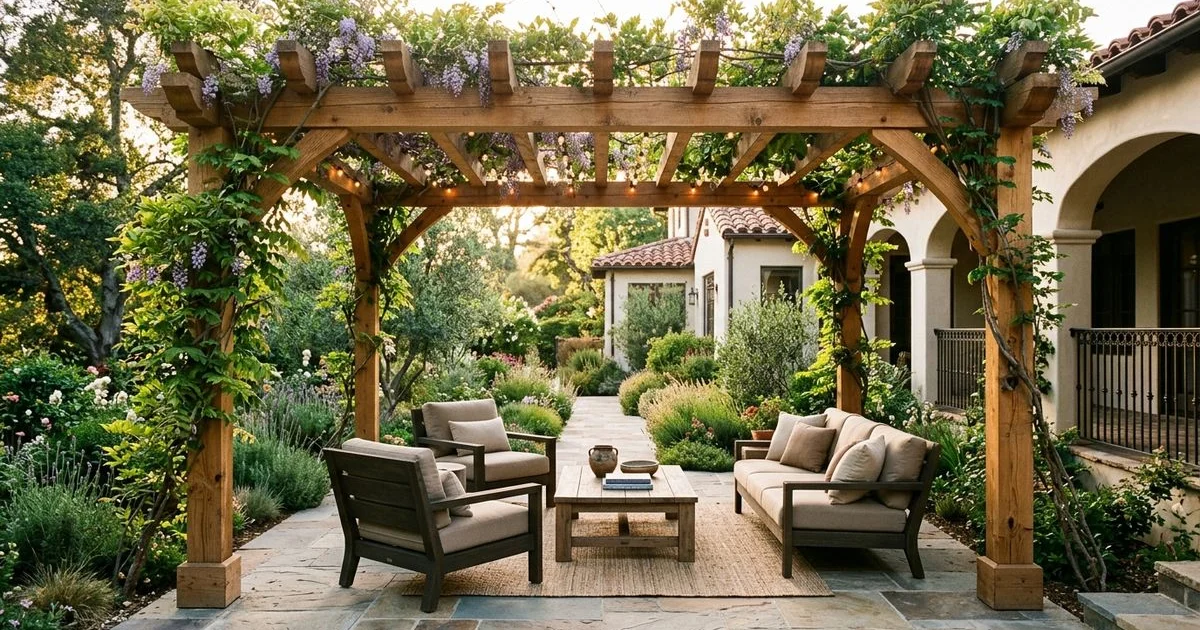
We see it all the time across the region. A beautiful, sun-drenched patio becomes completely unusable from April through October because of the intense heat. This happens when the outdoor living area lacks the right architectural shade.
Our team approaches every custom pergola Los Angeles project as the solution to reclaiming that wasted space. The ideal structure must respect your home’s architecture and provide the exact amount of cooling shade you need. It also needs to integrate smoothly with the surrounding hardscape and outdoor kitchen.
Our focus ensures these elements read as one cohesive environment.
Local permit rules and sizing guidelines dictate a lot of these choices. The following sections cover exactly how to plan a compliant, comfortable backyard retreat.
Materials
Our material selection process determines the longevity and cost of your pergola in the harsh Los Angeles climate. Wood brings classic warmth. Metals offer modern durability.
We often recommend Western Red Cedar or powder-coated steel for local projects. A smart choice balances upfront costs with long-term maintenance requirements. Finding the right fit depends heavily on your budget and aesthetic goals.
Cedar (most common residential pergola material)
Our preferred softwood choice is Western Red Cedar. This material costs roughly $35 to $55 per square foot. The natural resistance to pests and decay makes it highly desirable.
- Beautiful natural grain and color that fits most architectural styles.
- Weathers to silver-grey if untreated, but holds warm tones with stain.
- Durable and highly popular in LA’s dry climate.
- Easy to source in long, straight lumber.
Redwood
We source redwood directly from Northern California for its exceptional stability and rich color. This premium wood has a Janka hardness rating of 450, making it slightly stronger than cedar. Prices run higher, but the rot resistance is unmatched.
- Even more rot-resistant than cedar due to natural oils.
- Slightly more expensive and considered a regional premium option.
- Excellent aesthetic for traditional Craftsman homes.
- Less available in long beams than it used to be.
Pressure-treated pine
Our recommendation is to skip pressure-treated pine on premium projects. This budget-tier option requires significantly more maintenance to prevent cracking in the dry Southern California heat. The greenish tinge also persists until painted.
- Budget-tier choice.
- Greenish tinge until painted.
- Not all stains take well to the chemical treatment.
- Dries out rapidly in inland areas if not sealed properly.
Steel (galvanized or painted)
We utilize powder-coated steel for contemporary homes that require clean lines and massive spans. Steel pergolas typically cost $60 to $120 per square foot, but they can easily last over 50 years. They also comply perfectly with strict Wildland-Urban Interface fire codes in hillside neighborhoods.
- Cleaner modern lines.
- Much longer span capability.
- Allows more open structures.
- Higher cost, requiring welding and engineering.
Composite or aluminum kit pergolas
Our clients sometimes ask about pre-fab kits available from major manufacturers. These options offer a lower cost and faster install time. The downside is that they always look like kit pergolas and lack a custom feel.
- Pre-fab kits available from major manufacturers.
- Lower cost and faster install.
- Read as kit pergolas.
- Usually not the choice for premium custom work.
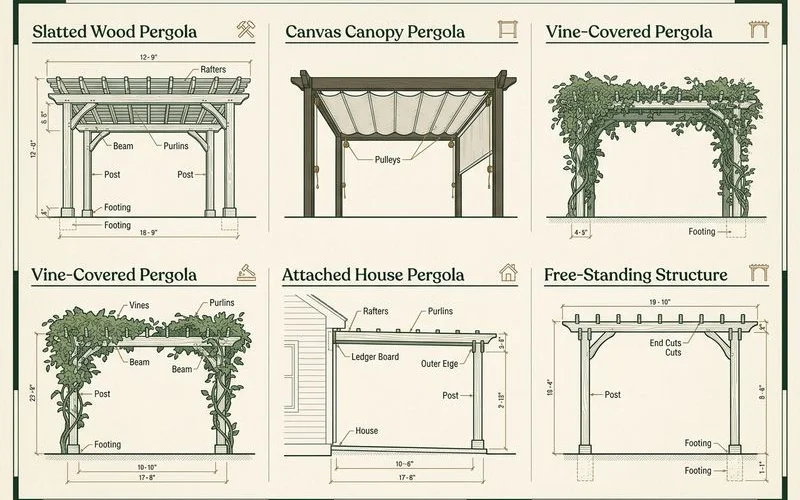
Roof styles
Our designs view the roof as the most critical factor during a Los Angeles heat wave. The canopy style determines exactly how much sun protection you receive. It also defines the structure’s architectural presence.
We plan roofs based on the orientation of your yard and your desired cooling level. A well-planned cover makes the difference between a comfortable retreat and a hot spot. Choosing the right style requires understanding how you plan to use the area.
Slat roof (most common)
Our go-to design for balancing airflow and shade is the classic slat roof. Wood slats spaced two to four inches apart provide 60 to 80 percent shade coverage. The exact cooling effect depends on the slat width and how they orient against the sun’s path.
- Wood slats spaced 2 to 4 inches apart.
- Oriented perpendicular to sun direction.
- Gives 60 to 80 percent shade depending on slat width.
- Architectural, breathable, and works with all materials.
Open lattice
We incorporate open lattice roofs for an elegant, traditional look. A crisscross pattern of thinner members creates a beautiful aesthetic. This style provides less sun protection, typically hovering around 40 to 60 percent shade.
Solid roof
Our team builds solid roofs using translucent polycarbonate panels to block 99 percent of UV rays while letting light in. This choice completely blocks the rain and creates a true outdoor room. The city views this as a patio cover, which triggers different building permit requirements.
Canvas canopy
We love installing retractable canvas canopies for ultimate flexibility. You get full shade when deployed and an open sky when retracted. This premium feature does require periodic fabric replacement due to intense sun exposure.
Living roof (climbing vines)
Our favorite drought-tolerant addition is a living roof draped in local vines. Beautiful options like Bougainvillea or Pandorea Bower Vine thrive in full sun with minimal water. These vines take two to three seasons to establish their colorful canopy over a slat structure.
- Bougainvillea provides vibrant magenta colors and withstands extreme drought.
- Pandorea Bower Vine offers lush foliage and elegant trumpet-shaped blooms.
- Takes 2 to 3 seasons to establish.
- Often combined with a slat structure for immediate shade.
Attached vs free-standing
We know that deciding between an attached or free-standing structure dictates your placement options. Los Angeles County building codes treat these two connection methods very differently. The permit requirements hinge entirely on this choice.
Our team always evaluates the local regulations before finalizing a patio layout. A structure physically connected to your house requires more engineering. Independent structures offer more flexibility and an easier approval process.
Attached
Our attached pergolas tie directly to the house using a structural ledger board. This visually integrates the new shade cover with your existing roofline. The Los Angeles Department of Building and Safety almost always requires a permit for this method because it modifies the primary structure.
Free-standing
We build free-standing options using independent posts and beams with no physical connection to the house. This allows for flexible siting in the center of a patio or a far garden corner. A freestanding structure under 120 square feet may qualify as a permit-exempt accessory structure if it has no electrical wiring.
Our most common Ridgeline approach features an attached pergola for the direct patio adjacent to the house. A free-standing unit then serves as a destination patio further out in the yard. This strategy creates multiple distinct entertaining zones.
Sizing for use
We use proper sizing to ensure your new shade structure accommodates your furniture layout and movement patterns. The dimensions also play a major role in whether you need a building permit. Local thresholds dictate exactly what is allowed without heavy engineering.
Our designers aim to keep small destination structures under the 120-square-foot mark to utilize safe harbor permit exemptions. Larger entertaining areas automatically require formal plan reviews. Designing the ideal footprint requires balancing your functional needs with these regulations.
| Use case | Typical size |
|---|---|
| Small dining (4 chairs) | 10’ × 10’ or 10’ × 12’ |
| Standard dining + lounge | 12’ × 14’ |
| Outdoor kitchen integration | 14’ × 18’+ |
| Multi-zone outdoor room | 16’ × 20’+ |
| Pool-side cabana | 16’ × 18’+ |
Our designs for outdoor kitchens with pergola overhead always feature generous overhead clearance for grill ventilation. Proper spacing prevents the slat or canopy material from dropping near the cooking zone. Safety codes dictate specific distances between open flames and combustible wood framing.
Integration with the rest of the project
Our experience as a leading pergola designer LA shows that a custom structure rarely stands alone in a high-end landscape design. The structure must coordinate directly with the ground surface, lighting, and surrounding greenery. Everything needs to function as one interconnected system.
Our project managers ensure the footings tie securely into the patio before laying pavers. Electrical conduits must run before the hardscape is finished. Proper planning prevents costly rework later in the build.
- Patio surface below: Paver patio, flagstone, or composite deck. Recent Los Angeles Low Impact Development ordinance updates encourage permeable pavers to capture rainwater.
- Lighting: Integrated string lighting along beams, downlights, and accent lights on dedicated 20-amp circuits.
- Outdoor kitchen: Often anchored under or adjacent to the pergola.
- Climbing plants: Integrated planting at posts for drought-tolerant living shade.
- Heaters and fans: Mounted to the pergola for shoulder-season use, requiring weatherproof electrical boxes.
- Drapes or screens: Fabric or rolling screens for privacy or wind blocking.
Our drafting process accounts for all these elements from the very beginning. Post anchors get sized correctly to support heavy hanging features like ceiling fans. Beam spans are engineered to handle both the weight of the wood and the necessary outdoor kitchen ventilation clearances.
What we typically design
We find that regional architecture heavily influences the materials and styles chosen for each specific neighborhood. Local microclimates also dictate whether a property needs solid rain protection or just basic sun filtering. The surrounding environment plays a massive role in the final aesthetic.
Our team matches the structural design to the historical context of the home. This creates a cohesive property that looks original and well-planned. A custom build always feels completely natural in its environment.
Our most requested Ridgeline designs across Los Angeles typically fall into two specific categories. These pairings match the right material to the specific neighborhood style. The features enhance both function and property value.
- Traditional Craftsman: Homes in Pasadena and San Marino usually get a cedar slat-roof. They feature integrated lighting and drought-tolerant Pandorea vines.
- Modern Contemporary: Properties in Beverly Hills or Culver City utilize powder-coated steel. These often incorporate motorized louvered roofs for $100 to $200 per square foot.
Our team provides comprehensive details on the build process and permit handling inside our guide to deck and pergola permits. The broader scope of these exterior renovations is covered on our decks and pergolas service page.
Proper planning makes all the difference in these backyard transformations.
We invite you to reach out for a site evaluation to discuss your pergola design Los Angeles today. Your perfect outdoor room is just a phone call away.
Frequently Asked Questions
Cedar vs steel vs vinyl pergola — which is best for LA?
Do I need permits for a pergola?
Can climbing vines really provide shade?
Have questions about a project of your own?
A free on-site consultation, a phased budget tier, and a master plan that fits your property and your goals.