Deck and Pergola Permits in LA: When You Need Them
When LA-area cities require permits for decks and pergolas, what the structural drawings cover, and how the project timeline includes permit lead time.
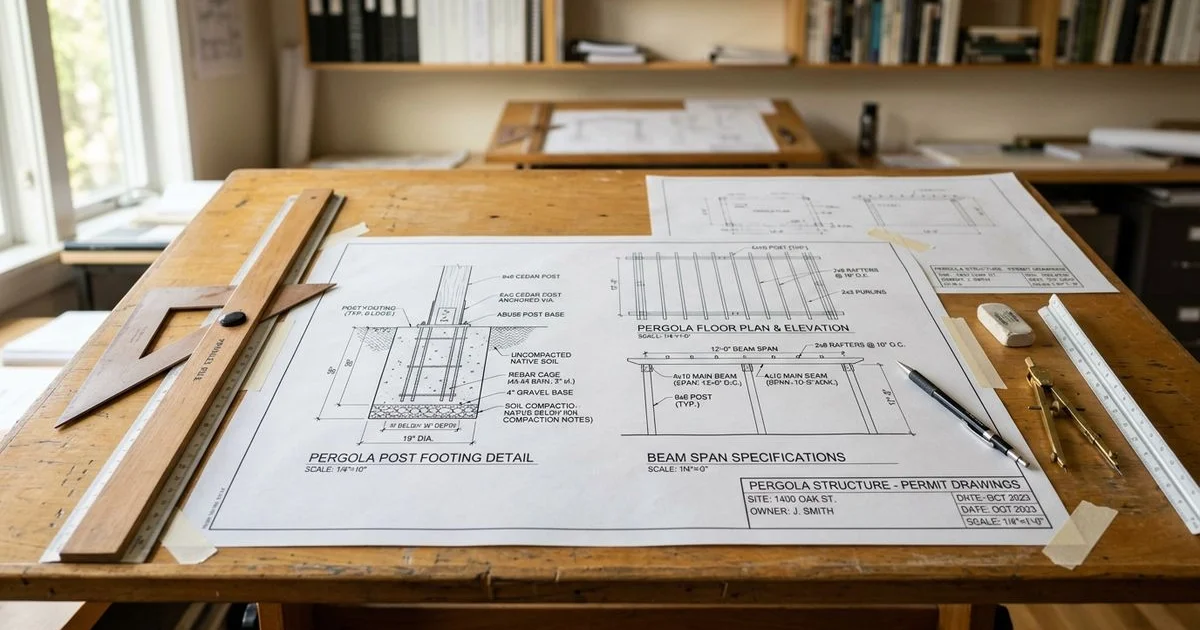
At Ridgeline Outdoor Living, our mission is to provide exceptional landscaping and hardscaping services that customers can truly rely on. Getting a deck permit los angeles or its surrounding cities often feels like entering a gray zone. We see a lot of confusion around which outdoor structures need official approval.
Some builds require full engineering, while others completely bypass the system.
Our team knows that ignoring these rules leads to red-tagged projects and major insurance issues later. The actual 2026 city guidelines offer a much clearer picture of what to expect. We are going to break down the specific thresholds for pergolas and decks to help you plan your drought-conscious backyard.
Let’s look at the data, see what inspectors actually check, and walk through a few practical ways to keep your project moving.
When a pergola needs a permit
A direct answer saves you time right away. You generally need a pergola permit la if the structure exceeds 120 square feet or attaches to your primary residence. We find that local building departments are particularly strict about covered structures in high-fire-hazard areas.
In most cities like Pasadena B&S, LADBS, and Beverly Hills, the basic rules look like this:
- Free-standing footprint under 120 sq ft: Usually exempt from building permits.
- Free-standing footprint over 120 sq ft: Requires full approval.
- Any attached pergola: Connecting a ledger board to your house structure triggers mandatory review.
- Wildland-Urban Interface (WUI) zones: Fire-hazard areas require specific non-combustible materials like thick-gauge aluminum.
- Electrical integrations: Adding lights or heaters automatically requires a separate electrical permit.
Our designers always verify these specific footprint thresholds during the initial site visit. Assuming a project is exempt can lead to costly tear-downs. We secure the correct documentation to protect your property value and keep your drought-tolerant landscape project on track.
When a deck needs a permit
Decks almost always cross the regulatory threshold faster than simple shade structures. Any platform built more than 30 inches above grade requires formal approval under the California Title 24 code. We manage these regulations daily across the entire region.
The statewide building standards code sets a strict baseline for these projects. You will need a deck permit pasadena, Glendale, or Los Angeles if your build hits any of these marks:
- Height over 30 inches: The most common trigger for mandatory review.
- Footprint exceeding 200 sq ft: Large platforms need structural validation.
- Attached to the home: Ledger connections alter the main house structure.
- Hillside conditions: Sloped properties require extensive soil testing and geological reports.
- Heavy load features: Supporting a hot tub requires engineered drawings and custom footings.
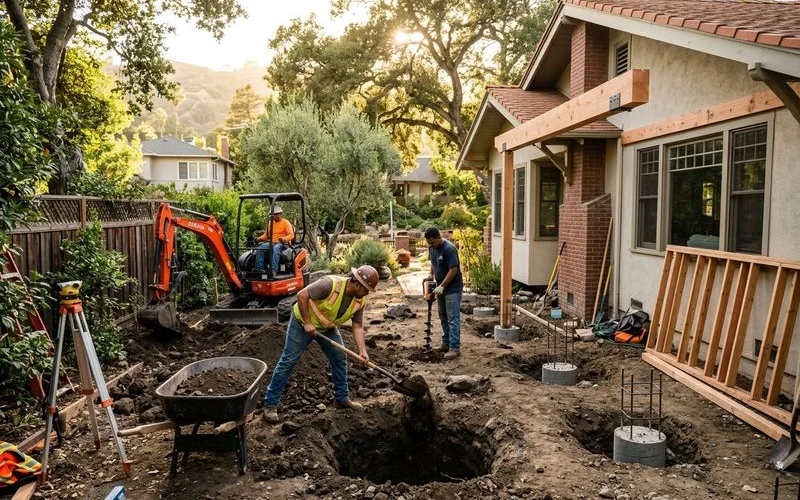
We ensure every deck design complies with local seismic and safety regulations. Building a lower platform under 30 inches is a great workaround if you want to skip the paperwork entirely.
What’s in a typical permit submittal
The application package must prove your new structure is safe and up to code. A standard submittal for a backyard deck or pergola requires several highly detailed documents. We assemble this entire packet to prevent delays at the city desk.
Here is what inspectors expect to see:
- Site plan: Details property lines, setbacks, and existing landscaping.
- Floor plan and elevation: Shows the precise dimensions and height limits.
- Structural drawings: Maps out post footings, beam spans, and connection hardware.
- Material specifications: Lists wood species, fire-retardant treatments, and fasteners.
- Engineered calculations: Required for taller builds, long spans, or steep hillside plots.
Our in-house design team prepares these pages for most standard residential shade structures. Complex hillside projects will require a licensed structural engineer to sign off. We work directly with structural engineers who typically charge between $500 and $5,000 to validate complex plans. Those specialized calculations are an essential investment in your property’s safety.
Plan-check timeline
Review times vary heavily based on municipal backlog and the complexity of your design. The Los Angeles Department of Building and Safety usually needs two to four weeks for a standard flat-lot application. We track these timelines closely to set realistic construction schedules.
Complex hillside builds can extend this process significantly due to mandatory geological reviews.
| City | Typical timeline |
|---|---|
| Pasadena B&S | 4 to 8 weeks |
| LADBS | 4 to 10 weeks |
| Glendale | 4 to 8 weeks |
| Beverly Hills | 6 to 10 weeks |
| San Marino | 4 to 8 weeks |
| Burbank | 4 to 8 weeks |
Our project managers know that these are numbers for perfectly clean applications. A single round of municipal revisions easily adds two to four weeks to the calendar. We aim to get it right the first time to keep your backyard transformation moving forward.
What permits cost
City fees are usually calculated based on the total project valuation. A standard residential deck application in Los Angeles typically runs between $200 and $800 according to recent city fee schedules. We factor these baseline municipality costs directly into your initial project budget.
Hillside structures involve grading fees and specialized inspections that push costs considerably higher.
- Basic city fees: $200 to $1,500 depending on location and size.
- Structural engineering: $100 to $250 per hour for site assessment and design.
- Complete plan sets: $1,500 to $5,000 for licensed stamps on complex builds.
- Hillside projects: Complex slope builds can see total approval costs exceed $20,000 due to soil testing.
Our team absorbs the administrative hassle of paying these fees and scheduling the drops. Transparency is a core part of our process from day one. We want you to understand every expense before a single board is cut.
Why DIY permit pulls usually go badly
Some property owners attempt to file the paperwork themselves to save a few dollars. The process requires a deep understanding of California building standards. We strongly advise against taking this on yourself.
Handling the building department involves significant technical hurdles:
- Structural translation: Plan-check comments require engineering knowledge to answer correctly.
- Logistical burdens: Scheduling inspectors eats up hours of your work day.
- Project delays: Failed inspections halt construction and leave your yard a mess.
- Insurance risks: Unpermitted or improperly documented structures cause major issues during a home sale.
Our comprehensive process removes this stress completely. The city desk and the construction crew talk to each other through a single project manager. We handle the bureaucratic red tape so you can focus on enjoying your new outdoor space.
What we handle
Managing the city desk is a massive headache that you simply do not need. For every mandatory deck or pergola project, our staff handles the entire bureaucratic lifecycle. We take full ownership of the compliance process from the first site visit to the final sign-off.
Here is exactly what happens behind the scenes:
- Confirm local zoning rules and property setbacks immediately.
- Prepare all required submission documents and architectural drawings.
- File the packets at the appropriate municipal desk.
- Address any technical plan-check comments from the city engineer.
- Pull the official paperwork to begin construction.
- Coordinate mandatory inspections at the footing, framing, and final stages.
- Close the official file completely upon project finish.
Our commitment to a smooth experience extends to every service we offer. The exact same rigorous process applies to our paver patio projects, our heavy-duty retaining walls, our custom outdoor kitchens, and our modern paver driveways. We manage the city inspectors so you do not have to.
If you are still mapping out your project, our guide on composite vs Wood Decking for LA Homes covers a related angle that pairs well with this topic.
Project timeline including permit lead time
Understanding the full timeline helps you plan your backyard events and landscaping upgrades. A typical flat-lot build takes about two to three months from contract signing to final occupancy. We run the approval process and material ordering in parallel to maximize efficiency.
Here is a realistic look at the schedule:
- Design and material selection: 2 to 3 weeks to finalize layouts and choose finishes.
- Submittal and plan check: 4 to 8 weeks for standard municipal review.
- Active construction: 2 to 4 weeks for simple shade structures, or 3 to 6 weeks for large decks.
- Final inspection: 1 week to walk the site and close the paperwork.
Our parallel scheduling strategy keeps your project from dragging out unnecessarily. Total project spans typically land right between 8 and 14 weeks. We focus on clear communication so you always know what phase your new outdoor living space is in.
Contact our design team today to schedule your site visit and start planning your perfect backyard.
Frequently Asked Questions
When does a pergola need a permit?
When does a deck need a permit?
How long does a deck or pergola permit take?
Have questions about a project of your own?
A free on-site consultation, a phased budget tier, and a master plan that fits your property and your goals.