Composite vs Wood Decking for LA Homes
Side-by-side comparison of composite and wood decking — install cost, maintenance, lifespan, aesthetics, and which wins in the LA climate.
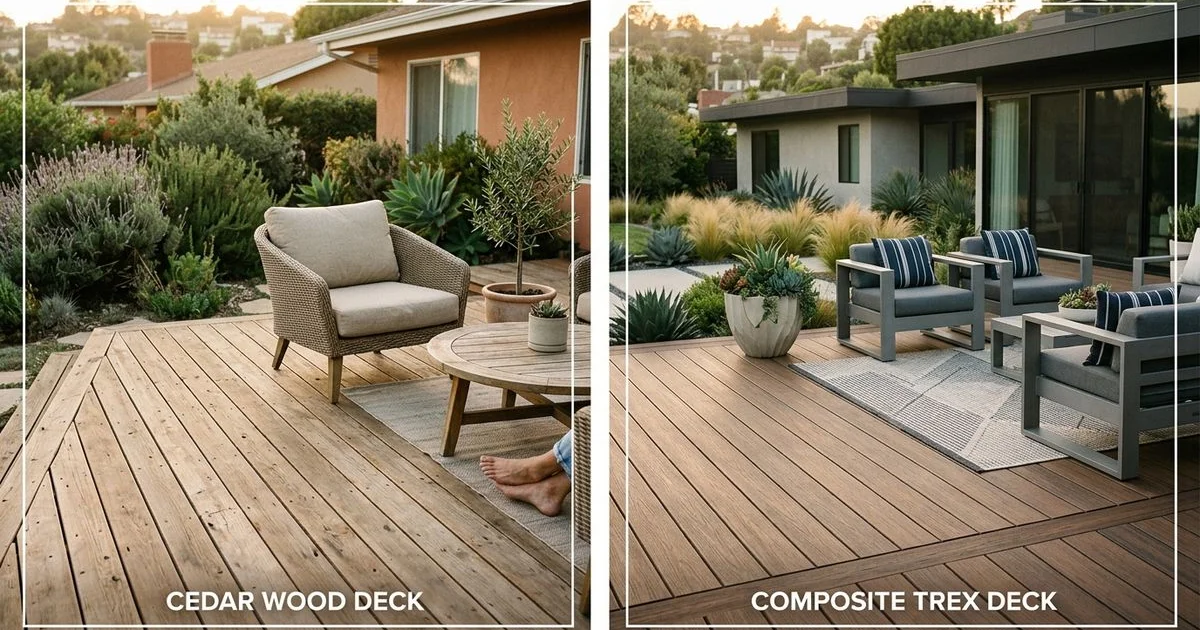
We often meet Southern California residents who feel torn between natural lumber and engineered boards. The composite vs wood decking choice often dictates how you spend your weekends and your water.
Both materials offer distinct advantages for drought-conscious homes. Our team at Ridgeline Outdoor Living typically recommends comparing the long-term water usage for cleaning against the initial material cost.
Let us look at the 2026 data to help you decide which option makes sense for your yard.
Quick comparison of composite vs wood decking
Choosing between cedar and engineered boards requires looking at the numbers. The table below outlines the basic differences in installation price and maintenance for the Los Angeles area.
Our 2026 local pricing data shows standard pressure-treated wood starting around $28 per square foot. Premium composite options now reach up to $90 per square foot for complex installations. You will quickly notice that the upfront savings of natural lumber disappear when factoring in yearly water usage and chemical sealants.
| Dimension | Wood (cedar/redwood) | Composite |
|---|---|---|
| Install cost | $28-50/sq ft | $50-90/sq ft |
| Lifespan | 20-30 years | 25-50 years (warranted) |
| Annual maintenance | Stain or seal every 2-3 years | Softwash; minimal otherwise |
| Aesthetic | Natural grain, weathers beautifully | Consistent, lower variation |
| Heat in full sun | Cooler than dark composite | Hotter, except specialized lines |
| Splinter / rot risk | Low if maintained | None |
| Color fade | Yes (silvers naturally without stain) | Minimal |
| Sustainability | Renewable, recyclable | 95% recycled plastics |
Wood: pros and cons
Natural lumber offers a timeless aesthetic that stays relatively cool under the hot California sun. The main drawback is the regular maintenance required to prevent rot and UV damage.
Our crews appreciate working with real wood because of its natural workability and classic appearance. These materials demand a commitment to regular upkeep. You must balance the beautiful aesthetic against the ongoing need for protective sealants.
Cedar
Cedar provides an excellent balance of natural rot resistance and straightforward installation. This softwood is lighter than other options and accepts UV-blocking stains exceptionally well.
- Beautiful natural color and grain pattern
- Naturally rot-resistant due to specific oils
- Weathers to silver-grey if untreated
- Lighter than redwood, making it easier to install
- Widely available at most local lumber yards
We highly recommend applying a penetrating oil like Penofin every two years. This specific step prevents the dry California heat from splitting the boards.
Redwood
Redwood boasts an even higher resistance to decay than cedar. It naturally carries a Class B fire rating under the ASTM E-84 standards.
- Exceptionally resistant to insects and moisture
- Naturally WUI-compliant for fire-prone areas
- Slightly higher cost than standard cedar
- Less available in long boards than in previous decades
Our clients who live near canyon brush often choose redwood for its innate fire resistance. The dense grain structure provides an extra layer of safety.
Pressure-treated pine
Pressure-treated pine represents the most budget-friendly wood option available. The chemical treatment process gives the wood a slightly green tint that requires opaque stain or paint.
- Cheapest option on the market today
- Prone to warping in dry heat
- Requires the most rigorous sealing schedule
- Less common on premium residential projects
We rarely suggest pressure-treated pine for high-end backyard entertaining spaces. You should reserve this material for structural framing or hidden retaining walls.
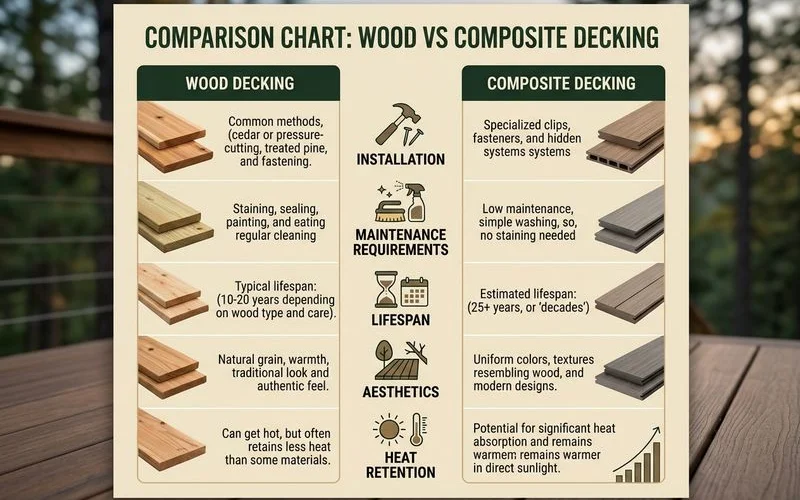
Wood maintenance reality
Maintaining natural lumber in a drought-prone state requires strategic planning. You will need to clean and seal the surface every two to three years to prevent rapid aging.
Our maintenance teams suggest avoiding traditional high-pressure washing. Standard power washing uses massive amounts of water and can strip the soft fibers right out of the boards.
- Clean the surface using eco-friendly soap
- Apply UV-blocking oil like Messmer’s every 2-3 years
- Sand any splintering edges as they weather
- Replace individual planks if rot develops
You can switch to a softwash method to save water. Softwashing uses up to 70% less water than traditional pressure washing and complies with local drought ordinances. The sealing cycle usually takes a single weekend but remains a permanent requirement.
Composite: pros and cons
Modern composite decking offers a virtually maintenance-free surface that lasts for decades. Premium options from brands like Trex and Fiberon resist fading and never require sanding or staining.
Our San Fernando Valley projects frequently feature engineered boards because they align perfectly with water conservation goals. Early generations of these plastics suffered from mold and severe fading. Current premium lines like Trex Transcend and TimberTech Advanced PVC hold up beautifully in harsh environments.
- Consistent appearance with zero annual staining
- 25 to 50-year manufacturer warranties
- Strong color retention despite heavy sun exposure
- No splinters and completely rot-proof
- Highly resistant to mold and stubborn stains
The main disadvantage involves the higher initial installation price. These boards cost about 30 to 50% more upfront than standard cedar. They also retain more heat in direct sunlight and lack the organic patina of aged lumber. Repairing a deep scratch is difficult because you cannot easily match the color of a single replacement board.
LA-specific considerations
Building a deck in Southern California means planning for intense sun exposure, strict fire codes, and ongoing drought conditions. You must select materials that can handle these specific regional extremes.
Our designs always prioritize heat management and water conservation. The right choice will save you significant frustration during the hottest months of the year.
Heat
When evaluating trex vs wood for heat retention, surface temperature matters more in Los Angeles than in cooler climates. Standard dark composite boards can hit temperatures of 150°F on a summer afternoon.
We actively guide clients to newer heat-mitigating technologies. For example, the Trex Lineage collection uses SunComfortable technology to reflect solar rays.
This specific product line stays up to 35 degrees cooler than traditional composite options, making it a critical upgrade for full-sun backyards.
If your space lacks shade and gets barefoot traffic, you should select these specialized boards or stick with lighter natural wood.
Drought / sun aging
Both material types handle high UV levels reasonably well in their premium tiers. Composite decking offers a significant advantage for homeowners tracking their household water footprint.
Our maintenance calculations show that scrubbing an engineered deck requires just a bucket of soapy water, whereas cleaning a wood deck requires a hose running for hours.
Uncapped plastics fade in three to five years under the glaring sun. Cheap pine warps quickly in the dry heat. You must invest in the premium tier of either material to ensure longevity in this climate.
Hillside lots
Building near the foothills requires strict adherence to Chapter 7A of the California Building Code. Your decking material must be approved for the Wildland-Urban Interface.
Our engineers routinely handle these fire safety requirements for hillside decks. These structures are common in La Cañada and the Glendale foothills. The underlying framing structure dictates the engineering demands, but the surface boards must pass CalFire ignition tests. You can confidently choose Class A rated PVC boards or Class B rated Redwood to meet these legal requirements.
Cost ownership over 20 years
Calculating the true cost of a composite vs cedar deck requires looking ahead two decades. The ongoing expense of maintaining lumber eventually surpasses the high initial price of engineered boards.
Our project managers recently priced out a standard 400 square foot deck for the 2026 season. Wood demands constant financial attention while plastics require almost zero follow-up funding.
- Cedar with proper maintenance: $14,000 install + $200 stain × 8 cycles = $15,600 total
- Premium composite: $22,000 install + minimal maintenance = $22,000 total
- Cedar without maintenance: $14,000 + likely $4,500 board replacements over 20 years = $18,500
- Pressure-treated pine: $10,000 install + full replacement at year 12 = ~$23,000
Cedar maintained correctly serves as the smartest value play for budget-conscious families. Composite serves as the ultimate convenience play for busy professionals. Both options remain legitimate choices for modern properties.
What we typically design
Around 60% of our deck and pergola projects go with cedar. The warmth of the natural look and the immediate value all stack up favorably for most families.
Our remaining 40% of clients opt for engineered materials. Homeowners who want a specific modern aesthetic or a completely hands-off lifestyle strongly prefer the consistency of manufactured boards.
Real estate data shows that a well-built outdoor living space recoups roughly 70% of its cost at resale. You add genuine property value regardless of where you land on the composite vs wood decking debate. For permit-side considerations, check our guide to deck and pergola permits in LA.
Frequently Asked Questions
Is composite cheaper than wood?
Does composite get hot in LA sun?
Which lasts longer?
Have questions about a project of your own?
A free on-site consultation, a phased budget tier, and a master plan that fits your property and your goals.