DIY Drainage Fixes vs Hiring a Contractor: When to Call In a Pro
What DIY drainage can fix vs when grade or sub-surface work needs a contractor. Permits, foundation risk, and the cost of repeated DIY failure.
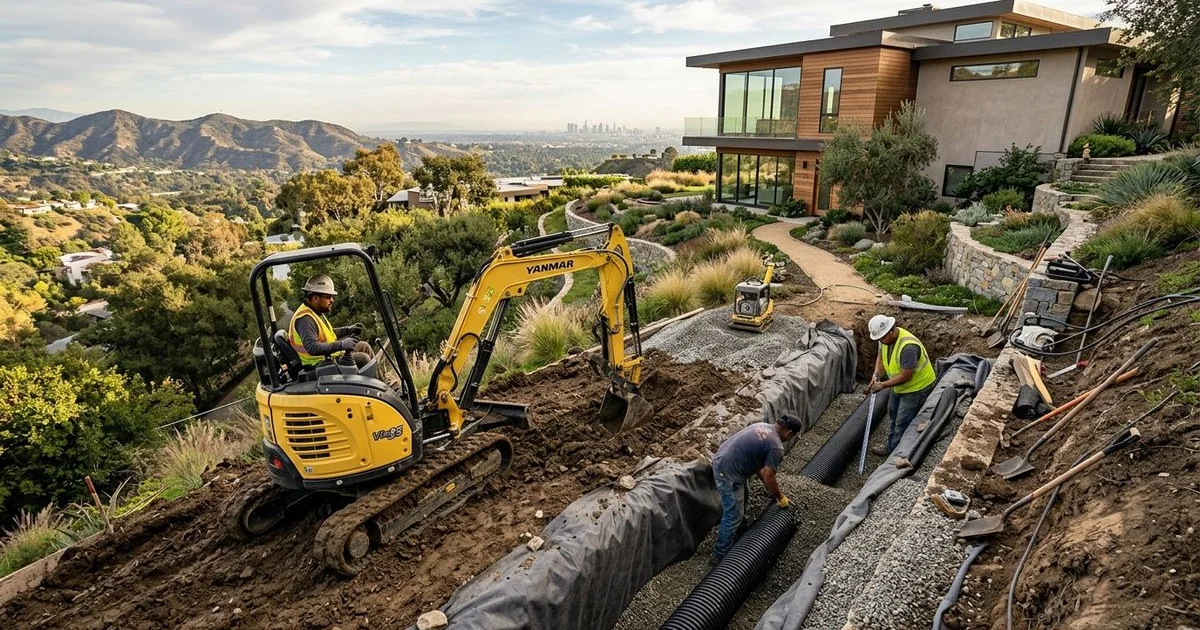
We see a lot of drought-conscious homeowners wanting to capture every drop of rain. Getting the diy yard drainage vs contractor decision wrong can turn a good intention into an expensive flood.
The team at Ridgeline Outdoor Living has spent years helping clients manage this exact balance. A simple mistake often leads to chasing the same flooding problem twice.
We are going to break down exactly when you should try a DIY fix and when you need to call a professional.
This guide will walk through the data, the true costs, and a few practical ways to respond.
What DIY can reasonably fix
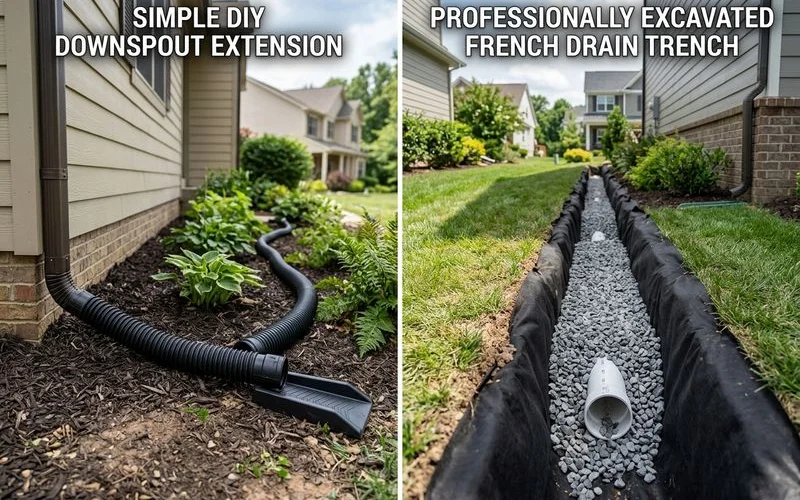
You can reasonably fix minor, localized pooling issues with basic DIY weekend projects. Simple solutions like extending downspouts or cleaning gutters often resolve surface water problems quickly.
We recommend tackling these small jobs yourself to save money and protect your foundation. The materials are cheap, and the labor is manageable for most homeowners.
A quick checklist of appropriate weekend jobs works for most properties:
- Downspout extensions. Adding a 4 to 6-foot extension moves water safely away from the foundation. The International Residential Code requires a minimum 5-foot distance, but extending out 8 to 10 feet is ideal for long-term protection.
- Mulch grading around individual planting beds. Topping up mulch and reshaping bed contours by hand directs surface flow efficiently. This is especially helpful for drought-tolerant plant roots.
- Gutter and area-drain cleaning. Inspecting and clearing existing infrastructure prevents immediate overflow.
- Surface swales for short runs. A shallow grass-lined channel moves water across a flat yard easily. You can shape these gently sloping channels by hand.
- Splash blocks and rain barrels. Catching and diverting downspout discharge saves water for dry spells.
If the flooding is caused by an obvious local problem like a clogged area drain, DIY may genuinely solve it. A $30 downspout extension kit from a local home center is a highly effective first step.
We always suggest trying these affordable fixes before exploring larger renovations.
When grade or sub-surface work is required
Major regrading, deep trenching, or installing sub-surface drainage systems requires professional equipment and precise slope calculations. You must know when to hire drainage contractor teams when water issues involve more than a small puddle.
We find that attempting large earth-moving projects by hand usually leads to ineffective results. A professional laser level and a mini-excavator are essential for these complex jobs.
Years of experience show that drainage work moves quickly into contractor territory in several specific scenarios:
- Re-grading more than a small area. Equipment and slope discipline are hard to replicate by hand. Experts recommend a minimum slope of 6 inches over the first 10 feet away from your foundation.
- Trenching for a diy french drain feeding a dry well. Trench depth and geotextile installation are error-prone in practice. A professional French drain costs about $10 to $65 per linear foot, which ensures proper gravel volume and slope.
- Sub-foundation drainage. Excavation near a foundation carries serious structural risk. Sized systems require engineering to prevent collapsing your footings.
- Hillside drainage retrofits. Slope grading and sub-surface drainage behind walls demand engineered solutions.
- Discharge to the city right-of-way. Sending water into public streets almost always triggers strict permitting rules.
- Drainage tied to hardscape. Projects involving retaining walls, paver patios, or heavy stone require coordinated structural work.
You should never guess on pipe angles when handling large volumes of water. Proper subsurface pipes must maintain a consistent 1/4-inch drop per foot to keep silt suspended and prevent clogs.
We strongly advise leaving this math to experienced landscape professionals.
Permit considerations
Drainage permits are required when you move large volumes of soil or alter water flow across property lines. Most local building departments mandate official approval for cuts or fills exceeding 50 cubic yards of dirt.
Our team handles these complex municipal paperwork requirements as a standard part of every project scope. Ignoring local codes without a professional can result in heavy fines or forced project removals.
Several common situations automatically trigger permit requirements:
- Sized retention or dry-well systems on lots that exceed municipal 500-gallon stormwater thresholds.
- Grading work that touches setback lines or property boundaries.
- Earth movement exceeding 50 cubic yards or cuts deeper than 3 feet.
- Discharge to the public right-of-way, which requires specific curb-cut paperwork.
- Drainage tied to hardscape projects that already mandate building permits.
Cities across the US enforce specific stormwater handling requirements to protect municipal infrastructure. Pasadena, Los Angeles, and other regional building desks enforce these rules strictly.
We submit engineered drawings to ensure your yard modifications meet all legal and environmental standards.
Foundation and hillside risk
Improper water management near your home can cause catastrophic structural failure and expensive foundation repairs. Saturated clay soils expand dramatically and exert massive hydrostatic pressure against your below-grade walls.
Our foundation specialists often see damage that could have been prevented with a simple surface drain. Average foundation repair costs in 2026 sit around $5,100, but major structural stabilization easily exceeds $15,000.
The most severe property risks divide into two specific categories:
Foundation Risks
Concentrated discharge near a foundation saturates footings and accelerates slab edge corrosion. A poorly placed dry well or a misdirected swale contributes heavily to soil expansion.
We know that wet clay can expand by up to 10 percent, putting tremendous stress on concrete supports. Sustained wetting for more than 24 to 48 hours is a genuine threat to your home stability.
Hillside Risks
Concentrated discharge onto a slope triggers aggressive erosion and deep soil saturation. In extreme cases, poor water management causes the complete failure of a hillside above or below your property.
Our crews install engineered hillside drainage in La Cañada, Glendale, and the surrounding foothills. You should never attempt to hand-trench steep slopes because the risk of a mudslide is simply too high.
The cost of repeated DIY failure
A failed DIY drainage fix usually costs twice as much in the long run because you have to pay for the initial materials and then the professional correction. Homeowners frequently spend $500 on rented equipment and gravel before realizing the water simply moved to a new problematic spot.
We frequently get calls to rescue these partial fixes after patio damage or plant losses have already occurred. The honest math for non-trivial drainage problems strongly favors hiring an expert from day one.
A quick comparison highlights the real differences in approach:
| Factor | DIY Drainage Repair | Professional Contractor |
|---|---|---|
| Average Cost (2026) | $200 to $700 | $3,000 to $5,100 |
| Typical Lifespan | 1 to 3 years | 10+ years |
| Slope Precision | Guesswork or simple string levels | Laser transit targeting 1 to 2 percent grade |
| Permit Handling | Homeowner assumes all legal risk | Contractor manages all compliance |
You will likely encounter foundation moisture or ruined landscaping by the time a second DIY attempt fails. One professional fix sized to your actual lot conditions protects your property permanently.
We always engineer our systems to handle severe storm surges efficiently.
If you are still mapping out your project, our guide on causes of Yard Flooding and Standing Water in LA Homes covers a related angle that pairs well with this topic.
When to call
You should try a DIY fix first if the flooding is a single localized problem with an obvious cause like a short downspout. This approach works often enough to be worth a quick weekend attempt.
We recommend calling a professional immediately if the water pools near your foundation or spans across a widespread area. The diy yard drainage vs contractor debate ends quickly when persistent moisture threatens a hillside.
Here are the key signs that it is time to call a contractor:
- Water stands for more than 24 hours after rain.
- Foundation cracks appear alongside pooling water.
- Previous DIY attempts failed to redirect the flow.
Please schedule a yard drainage consultation today to protect your property from serious water damage. A proper assessment will save you from making expensive mistakes.
We are ready to design a reliable solution that keeps your home dry and secure.
Frequently Asked Questions
Can I DIY a French drain?
When does a drainage project need a permit?
What's the risk of a bad install?
Have questions about a project of your own?
A free on-site consultation, a phased budget tier, and a master plan that fits your property and your goals.