Causes of Yard Flooding and Standing Water in LA Homes
The top causes of yard flooding in LA homes — grade issues, clay soils, downspout discharge, hardscape runoff, hillside concentration — and when DIY won't fix it.
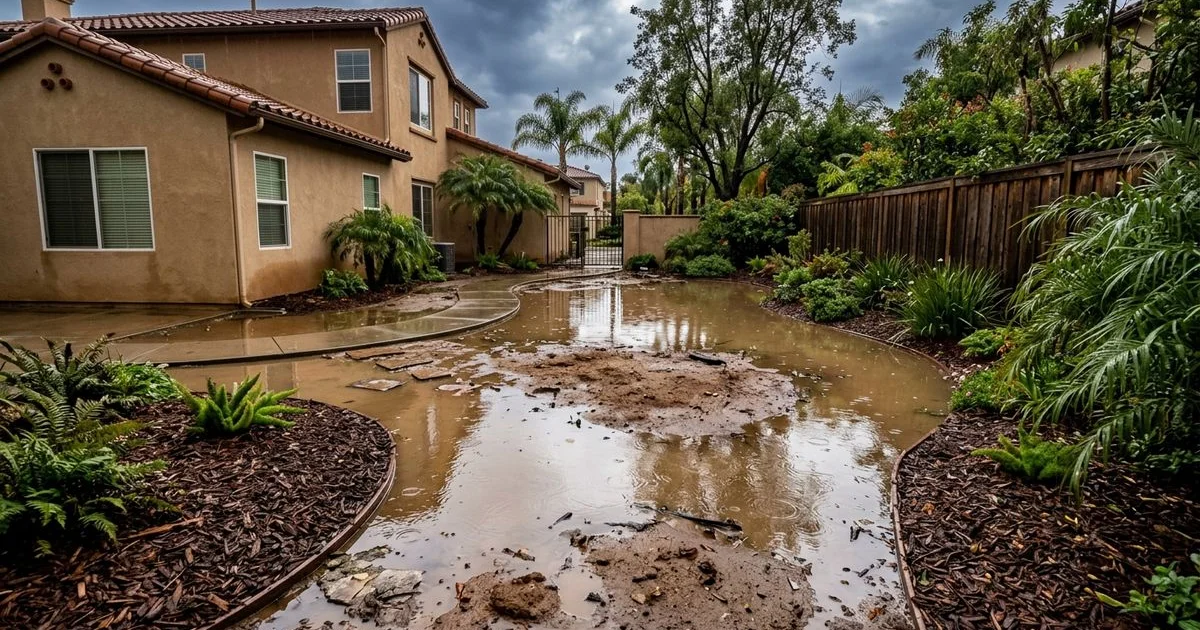
You know how extreme the shift between drought and heavy rain has become here in Southern California. The 2025-2026 storm seasons dumped nearly 17 inches of rain on downtown Los Angeles, totally overwhelming yards used to dry conditions.
At Ridgeline Outdoor Living, providing exceptional landscaping services you can rely on is our core mission. We frequently see this exact weather whiplash expose hidden drainage flaws on residential properties. Figuring out why yard floods happen usually comes down to one of a few structural issues, not just bad luck.
Diagnosing the specific causes of yard flooding is the crucial first step to fixing the mess.
Our team has pinpointed the most frequent culprits leaving standing water in yard LA properties right now. Finding the right fix conserves that valuable rainwater while protecting your foundation. Let’s look at the data, what it is actually telling us, and explore practical ways to respond.
1. Grade issues (most common cause)
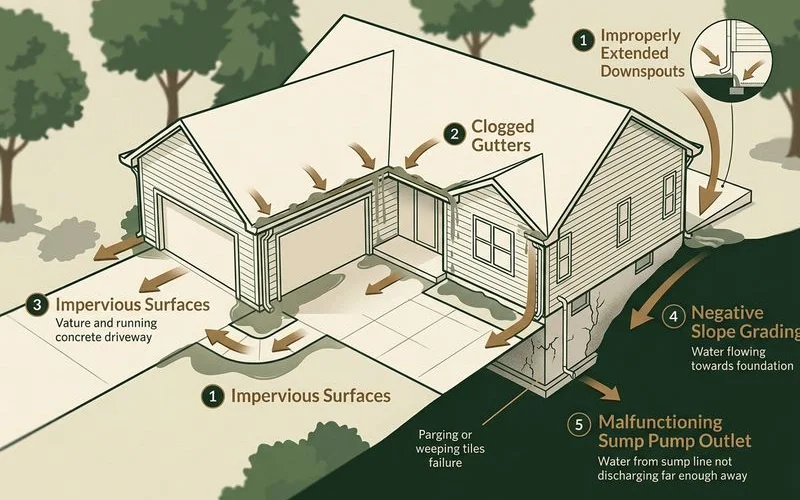
The yard slopes toward the house instead of away from it, pushing rainwater directly into your foundation. Grading problems are the most frequent reason behind saturated lawns. Building codes require exactly 6 inches of fall over the first 10 feet moving away from the foundation. We see many older properties where the soil has simply compacted or eroded over the decades. Settling dirt traps moisture where you absolutely do not want it.
Catching this reverse slope early saves you from a massive structural headache later. Water damage causes severe issues if left unchecked:
- Cracked concrete foundations
- Flooded crawlspaces and basements
- Rotted structural wood framing
- Extensive mold growth
Foundation repairs in the Los Angeles area easily average $5,000 to $7,000. Our crews recommend checking your slope with a simple string level after any major landscaping updates. Catching the problem early keeps your basement dry.
Sign: Water pooling within 6 feet of the house after a rain. Mud against the foundation. Damp basement or crawl-space.
2. Clay soils and infiltration limits
Most LA basin and foothill soils are heavily packed with clay, which restricts water absorption. Clay soil absorbs moisture incredibly slowly. The ground hits full saturation fast during an atmospheric river, leaving the rest of the rain to pool on the surface. We find that the tight clay particles physically block water from percolating down into the groundwater table. This creates a messy, slick surface for days.
The state’s updated Model Water Efficient Landscape Ordinance (MWELO) actually requires new landscaping projects over 500 square feet to improve soil health. Adding two to three inches of organic compost breaks down that stubborn clay over time. Compost delivers several direct benefits:
- Increases soil porosity
- Feeds beneficial microorganisms
- Retains moisture during dry spells
- Prevents crusting on the surface
Our landscapers use this exact method to boost infiltration rates while feeding drought-tolerant native plants. Healthy soil acts like a sponge instead of a concrete slab.
Sign: Water sitting flat across the lawn or yard 6+ hours after a storm. Cracking when dry, slick when wet.
3. Downspout discharge problems
Downspouts dumping concentrated roof water at the foundation create instant, localized flooding zones. A typical 1,500-square-foot roof generates more than 900 gallons of runoff during a single one-inch rainstorm. That massive volume easily washes out planting beds if it dumps into a flat area.
We often see homeowners unknowingly direct all that flow straight into their crawlspaces. Diverting the flow correctly is a simple, high-impact fix. You have a few options for managing this water:
- Attach a flexible extension hose
- Pipe the water into a rain garden
- Connect the spout to an underground catch basin
You can actually capture this runoff instead of letting it drown your yard. The Los Angeles Department of Water and Power (LADWP) currently offers rebates for installing residential rain barrels and cisterns. Our clients often use these systems to store winter rain for summer irrigation, supporting a sustainable yard.
Mayor Karen Bass recently announced the city captured 5.5 billion gallons of stormwater during late 2025 storms. You can play a part in that regional effort by catching your own roof runoff.
Sign: Specific wet zone right under or near a downspout. Splash erosion at the discharge point. Mud trail leading away from the spout.
4. Hardscape runoff concentration
Solid surfaces like patios, driveways, and concrete walkways shed water rather than absorbing it. Concentrated runoff occurs when the slopes from these hard surfaces feed directly into low-lying grass areas. This is incredibly common in older properties where previous owners added pavement incrementally without any drainage strategy.
We regularly inspect backyards where a massive concrete slab channels gallons of water right into a tiny patch of soil. The dirt simply cannot handle the sudden influx.
California’s strict new AB 1572 water laws have accelerated the removal of thirsty lawns. Homeowners are rapidly replacing grass with expansive patios in a trend many call “hydro-hardscaping.” To avoid trading a water-wasting lawn for a flooded patio, consider these alternatives:
- Open-cell concrete pavers
- Spaced flagstone with gravel joints
- Permeable interlocking concrete pavements
Our designs prioritize permeable pavers for these new outdoor living spaces. Permeable materials allow rain to seep directly through the joints into a gravel base below. This keeps your yard compliant with water restrictions while completely eliminating the runoff problem.
Sign: Wet zones along patio or driveway edges. Water tracking visible across hardscape during rain.
5. Hillside concentration onto downslope lots
Flooding caused by uphill neighbors discharging runoff onto your lot is a massive liability. Being situated at the bottom of a slope means you catch everything flowing downhill. Hillside neighborhoods in La Cañada, Glendale, and the Pasadena foothills see this routinely.
We constantly get calls from frustrated homeowners who inherit their neighbor’s storm runoff. The water respects gravity, not property lines. Recent atmospheric river events dropping two to three inches of rain in a single day make this uphill battle much worse.
California law generally states that property owners cannot artificially alter or increase the flow of surface water onto lower properties. Dealing with a neighbor’s runoff requires a strategic defense:
- Document the water flow during a storm
- Check local municipal codes for discharge rules
- Install a physical barrier or berm
Our crews often install strategically placed catch basins along the property boundary to intercept this trespassing water. Catching the flow before it reaches your foundation is the best defensive strategy.
Sign: Flooding correlates with rain even when the lot’s grade is fine. Visible flow paths across the property from one direction.
6. (Bonus) Failing or absent drainage infrastructure
Older homes sometimes contain French drains, area drains, or sump pumps that have failed silently underground. New construction occasionally features drainage pipes that are severely undersized for the roof area. Corrugated plastic pipes are notorious for crushing under the weight of settling dirt or getting clogged by invasive tree roots.
We use specialized camera equipment to inspect these hidden lines and find the exact blockage point. Guessing is an expensive game when dealing with buried utilities. Replacing a collapsed system requires a clear budget.
Professional exterior French drain installation in the Los Angeles area currently costs anywhere from $10 to $75 per linear foot. The final price depends on a few major factors:
- Trench depth and width
- Soil conditions (clay costs more to dig)
- Accessibility for heavy machinery
- Necessary permits and inspections
Our installation process always includes accessible cleanouts every 50 feet. Regular flushing keeps the gravel and perforated pipes clear of silt buildup. A well-maintained trench system will easily manage heavy downpours for decades.
Sign: Drainage exists but isn’t moving water. Standing water at supposed drain inlets. Sluggish flow during rain.
When DIY won’t fix it
Certain yard maintenance tasks are perfectly safe to handle yourself over the weekend. A few basic adjustments can make a surprising difference during the next storm.
Some things you can DIY:
- Extending a downspout 4 to 6 feet from the foundation
- Adding mulch and re-grading by hand around individual planting beds
- Cleaning out existing area drains and gutters
- Installing a simple rain barrel under a single gutter drop
Tackling deeper underground work carries major risks and strict legal requirements. Hitting an unmarked utility line can cause severe injuries and trigger massive repair bills. By law, anyone digging in Southern California must contact DigAlert at 811 at least two days before starting.
Some things that almost always need a contractor:
- Re-grading more than a small area
- Trenching for a French drain feeding a dry well
- Sub-foundation drainage
- Hillside drainage retrofits
- Anything that involves permits or discharge to the city right-of-way
Understanding the local building codes requires specific expertise. Los Angeles issues heavy fines for property owners who illegally pipe private runoff directly into public streets.
To match the diagnosis to the exact fix, read the detailed breakdowns in French drain vs dry well vs channel drain and DIY drainage vs hiring a contractor.
What we do
Ridgeline’s yard drainage service starts with a comprehensive site survey. We evaluate your grade, downspout locations, hardscape runoff ratios, and soil composition. This detailed audit ends with a scoped, permanent fix sized exactly for your specific lot. Most LA flooding is entirely solvable once you stop guessing and start measuring.
Our goal is to build a resilient, drought-conscious outdoor space you can actually enjoy year-round. Innovative drainage systems protect your home from winter storms while keeping water on-site for your plants whenever possible. We want you to stop waiting for the mud to dry. Call the team today to schedule an expert property assessment and protect your landscape investment.
Frequently Asked Questions
Why does water pool against my house?
Can clay soils be fixed?
How long can standing water sit before it's a foundation risk?
Have questions about a project of your own?
A free on-site consultation, a phased budget tier, and a master plan that fits your property and your goals.