Outdoor Kitchen Design Ideas for LA Homes
How to design an outdoor kitchen — layout, appliance choices, countertop materials, integration with patio and pergola, and the rough-ins that make it work.
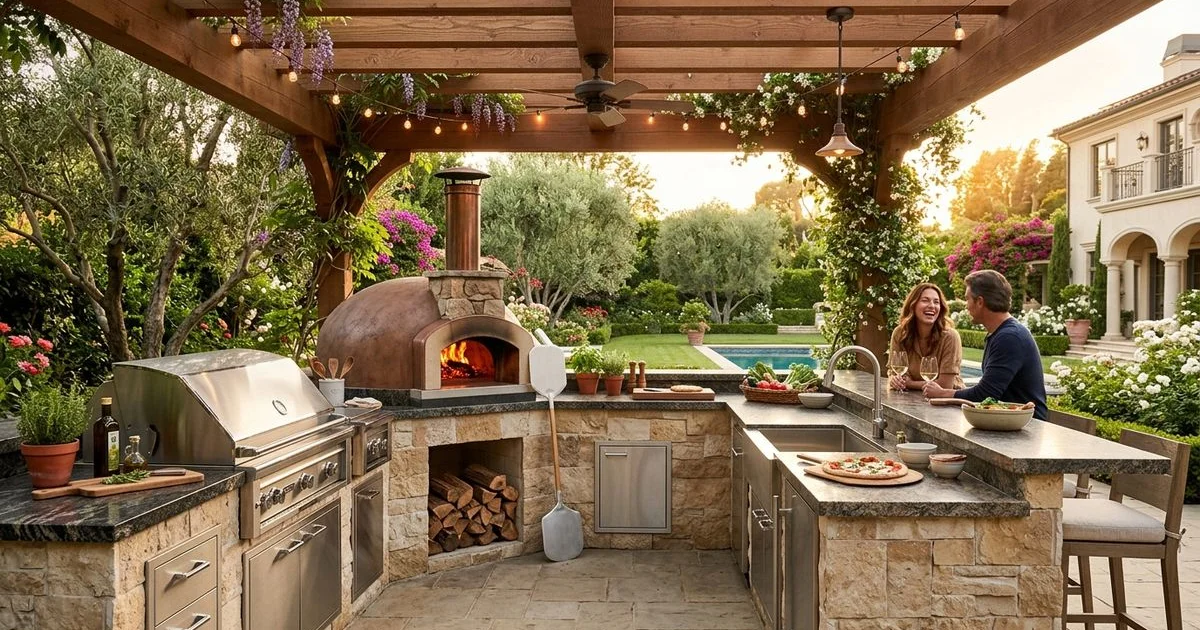
Our team at Ridgeline Outdoor Living has noticed a distinct shift in how Los Angeles residents view their backyards.
You know the drill. An expensive grill island gets built, sits in the hot sun, and nobody uses it after year one.
A truly great outdoor kitchen requires careful planning for plumbing, gas, electrical, ventilation, and weatherproof masonry. When these elements integrate into a layout that fits your cooking habits, the return on investment can range from 55% to over 200% in Southern California. Water conservation is the dividing line between a standard project and a great one.
We will walk you through the essential steps, layout options, and appliance choices to create a cooking zone you actually use. Let’s examine the data and explore a few practical ways to design a custom outdoor kitchen Los Angeles homeowners will love.
Start with how you’ll use it
Before picking appliances, you need to answer a few critical questions. The honest answers to these questions will shape your entire outdoor kitchen layout.
- How often will you actually cook outside? Weekly summer cooking justifies a heavy-duty build, while occasional weekend use might just require a basic grill.
- How many people do you typically host? Cooking for a family of four requires much less prep space than hosting 12 guests.
- Do you grill, smoke, or both? Grills, smokers, and pizza ovens each take up a real footprint.
- Bar service or dining service? If you plan on serving drinks, you need to account for seating, refrigeration, and drought-conscious ice makers.
- What is the indoor kitchen distance? Long-range setups need more on-site capability, while close-to-back-door builds can lean on the indoor kitchen for prep.
- Are you prioritizing water conservation? California Title 24 guidelines make water efficiency a priority.
We see homeowners save thousands simply by aligning their appliance choices with their actual entertaining habits. A 2026 report from the LADWP emphasizes that smart planning directly reduces long-term water and energy costs.
Placing your cooking zone near existing drought-tolerant planting areas, a technique called hydrozoning, makes irrigation and cleaning much easier.
Layout options
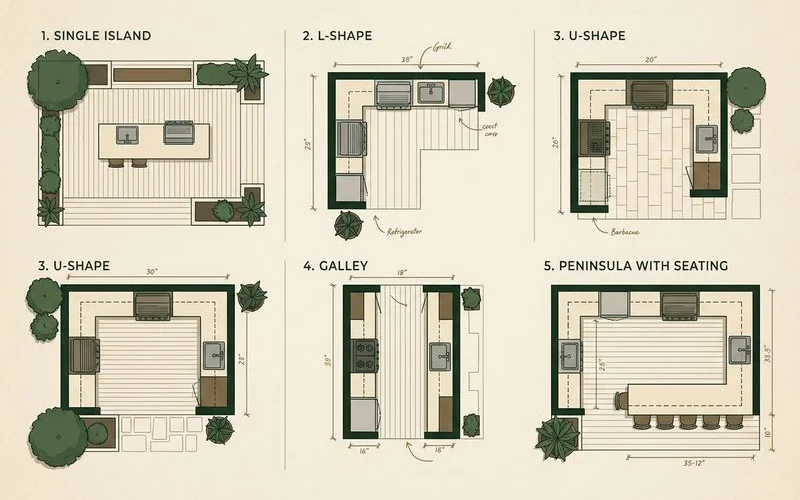
An outdoor kitchen layout should match both your yard size and your cooking style. We typically recommend one of four main configurations based on the available square footage.
Single island (entry-level)
This linear or peninsula island features a grill, a side burner, and a modest counter. It generally runs 8 to 12 feet long.
Our clients love this budget-friendly option for occasional grilling because it leaves plenty of room for drought-tolerant landscaping. Surrounding a single island with decomposed granite (DG) or artificial turf keeps water usage incredibly low.
This setup offers limited seating but maximizes open space.
L-shape (most popular for serious builds)
Two perpendicular runs form an L-shape in this classic design. One run holds the grill and cooking area, while the other holds prep space, a sink, and a refrigerator.
We often build these layouts with 10 to 18 feet of total run to allow comfortable seating on the back side.
This layout pairs perfectly with the 2026 trend of cantilevered covered patios. The floating roof look provides shade without needing obstructive posts.
U-shape (entertainment-grade)
Three runs in a U-shape provide maximum counter space and storage. This generous footprint allows multiple cooks to work simultaneously across dedicated activity zones.
- Hot zone: Dedicated entirely to grills, smokers, and side burners.
- Cold zone: Focused on refrigeration, ice makers, and beverage service.
- Wet zone: Centered around the sink and food prep areas.
Our installation teams typically require a minimum footprint of 16 feet in any direction for this setup. Because this layout includes complex plumbing, we install smart leak monitors to conserve water under strict Los Angeles guidelines.
These systems provide real-time alerts to your phone, protecting your hardscape investment from hidden water damage.
Galley with seating counter (modern)
A linear cooking run sits on one side with a parallel seating counter on the other. This layout resembles a restaurant line and reads very modern.
We frequently design galley kitchens using the Contemporary California Neutrals trend. Mixing warm wood, natural stucco, and low-maintenance concrete creates a calming, clean aesthetic.
This style works exceptionally well with existing patio sight lines.
Appliances worth including
Choosing the right equipment determines how much value you get out of the space. We suggest dividing your appliance budget into standard necessities and premium additions.
Investing in high-quality items upfront prevents costly replacements caused by the harsh Southern California sun.
Standard build
Every functional outdoor kitchen needs a solid foundation of reliable equipment. Our standard appliance checklist focuses on performance and durability.
- Grill: A 36-inch model is the standard for most households, while 42 or 48-inch models suit serious cooks. Premium 2026 brands like Hestan, Lynx, and DCS offer thick stainless steel that withstands all weather conditions.
- Side burner: A single or dual burner is essential for sauces, sides, or boiling water.
- Sink with hot and cold supply: Plumbed to the home’s water system. You must install a WaterSense certified low-flow aerator to meet Los Angeles water conservation standards.
- Refrigerator: You need an outdoor-rated unit from brands like Lynx or U-Line. A standard 24-inch undercounter model works best.
Premium add-ons
Once the basics are covered, you can personalize the space for your specific entertaining style. These additions expand your cooking capabilities significantly.
- Pizza oven: A wood, gas, or hybrid oven adds serious variety to your menu.
- Kamado-style smoker: Building a Big Green Egg right into the masonry creates a seamless look.
- Fire tables: These sleek, linear gas features are rapidly replacing traditional wood fire pits in 2026 because they burn cleaner and provide instant ambiance.
- Ice maker: Choose an outdoor-rated nugget or cube ice machine, but ensure it meets current drought efficiency ratings.
- Warming drawer: This holds plates and cooked food at safe temperatures.
- Wok burner: A high-BTU burner provides the intense heat needed for stir-fry.
We always remind clients that adding a gas line for a fire table or pizza oven requires planning during the initial patio build. It costs much less to lay pipes before the concrete is poured.
What to skip (usually)
Knowing what to leave out is just as important as knowing what to include. Our designers regularly advise against a few common requests.
- Built-in TV outside: Televisions are hard to view in daylight and carry a high weather risk.
- Indoor-rated appliances: These units will fail quickly in outdoor conditions and will void your warranty.
- Specialty grills you won’t use weekly: A massive roasting spit just becomes expensive storage if you only use it on holidays.
- Water-heavy misting systems: These systems waste a tremendous amount of water and violate many local drought restrictions.
Countertop materials
Your surfaces must endure intense UV rays, accidental spills, and heavy usage. We evaluate countertop materials based on their longevity, maintenance needs, and visual appeal.
| Material | Pros | Cons |
|---|---|---|
| Granite | Workhorse; durable, attractive | Needs sealing; some patterns feel dated |
| Soapstone | Beautiful patina, food-safe | Soft; scratches show easily |
| Porcelain slab | Modern, consistent, highly heat-resistant | Limited fabricator network in some areas |
| Concrete | Custom shapes, fits the Contemporary Neutrals trend | Needs sealing; cracks if poorly cured |
| Stainless steel | Restaurant aesthetic | Marks easily, gets very hot in the Los Angeles sun |
| Quartz | Avoid using outdoors entirely | Fades rapidly in UV light |
| Marble | Avoid for cooking surfaces | Stains and etches quickly |
The Los Angeles sun will quickly fade materials that are not UV-resistant. Light-colored porcelain and concrete are dominating 2026 designs because they stay cool to the touch and reflect heat away from the cooking zone.
The rough-ins that make it work
What separates a real outdoor kitchen from a grill island sitting on a patio is what happens below the surface. Our team plans the infrastructure long before any masonry blocks arrive on site.
- Gas line: Sized properly for the grill BTU, plus a side burner, plus a pizza oven. This must be plumbed during the patio build.
- Water supply: Hot and cold water plumbed to the sink, with hose bib access for easy cleaning.
- Sanitary drain: Water routes from the sink to the home’s drain or a dry well, strictly following Los Angeles County code.
- Electrical: You need a minimum of two GFCI outlets, plus an additional 240V line if required for a large refrigerator or ice maker.
- Lighting: Plan for task lighting at the cooking surface, ambient strips under counters, and solar-powered accent lighting to save energy.
These utilities get scoped during design and roughed in before the masonry shell is built. Retrofitting any of them later means tearing into the finished kitchen, which ruins the aesthetic and balloons your budget.
Integration with patio and pergola
The kitchen never works alone. Most Ridgeline outdoor kitchens sit within a comprehensive, well-planned environment. To maximize water conservation, you should surround these areas with native California plantings and smart drip irrigation.
- Under a pergola for shade.
- On a paver patio sized for cooking, dining, and seating.
- With integrated lighting for evening use.
- Adjacent to a fire pit for after-dinner gathering.
Design these structural elements together from the very beginning. You cannot add a heavy shade structure later without dismantling portions of the hardscape.
We strongly recommend using permeable pavers for the patio base. Permeable surfaces allow rainwater to recharge the groundwater supply, which is a major benefit for drought-conscious California homeowners.
What we typically design
For most LA properties, an L-shape layout with a 36-inch grill, a side burner, a sink, and a refrigerator covers the use case beautifully. Our clients typically only request a pizza oven and kegerator when they are seriously passionate about making their own dough or hosting large watch parties.
A premium countertop in granite or soapstone, paired with stainless appliances, looks incredible under a cedar pergola. If you are researching the best outdoor kitchen design ideas, placing this setup on a permeable paver patio completes the aesthetic while respecting local water restrictions.
If you are still mapping out your project, our guide on built-In BBQ vs Modular Outdoor Kitchen covers a related angle that pairs well with this topic.
That approach forms the bread-and-butter Ridgeline outdoor kitchen build. Start by assessing your current yard configuration, and then reach out to schedule a consultation with a local design team to finalize your layout.
Frequently Asked Questions
What's the best layout for an outdoor kitchen?
What appliances should I include?
What countertop survives LA outdoor conditions?
Have questions about a project of your own?
A free on-site consultation, a phased budget tier, and a master plan that fits your property and your goals.