Gas vs Wood-Burning Fire Pit (LA Decision Guide)
Side-by-side comparison of gas and wood-burning fire pits — convenience, code compliance, ambiance, cost, and which works best in LA conditions.
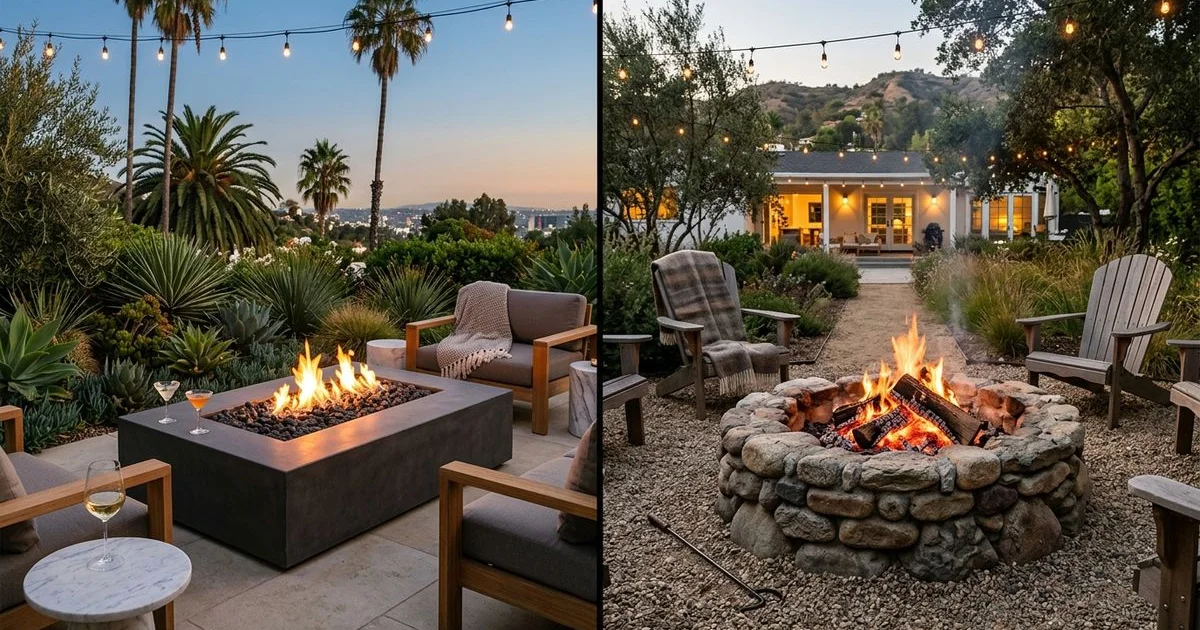
You already know that adding a fire feature completely changes how you use a backyard. We see this shift constantly across Southern California properties.
Choosing between a gas vs wood fire pit is the first step to extending your outdoor entertaining season.
Our landscape designs often incorporate these features to anchor drought-tolerant seating areas. Let’s look at the data comparing natural gas and traditional setups. We will walk you through the real installation costs, local regulations, and practical differences.
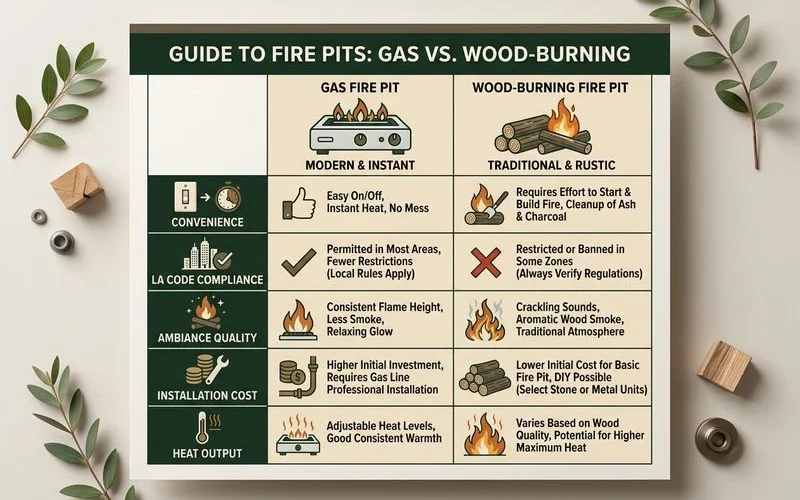
Quick comparison
Reviewing the raw numbers makes the decision much easier. We created this breakdown to highlight the major differences in cost and maintenance.
| Dimension | Gas fire pit | Wood-burning fire pit |
|---|---|---|
| Install cost | $4,500 to $15,000 | $3,500 to $12,000 |
| Operating cost | Low (around $0.70 per hour) | Variable ($5 to $10 per wood bundle) |
| Convenience | Instant ignition via switch or app | Manual building and log management |
| Ambiance | Clean and predictable flame | Crackling sound with visual variety |
| Heat output | Consistent moderate warmth | High radiant heat |
| Smoke | Zero emissions | Heavy PM2.5 particulate smoke |
| LA code compliance | Always allowed, exempt from bans | Banned during SCAQMD No-Burn days |
| Maintenance | Periodic burner cleaning | Frequent ash removal |
| Cleanup | Minimal | Heavy ash and soot management |
Gas fire pits: pros and cons
A natural gas fire pit offers unmatched convenience for busy homeowners. We find that clients use their outdoor spaces ten times more often when they can just flip a switch.
Pros
- Instant operation and control. Push a button or use a smartphone app to ignite the burner immediately.
- Extremely low operating costs. Running a natural gas line costs roughly $0.70 per hour. This is far cheaper than buying bundled firewood over time.
- Zero smoke or particulate emissions. You will never trigger smoke alarms or force your guests to dodge a shifting smoke cloud.
- Immunity to regional burn bans. The South Coast Air Quality Management District exempts natural gas features from their mandatory winter No-Burn days.
- Perfect for drought-friendly designs. These permanent fixtures integrate beautifully into water-wise hardscapes and gravel patios.
Cons
- High initial installation expense. Running a dedicated underground gas line typically adds $15 to $50 per linear foot to your project.
- Trenching through existing patios. Installing that line often requires tearing up and patching existing concrete if you are not building a patio from scratch.
- Lower radiant heat output. A gas flame provides less aggressive warming power on chilly winter nights compared to burning logs.
- Dependence on utility power. Some electronic ignition systems require a dedicated 120V electrical connection to function.
Style options
- Modern lava rock or fire glass. This creates a sleek, minimalist look that pairs perfectly with smooth concrete finishes.
- Ceramic or cast iron log sets. These pieces mimic a traditional aesthetic while keeping the convenience of a piped fuel source.
- High-performance brass burners. The Warming Trends CROSSFIRE system uses a patented Venturi jet technology to pull in extra oxygen. This creates a taller, brighter flame while using less fuel.
- Rust-resistant materials. Choosing 100% brass components ensures your burner will not corrode in the damp coastal air like standard stainless steel.
Wood-burning fire pits: pros and cons
Traditional wood fires deliver a classic sensory experience that gas simply cannot replicate. Our clients who choose this route usually prioritize the nostalgic smell and the aggressive heat of a real campfire.
Pros
- Authentic sensory experience. The distinct smell, the crackling sound, and the dancing embers create an unbeatable atmosphere.
- Superior radiant heat. Wood produces significantly higher temperatures. This makes it the best option for staying warm on cold December nights.
- No utility lines required. Once the structure is built, it operates completely off the grid without any gas or electrical connections.
- Lower initial construction costs. You save a substantial amount of money by avoiding trenching and plumbing fees.
- Built-in cooking capabilities. Many designs easily accommodate cast iron grates for grilling skewers or roasting marshmallows.
Cons
- Significant health and environmental impact. Burning logs releases heavy amounts of PM2.5 fine particulate matter into the local air basin.
- Neighbor nuisance potential. Shifting winds can easily blow thick smoke directly into adjacent yards and open windows.
- Strict regulatory shutdowns. You cannot legally use these during poor air quality days in Los Angeles County.
- Constant manual labor. Someone must build the fire, buy the wood, tend the flames, and safely extinguish the embers.
- Ongoing mess and storage needs. You must regularly shovel out the soot and dedicate dry space to store firewood.
Style options
- Traditional stone enclosures. Round or square shapes with a raised lip naturally complement rustic or heavily planted garden designs.
- Heavy-duty corten steel bowls. These develop a protective rust patina over time. They look fantastic in modern, drought-tolerant landscapes.
- Integrated masonry structures. A built-in fire block matched to existing retaining walls creates a cohesive, permanent outdoor room.
LA fire-zone considerations
Before installing a wood burning fire pit LA homeowners must understand the local rules. We handle these municipal codes daily to ensure every project passes inspection. Local air quality and wildfire risks heavily dictate what you can legally build.
The South Coast Air Quality Management District monitors fine particulate pollution from November through February. Our designs must account for these seasonal restrictions. High PM2.5 levels trigger mandatory No-Burn days during this specific season.
We saw 25 of these alert days during the 2024-2025 winter season alone. Burning solid fuel outdoors becomes a finable offense on those restricted days. Our team always reminds clients that these rules cover large sections of Los Angeles, Riverside, and Orange counties.
Some specific jurisdictions take things a step further with permanent restrictions:
- Hillside and brush-clearance zones in La Cañada Flintridge, Altadena, and parts of Glendale often ban open flames entirely to prevent wildfires.
- Beverly Hills and several Westside cities enforce their own distinct property line setbacks and chimney requirements.
- Mountain communities above 3,000 feet in elevation generally receive exemptions from the standard basin-wide bans.
Your contractor must confirm these site-specific details before breaking ground. We handle all of this compliance research during the initial property walkthrough. Natural gas units bypass these headaches because they burn cleanly and safely.
Hybrid options
A few property owners want the convenience of gas alongside the option to burn real logs. We build hybrid configurations to give you the exact experience you want on any given night. These dual-purpose setups utilize a heavy-duty gas log lighter installed beneath a traditional grate.
Our installers run the required plumbing, but you can still stack split wood right on top. You turn on the gas to ignite the logs quickly, then shut the valve off once the fire catches.
This approach offers a few specific benefits:
- Fast ignition. You eliminate the need for kindling and lighter fluid entirely.
- Flexible usage. You can enjoy a true wood fire when the weather is perfect, or just use the gas element for quick warmth.
- Classic aesthetics. The setup looks like a traditional campfire ring even when not in use.
Our crews do have to pull specific permits for this type of combined installation. Keep in mind that a hybrid unit is still legally classified as a wood-burning device. We want you to be aware that you will still face all the standard winter burn restrictions.
If you are still mapping out your project, our guide on custom Water Feature Design for LA Backyards covers a related angle that pairs well with this topic.
What we typically recommend
Deciding on a gas vs wood fire pit comes down to your daily lifestyle. We almost always steer Los Angeles clients toward a natural gas fire pit for this exact reason.
Convenience drives actual frequency of use for the vast majority of local homeowners.
Push-button ignition means you will actually step outside to enjoy a coffee on a random Tuesday morning. Our project managers focus on three main priorities when integrating these setups into broader hardscape work:
- Visual integration. Underground lines remain completely hidden beneath the pavers.
- Plant protection. The elimination of smoke protects your investment in drought-friendly native plants.
- Space optimization. Custom seating designs maximize your usable patio footprint.
Wood features remain a highly specific niche choice.
Our designers only specify them when a client desperately wants that authentic campfire feel. You must also have a large enough lot to handle the smoke.
For more details on integrating these elements into a complete backyard transformation, explore our guide to fire pits and water features. We update that resource regularly with new project photos and design strategies. Reach out to our team today to start planning your perfect backyard upgrade.
Frequently Asked Questions
Are wood-burning fire pits legal in LA?
Is gas more expensive to install?
Which gives more heat?
Have questions about a project of your own?
A free on-site consultation, a phased budget tier, and a master plan that fits your property and your goals.