Custom Water Feature Design for LA Backyards
How custom water features get designed — fountains, scupper walls, pondless waterfalls, ponds — including pump sizing, sound profile, and lighting integration.
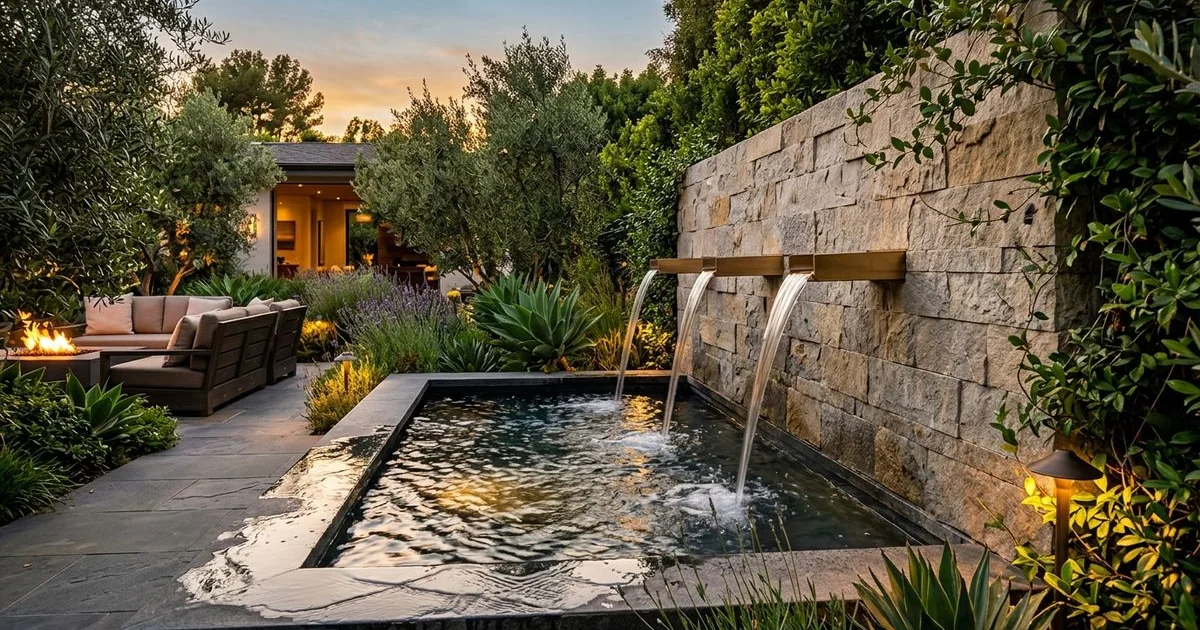
We founded Ridgeline Outdoor Living with a simple mission to provide exceptional landscaping and hardscaping services that customers can truly rely on. The biggest challenge in outdoor design today is balancing a luxurious aesthetic with California’s strict water conservation mandates.
Our team considers a custom water feature design the perfect solution to soften a backyard just as a fire pit anchors one. Recent data shows that a traditional irrigated lawn can consume up to 7,000 gallons of water daily.
We see the 95% reduction in evaporative loss from an enclosed recirculating system as a complete game changer for any drought-conscious budget.
The following guide breaks down four major feature types and walks through the exact design considerations required for a sustainable oasis.
Pondless waterfall
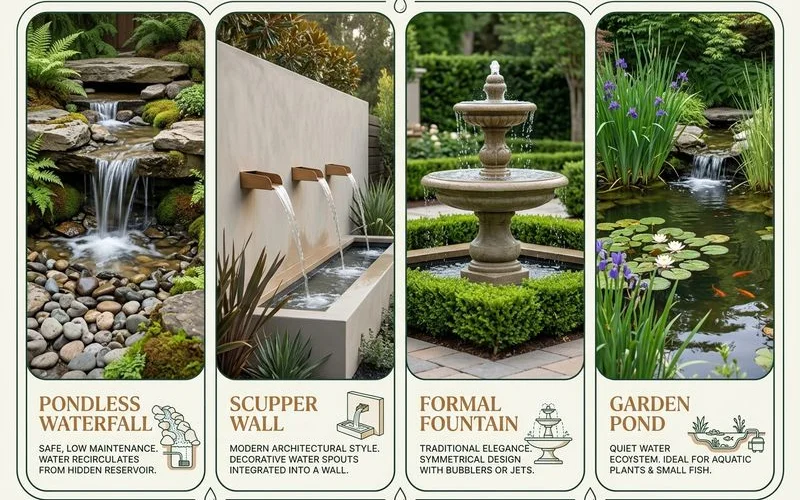
Our most requested installation is the pondless waterfall design because it delivers a natural stream aesthetic without an open basin. Water cascades over a constructed rock feature into a hidden underground reservoir before pumping back up.
We always recommend this setup for foothill homes and integration with drought-tolerant planting. A typical installation in the Los Angeles area costs roughly $1,300 per linear foot.
Our standard 10-foot project runs around $13,000 and typically includes an Aquascape variable-speed pump to minimize electricity costs. This enclosed system loses significantly less water to evaporation than a traditional exposed pool.
| Aspect | Project Details |
|---|---|
| Best for | Naturalistic gardens and CA native landscapes |
| Pros | No standing water, kid-safe, highly water-efficient |
| Cons | Larger underground footprint, labor-intensive rock work |
| Cost Range | $5,000 to $20,000+ depending on scale |
Scupper wall (or sheet wall)
We use the scupper wall fountain to create a striking architectural focal point for contemporary homes. Water emerges from a single spout, multiple spouts, or a continuous sheet before falling cleanly into a basin below.
Our construction process requires precise waterproofing behind the masonry to prevent calcium leaching and structural damage over time. Premium copper fixtures from brands like Bobé Water & Fire are highly sought after for these installations.
We love how you can tune the acoustic profile of these modern features by adjusting the flow rate. The rigid structure must be built perfectly level to ensure an even sheet of liquid.
| Aspect | Project Details |
|---|---|
| Best for | Modern architecture, courtyards, and focal-point features |
| Pros | Highly architectural, wide range of styles, tunable sound |
| Cons | Requires custom wall construction and precise waterproofing |
| Cost Range | $4,000 to $25,000+ depending on size and complexity |
Formal fountain
Our clients often request a formal fountain to anchor a traditional or Mediterranean outdoor living space. These classical structures feature a tiered or single basin with a central spray for aesthetic gravity.
We frequently install these centerpieces for heritage homes matching the San Marino traditional or Beverly Hills classical styles. The open basin requires consistent maintenance and chemical balancing to stay pristine.
Our maintenance routine always includes adding Bti products like Mosquito Dunks to the standing water. This biological control safely kills larvae without harming visiting wildlife or pets, which is crucial for California gardens.
| Aspect | Project Details |
|---|---|
| Best for | Heritage estates and Spanish-revival properties |
| Pros | Strong architectural anchor with immense aesthetic gravity |
| Cons | Needs chemical balance, stagnant water attracts mosquitoes |
| Cost Range | $6,000 to $30,000+ |
Pond / koi pond
We only recommend a true koi pond for clients who are fully committed to cultivating a living ecosystem. This type of open water requires serious space, daily maintenance, and expensive equipment.
Our team installs professional-grade filtration systems to handle the heavy bioload of the fish. A high-end unit like the Oase ProfiClear Premium drum filter can easily cost over $6,000 just for the hardware.
We tend to design pondless waterfalls for clients who like the look of a pond but cannot commit to that level of care. Plant care, water quality management, and constant aeration add up to a significant ongoing chore.
| Aspect | Project Details |
|---|---|
| Best for | Serious gardeners and dedicated fish hobbyists |
| Pros | Deeply rewarding living water with ecological depth |
| Cons | Massive ongoing maintenance and strict water quality needs |
| Cost Range | $15,000 to $60,000+ with proper drum filtration |
Design considerations
Our design philosophy relies on carefully balancing several technical factors to ensure long-term success. Every successful installation requires precise calculations behind the scenes.
Pump sizing
We base your pump size strictly on the spillway width and total basin volume. The industry standard calls for 30 to 60 GPM per linear foot of spillway for most residential applications.
- Proper Sizing: Matches the physical width of the spillway.
- Variable-Speed Control: Allows for flow adjustments throughout the day.
Our installers use Aquascape variable-speed pumps to prevent massive energy bills during the hot summer months. With LADWP 2026 Tier 3 electricity rates reaching nearly 39 cents per kWh, an oversized unit wastes incredible amounts of money.
We always want to deliver an impressive visual flow without generating excessive noise or burning unnecessary power. An undersized pump simply leaves you with a weak trickle instead of a satisfying cascade.
Sound profile
Our landscape architects consider the acoustic profile to be the single most underrated design variable. The acoustic impact changes based on flow rates, drop heights, and surrounding materials.
- Pump GPM: Higher flow rates directly translate to louder volume.
- Spillway Height: A taller drop creates significantly more impact and noise.
- Basin Material: Natural stone basins absorb energy, while flat concrete amplifies the splash.
- Surrounding Hardscape: Patios reflect echoes, but dense California native plants absorb the sound waves.
We tune the acoustics specifically for how you plan to use the space. A background ambient feature needs a lower GPM, a modest drop, and planted surroundings.
Our goal is for guests to be able to converse comfortably while sitting six feet away. A strong focal point requires a higher GPM and a taller drop to command attention.
Lighting integration
We install lighting during the initial construction phase because retrofitting waterproof fixtures later is extremely difficult. A dark basin completely hides the cascading movement as soon as the sun goes down.
- Underwater LED Lights: These are the most common choice, offering warm white or color-changing options on a 12-volt low-voltage system.
- Submerged Spotlights: These narrow beams highlight specific architectural spouts or unique rock formations.
- System Coordination: Everything connects to the overall landscape lighting controller and can be programmed into evening scenes.
Our crews wire everything into one central smart transformer for easy smartphone control. The right illumination transforms a quiet stream into a dramatic evening centerpiece.
Automatic-fill valve
Our premium installations always include an automatic-fill valve plumbed directly into the main basin. Almost every outdoor water system loses a noticeable amount of volume to evaporation in the dry heat.
”Evaporation is relentless in the California summer, making an automatic fill line the cheapest insurance policy for your expensive pump equipment.”
We rely on heavy-duty commercial float devices like the trusted Hudson valve to monitor the depth. This mechanical float tops up the exact amount needed without any manual intervention from the homeowner.
Our clients never have to drag a garden hose across the patio to protect their machinery from running dry. A hidden dedicated supply line ensures the equipment stays submerged and safe at all times.
Water treatment
We talk through specific chemical expectations during the initial design meeting to prevent future surprises. Formal basins with standing water require consistent chemical treatment to prevent thick algae growth and aggressive mosquito breeding.
- Bti Products: Biological controls like Mosquito Dunks kill larvae safely.
- Beneficial Bacteria: Natural additives like Microbe-Lift clarify the water.
Our preferred method for combating insects is the safe application of Bti because it targets pests without harming the ecosystem. Pondless systems demand far less maintenance because the liquid never sits still long enough to stagnate.
We also recommend adding natural bacteria packets to keep recirculating streams crystal clear. The right preventative routine protects the expensive pump and keeps the stone surfaces looking pristine.
If you are still mapping out your project, our guide on gas vs Wood-Burning Fire Pit covers a related angle that pairs well with this topic.
Integration with the project
Our most cohesive backyard transformations treat the aquatic elements as part of a much larger master plan. A standalone basin looks entirely out of place if it ignores the surrounding patios and vegetation.
- A pondless run integrated cleanly with drought-tolerant planting and structured paver hardscape.
- A copper scupper focal point positioned strategically near the outdoor kitchen and dining area.
- Coordinated landscape lighting that unifies the entire property after dusk.
We insist on designing these phases simultaneously so the electrical, supply, and drainage rough-ins happen during a single excavation event. This synchronized approach prevents contractors from tearing up a brand-new lawn to bury a hidden pipe.
Our goal is to hand over a fully finished, functional retreat. For more details on these custom builds, see Ridgeline’s fire and water features service.
Our team is ready to help you plan the perfect aquatic addition for your backyard. A custom water feature design transforms an ordinary patio into a true personal retreat.
We encourage you to start gathering inspiration and measuring your available space today.
Take the next step and schedule your consultation to discuss the possibilities.
Frequently Asked Questions
Do water features waste water?
How loud is a typical water feature?
Do water features need permits?
Have questions about a project of your own?
A free on-site consultation, a phased budget tier, and a master plan that fits your property and your goals.