Drip Irrigation Systems for California Yards
How drip irrigation works in California yards: anatomy, water savings versus spray, hydrozoning principle, smart controllers, and maintenance basics.
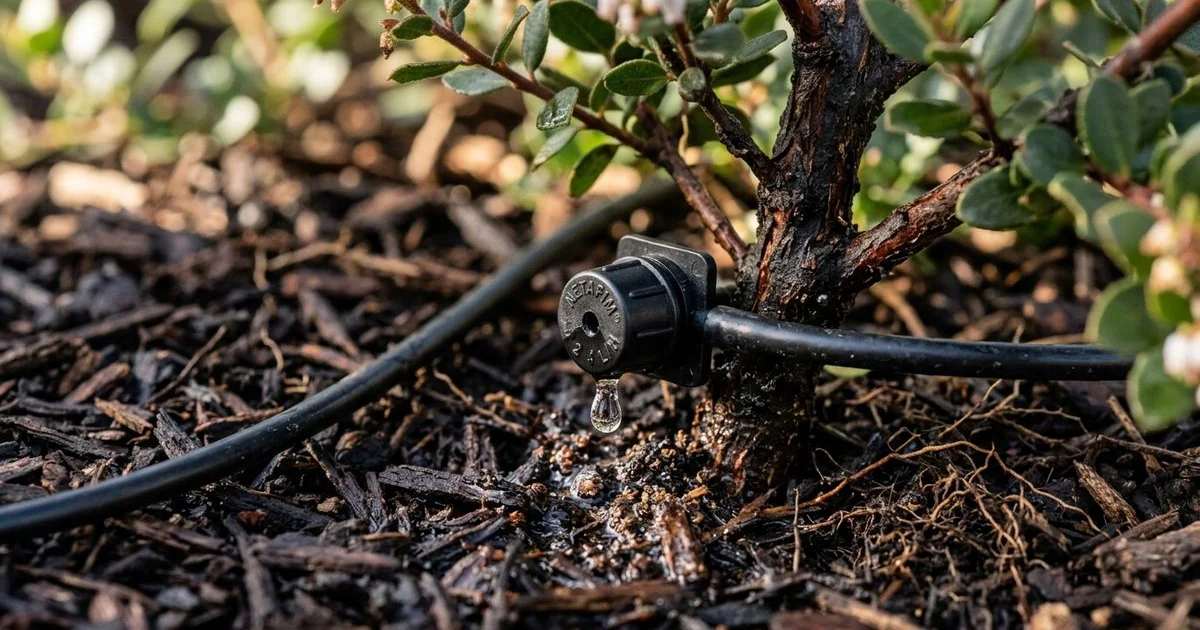
Every summer brings a new round of water restrictions for property owners across the state. We notice this constant pressure forces people to rethink how they keep their plants alive.
Upgrading to the type of modern drip irrigation system california regulations encourage is the most effective response.
The initial installation takes some planning, but the long-term payoff is undeniable. We will break down exactly how these setups function and why they out-perform traditional sprinklers.
Drip vs spray (in plain terms)
Comparing drip vs spray comes down to target accuracy and water volume. Drip systems push water directly into the soil at the root zone, while spray throws water through the air and across hardscapes. We constantly see standard sprinklers losing massive amounts of moisture to wind and evaporation.
The efficiency numbers show a massive gap between the two methods. Studies from irrigation manufacturers show drip networks achieve about 90% water efficiency. Spray sprinklers, by contrast, max out around 50 to 70% efficiency.
For standard sod lawns, conventional spray heads are still the standard choice. For drought-tolerant shrubs and native garden beds, targeted emitters are the only correct answer.
| Feature | Drip Irrigation | Spray Sprinklers |
|---|---|---|
| Water Efficiency | Up to 90% | 50% to 70% |
| Delivery Method | Direct to root zone | Broadcast through air |
| Evaporation Loss | Minimal | High |
| Best Used For | Shrubs, trees, garden beds | Sod lawns |
System anatomy
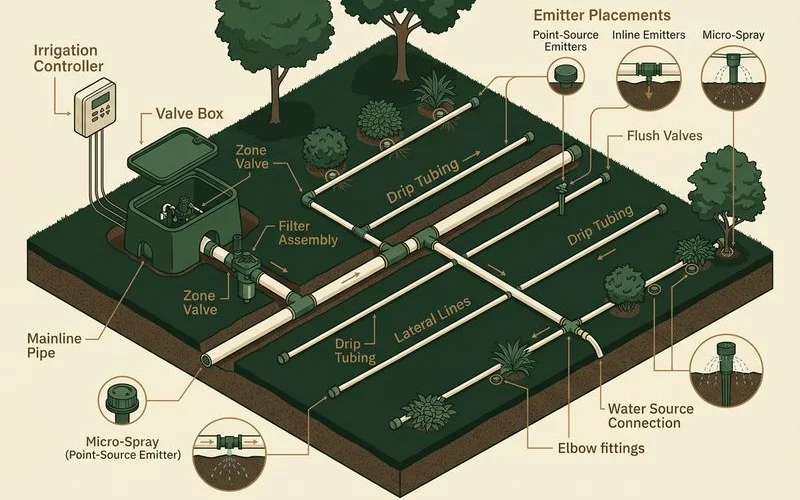
A dependable watering zone requires specific hardware working together to control pressure and filter debris. We build every setup using a standard sequence of commercial-grade parts.
- Controller (timer): This device sets the schedule and run times.
- Valve: The timer signals this component to open and close water flow to the specific zone.
- Pressure regulator: Household lines run at 60 to 80 PSI, so this part drops the pressure down to the 25 to 30 PSI range required for low-volume lines.
- Filter: This fine mesh screen catches debris and mineral buildup before it can clog the tiny emitters.
- Mainline and lateral tubing: A larger PVC or poly tube carries water from the valve into the bed, while smaller 1/4-inch lines branch off to reach individual plants.
- Emitters: These small heads deliver the water directly to the soil at the base of each plant.
We often specify exact equipment depending on the property layout. Brands like Rain Bird and Netafim provide excellent durability for these core parts.
The hydrozoning principle
Hydrozoning simply means grouping plants with similar water needs on the same irrigation valve. This ensures each specific area receives the exact moisture it requires without drowning nearby plants. We design these zones so a low-water native shrub does not share a watering cycle with a thirsty fruit tree.
Mixing high and low-water plants on one valve is the most common reason drought designs fail. The California native plants rot from too much moisture, while the thirstier plants dry out and wither. A typical yard design splits the property into several distinct watering groups.
- Native shrubs (like Ceanothus) need brief, infrequent cycles.
- Mediterranean accents (like Bougainvillea) require low to medium moisture.
- Mixed perennials and bulbs thrive on medium watering schedules.
- Citrus and fruit trees demand medium to high water with deep soaking cycles.
- Vegetable beds and containers need the highest volume of consistent moisture.
We apply this zoning strategy to every new project. When installing a custom drip irrigation pasadena residents love, separating the vegetable boxes from the native hillside is always step one. This precise control is exactly why local city ordinances often exempt low-flow drip zones from their strict two-day-a-week watering limits.
Pressure-compensating emitters
Pressure-compensating emitters maintain a precise, consistent flow rate regardless of pressure variations along the tubing. These specialized parts deliver the exact same amount of water at the beginning of the line as they do at the very end. We consider this the single feature that separates entry-level amateur setups from professional installations.
Standard emitters will dump excessive water at the lowest point of a property and starve the plants at the top. PC emitters solve this problem entirely.
“Pressure-compensating emitters are the single most important component for hillside properties, ensuring the plant at the top of the slope gets the exact same water as the plant at the bottom.”
We rely heavily on premium options like the Netafim Woodpecker series for these exact reasons. These specific parts operate flawlessly across a wide pressure range from 7 to 58 PSI. You can easily spot these high-quality emitters by checking the manufacturer specifications for the letters “PC” printed directly on the packaging.
Smart-controller integration
Modern smart controllers upgrade a basic watering timer into an active water management tool. These devices connect to your home Wi-Fi and pull real-time weather data to adjust your daily watering schedule automatically. We install units from Rachio and Hunter Hydrawise because their software interfaces are incredibly reliable.
These smart systems handle three primary tasks to keep your plants healthy and lower your water bills.
- They pause upcoming cycles if local rain is forecasted or if temperatures drop significantly.
- They adjust seasonal run-time multipliers, lowering output in winter and raising it during summer heatwaves.
- They give you full control to manually start or stop a zone directly from your smartphone.
Upgrading to a connected controller often qualifies homeowners for substantial utility rebates. As of 2026, the LADWP offers up to $200 per controller for residential properties under one acre.
We encourage every client who is planning drought-tolerant planting to claim these available funds and reduce their monthly expenses.
Maintenance basics
Even the most efficient watering hardware requires seasonal checkups to prevent clogs and leaks. California municipal water often contains high mineral content that builds up inside the tiny plastic components over time. We recommend a proactive approach to catch small issues before they kill your mature shrubs.
Routine maintenance comes down to a few core tasks.
- Conduct a twice-yearly inspection: Look closely for clogged emitters where no water reaches the plant base.
- Flush filters seasonally: Open the filter housing and rinse the mesh screen.
- Scale up emitter flow as plants grow: A 1-gallon native shrub needs very little water at installation, but requires more at maturity.
- Adjust the schedule for the season: If your controller lacks Wi-Fi weather tracking, you must manually reset the run times.
Missing these basic steps will eventually lead to dry spots and expensive plant replacements.
If you are still mapping out your project, our guide on low-Voltage Landscape Lighting: Zones and Design Basics covers a related angle that pairs well with this topic.
Where this fits
Most Ridgeline landscape renovations include a complete watering system rebuild from the ground up. The new planting layout and the underground water delivery network must be designed together to function correctly.
We approach every single project with this integrated mindset.
This comprehensive planning is the primary focus of our outdoor lighting and irrigation service department. Upgrading the underground infrastructure is the hidden foundation that makes a drought-resistant design survive and thrive for decades.
If you are tired of paying for wasted water and replacing dead plants, start by evaluating your current setup. We can help you design a modern, hyper-efficient layout that protects your landscape investment.
Frequently Asked Questions
How much water does drip save vs spray?
Can drip be used on a slope?
How often do drip systems need service?
Have questions about a project of your own?
A free on-site consultation, a phased budget tier, and a master plan that fits your property and your goals.